

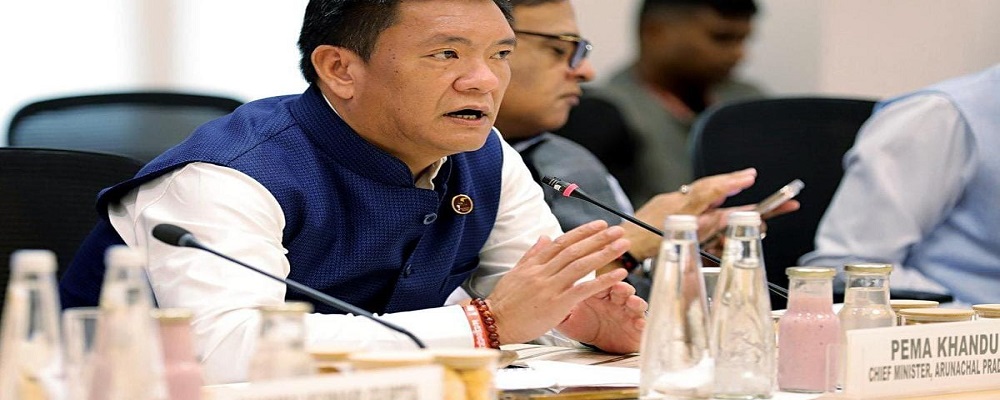
Arunachal Pradesh Chief Minister Pema Khandu’s assertion that there is “nothing forceful” about the proposed 11,000-12,500 MW Siang Upper Multipurpose Project is more political firefighting than clarification. The project, India’s answer to China’s 60,000 MW Medog dam on the Yarlung Tsangpo upstream, sits at the intersection of national security and indigenous rights.
Khandu claims doors are open for discussion and that villagers have signed MoUs in favour. The ground reality is split. In a state where four districts — East Siang, Siang, Upper Siang and West Siang — fear submergence, displacement and seismic risks, the government has indeed secured consent from some villages after two years of outreach. But the timing of his denial matters: it came days after the CBI booked lawyer and anti-dam activist Bhanu Tatak under FCRA for alleged foreign funding.
That sequencing feeds the perception Khandu seeks to trash. When a state that needs a strategic buffer dam criminalizes its most vocal opponent, “open for discussion” sounds like an invitation with a caveat. The PFR — pre-feasibility report — is being offered for public scrutiny, but scrutiny requires credible dissent.
India is strategically correct to not let China weaponize water in the Brahmaputra basin. A storage dam on the Siang is hydrologically a countermeasure. Yet Beijing’s logic cannot become Delhi’s method. If the Siang dam is to be a national interest project, it must survive not just geological tests but a democratic one — free, prior, informed consent, and space for anti-dam voices without FCRA raids. Otherwise, the state risks winning a dam and losing a valley.