

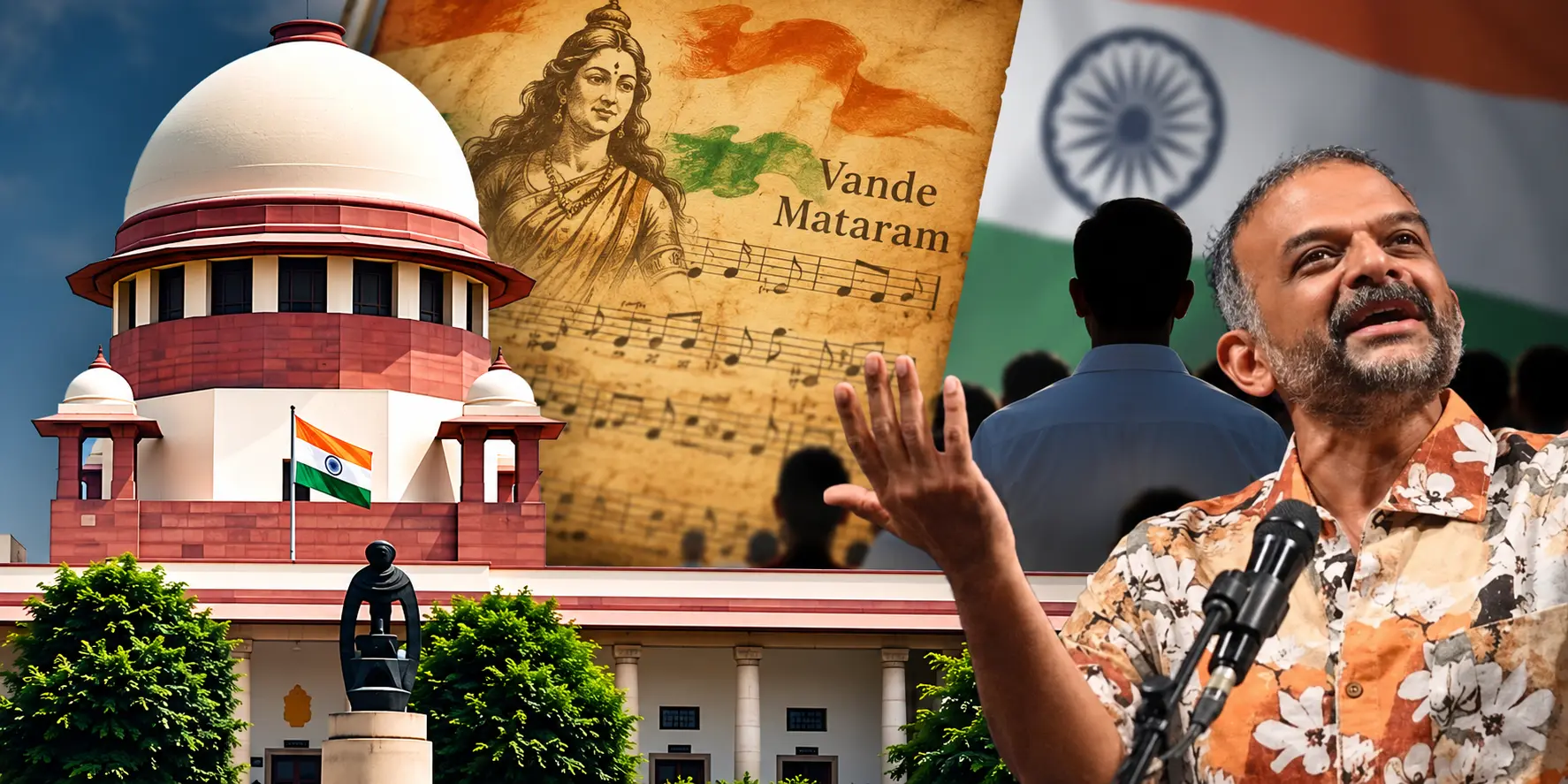
The Supreme Court on Tuesday drew a hard line that the government wanted blurred. While a democratically elected government may decide what the National Song is - two stanzas or six - it cannot infract Articles 25 and 26 or subject a conscientious objector to penal consequences for refusing to sing.
The observation came from Justice Joymalya Bagchi, part of a three-judge bench headed by CJI Surya Kant, while hearing Carnatic vocalist T.M. Krishna's challenge to the Prevention of Insults to National Honour (Amendment) Act, 2026. The amended law, read with Home Ministry orders of January and July, compels playing and mass singing of all six stanzas of Vande Mataram before the National Anthem at public functions. Non-compliance risks three years jail or fine.
Krishna, argued by senior advocate S. Muralidhar, says stanzas three to six are expressly devotional, deity-invoking, non-secular - Bankim Chandra's hymn to Durga. Mandating all six under penal sanction transforms contested history into compelled orthodoxy. The petition calls it formally neutral but substantively coded, sending majoritarian religious alignment and inflicting expressive subordination on believing Muslims and other objectors.
The Court invoked Bijoe Emmanuel vs Kerala 1986, which upheld Jehovah's Witness children's right to silently stand during National Anthem. Justice Bagchi noted American anthem uses word God, yet that does not destroy secularism. But court is loath to articulate nationalism, it will examine if 2026 amendment chokes objectors.
Solicitor General Tushar Mehta's interjection - "let us not bag National Song in sensationalism" and "law-making cannot be as per Naxalites' idea" - drew sharp rebuke. Muralidhar called it offensive.
At stake is not Vande Mataram's beauty, but coercion. Nationalism that needs jail to be sung is not pride, it is insecurity. The Court's question is right - can you punish someone for not singing devotion they don't believe? If yes, secularism becomes singing lesson.