

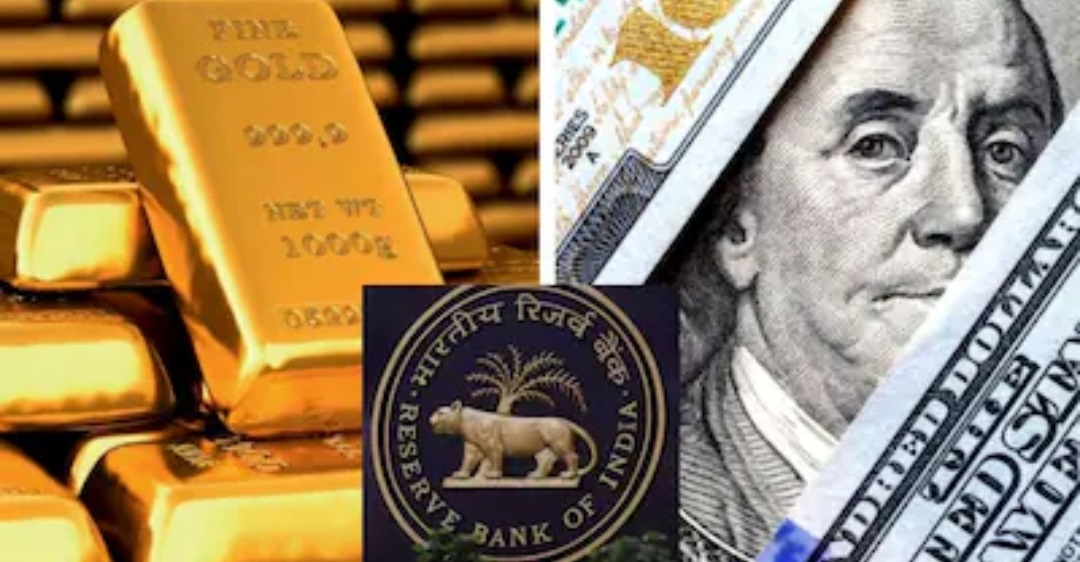
According to the latest data released by the Reserve Bank of India (RBI), India's foreign exchange reserves are once again poised to make history. Despite global economic uncertainties, India's total reserves have risen to a level very close to a new all-time high of $698.2 billion. This figure reflects the Indian economy's remarkable resilience against external shocks and the sustained inflow of foreign capital.
The primary contributors to this impressive rise in foreign exchange reserves are the appreciation in the value of 'Foreign Currency Assets' (FCA) and gold reserves. The value of the RBI's gold reserves has seen unprecedented growth due to increased gold purchases by central banks worldwide and a surge in gold prices in the international market. Additionally, the positive outlook of Foreign Portfolio Investors (FPIs) towards India has boosted dollar inflows.
A robust and substantial foreign exchange reserve acts as a strong financial cushion for the country's economy. It empowers the RBI to manage excessive volatility in the Indian Rupee (INR) exchange rate. Should crude oil prices spike in the international market or turmoil erupt in global financial markets, India possesses sufficient foreign exchange to cover approximately 11–12 months of imports.
Global rating agencies and the International Monetary Fund (IMF) have also commended India's robust foreign exchange management. While many developed and developing nations grapple with high inflation, rising debt, and dwindling reserves, India's financial stability will help attract Foreign Direct Investment (FDI) and bolster the country's credit standing in international markets.
The RBI's visionary monetary policy, prudent exchange rate management, and the Indian economy's strong GDP growth have collectively propelled India to this significant global financial milestone. This achievement not only reinforces the country's economic stability but also provides a solid foundation for future economic reforms and infrastructure development.
The primary contributors to this impressive rise in foreign exchange reserves are the appreciation in the value of 'Foreign Currency Assets' (FCA) and gold reserves. The value of the RBI's gold reserves has seen unprecedented growth due to increased gold purchases by central banks worldwide and a surge in gold prices in the international market. Additionally, the positive outlook of Foreign Portfolio Investors (FPIs) towards India has boosted dollar inflows.
A robust and substantial foreign exchange reserve acts as a strong financial cushion for the country's economy. It empowers the RBI to manage excessive volatility in the Indian Rupee (INR) exchange rate. Should crude oil prices spike in the international market or turmoil erupt in global financial markets, India possesses sufficient foreign exchange to cover approximately 11–12 months of imports.
Global rating agencies and the International Monetary Fund (IMF) have also commended India's robust foreign exchange management. While many developed and developing nations grapple with high inflation, rising debt, and dwindling reserves, India's financial stability will help attract Foreign Direct Investment (FDI) and bolster the country's credit standing in international markets.
The RBI's visionary monetary policy, prudent exchange rate management, and the Indian economy's strong GDP growth have collectively propelled India to this significant global financial milestone. This achievement not only reinforces the country's economic stability but also provides a solid foundation for future economic reforms and infrastructure development.