

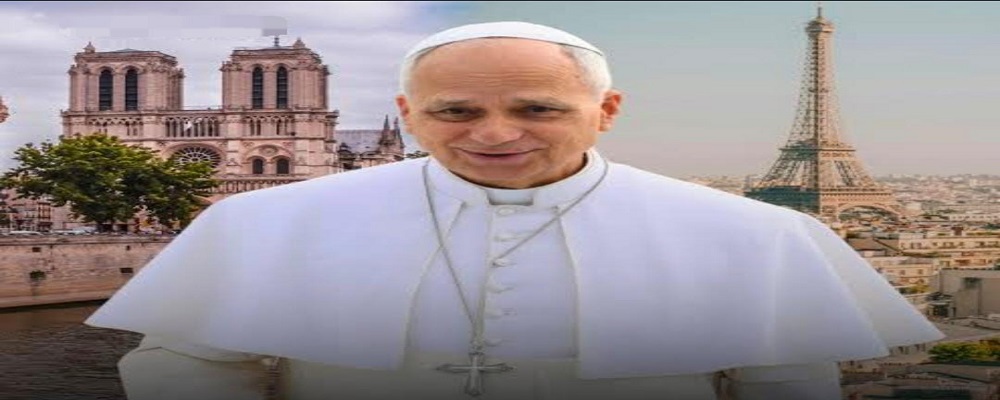
When Pope Leo XIV lands at Paris Orly on Friday, he will be stepping into the hardest test of his new pontificate: a country that is Catholic in heritage but secular by law, by statistics, and by pride.
The four-day state visit from Sept. 25-28 to Paris, Lourdes and Metz is the first official papal state visit to France in 18 years, since Benedict XVI in 2008. Francis visited Strasbourg, Marseille and Corsica, but never on a state visit. Leo XIV, the first American pope elected in May 2025 and a fluent French speaker, made France an early priority.
He chose a telling motto: "That the world may have life." It is a direct challenge to France's recent vote to legalize assisted dying, which French bishops called a "radical choice." In Paris, Leo will meet President Emmanuel Macron at the Elysee, address diplomats and civil society, speak at UNESCO on AI and culture, and celebrate vespers at the restored Notre Dame — the first papal prayer there since the 2019 fire and 2024 reopening.
France today is less Catholic than ever. In 2019-20, 51% of adults said they have no religion, up 8 points in a decade. Only 29% identify as Catholic, and just 8% go to Mass regularly. Yet paradoxically, France is also more open to Catholicism, says French journalist Cyprien Viet. The murder of Father Jacques Hamel in 2016, the burning of Notre Dame, and the Church's work during Covid created new sympathy.
Leo's strategy is to be everyone's pope not culture warrior but social teacher. His recent encyclical _Magnifica Humanitas_ on artificial intelligence had strong impact in France. In Paris, he will talk about immigration, end-of-life, and AI — issues where Catholic social doctrine can speak to secular concerns without preaching.
The protocol battle reveals the tension. France proposed a full military parade and a state dinner; the Vatican declined. Macron will greet Leo at the airport but, respecting laïcité, will skip all three Masses in Paris, Lourdes and Metz. Meetings will be institutional, not liturgical. Leo will, however, hold a private meeting with victims of Church abuse — victims themselves involved in preparation — acknowledging France's devastating 2021 Sauvé report.
For Macron, in his final months before May 2027, it is a legacy moment. For Leo, it is a map for the Church in post-Christian Europe: not reclaiming a throne, but finding a voice in a square that no longer believes.