

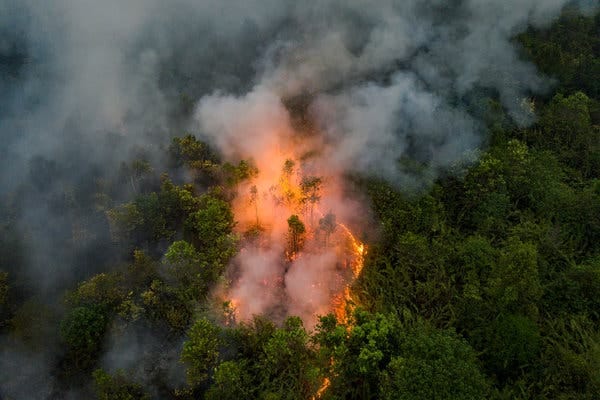
In Pontianak, West Kalimantan, the sky is no longer blue. It is orange. "All we could see was red," said farmer Juniarni, 48, describing fires that have surrounded her village of Sungai Awan Kiri. She noticed it first in the silence, the birds that chirped constantly have gone quiet.
Indonesia is battling its worst wildfires in 11 years, supercharged by a "super El Niño" that has brought 60-plus days without rain, dried water sources, and turned peatlands thick layers of decaying plants into tinderboxes.
More than 200,000 hectares have burned across Borneo and Sumatra. Over 12.5 million people have been exposed to haze in seven provinces. Respiratory illness cases more than doubled in one week in September, to 113,336. In West Kalimantan alone, hundreds of schools have shut indefinitely, leaving 200,000 pupils learning from home, many without stable internet.
Housewife Mimi Marlina, 45, rides a motorbike through thick haze to buy groceries, her two children coughing with fever at home. "We can still hold it off with medicines, but I'm concerned if this persists, it will lead to worse illnesses," she told Reuters, mask on but still gasping.
The crisis is transboundary. Haze has drifted to Malaysia and Singapore. Sarawak state in Malaysia reported "very unhealthy" air, closing 600 schools. Flights from Supadio Airport in Kubu Raya are delayed; visibility in some Kalimantan roads is down to one meter, with drivers using headlights at noon.
The cause is a mix of climate and economics. El Niño dries the peat; people set fires to clear land for palm oil. Police in Central Kalimantan detained 12 suspects for arson and illegal land clearing. Indonesia warned of legal action for open burning.
But the response is also grassroots. In Ketapang, 140 women farmers formed “The Power of Mama” unpaid volunteers in red suits patrolling on motorbikes to extinguish hotspots and warn neighbours against slash-and-burn. Volunteers run "Rumah Oksigen" — Oxygen House, going door-to-door handing oxygen cylinders to residents and firefighters.
As Andri Susanto of the Manggala Agni fire brigade said, conditions are worse than the catastrophic 2015 season that choked all of Southeast Asia. This time, praying for rain may not be enough.