
AlphaFold, the AI that solved biology's 50-year protein-folding problem, has gone viral — literally.
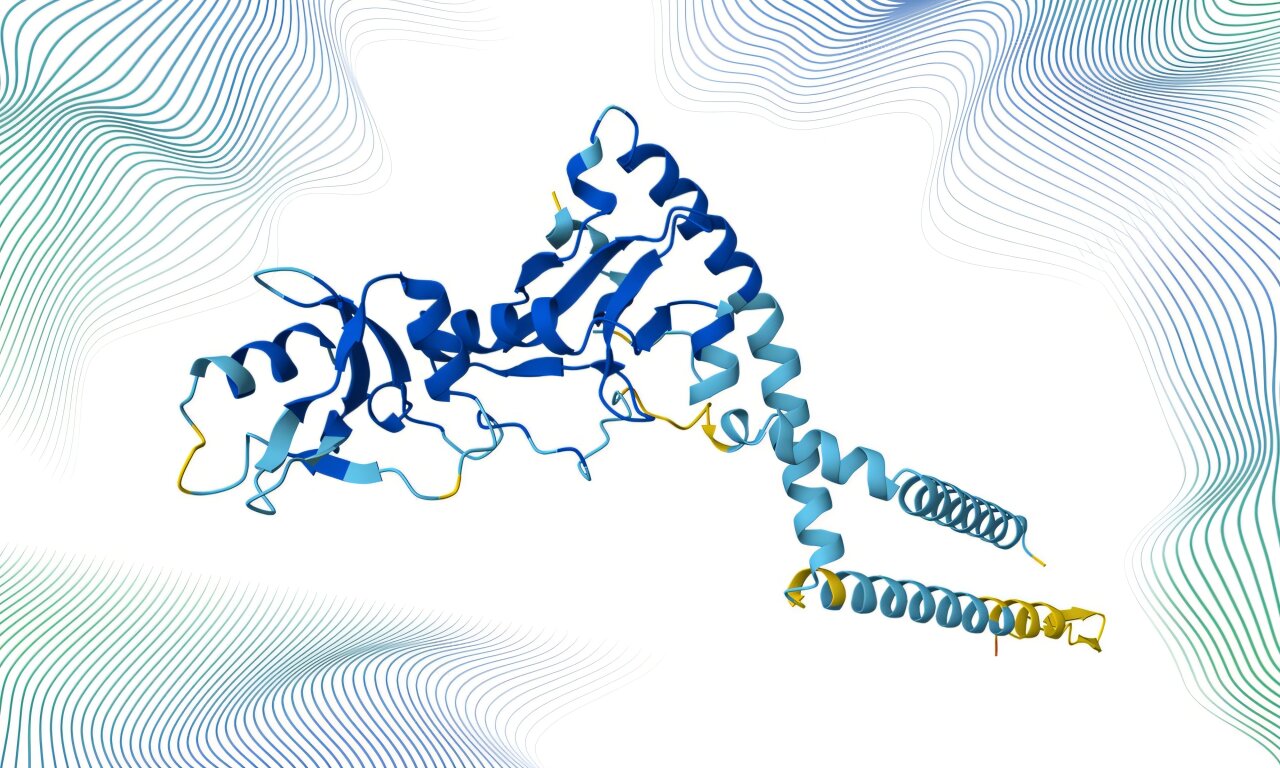
On Tuesday, researchers added more than 8,000 virus protein complexes — pairs of interacting molecules — to the AlphaFold Protein Structure Database, in its biggest virology expansion ever. The proteins come from 23 virus families that infect humans, covering 2,800 viruses including hepatitis B, measles, mpox, influenza, and coronaviruses.
It is part of a new "pandemic preparedness portal" inside the database, which already contains over 260 million predictions and is used by 3.4 million scientists in 190 countries.
Until this year, AlphaFold DB only contained single proteins. But as University of Glasgow virologist Joe Grove notes: "Many viral proteins do not act individually, they act in concert with partners." A virus's spike protein, polymerase, or entry fusion complex — the very targets for vaccines and drugs — only works as a dimer or heterodimer.
Earlier in 2026, the collaboration — EMBL-EBI in Hinxton, Google DeepMind, NVIDIA, Seoul National University, University of Glasgow, Swiss Institute of Bioinformatics, and CEPI — added 1.7 million protein complexes for humans, mice and bacteria. Now viruses.
The technical challenge was huge. Many viruses encode their proteins as long polyproteins that are then sliced. The Swiss Institute had to re-annotate 41,774 proteins to find where one protein ends and another begins. Using AlphaFold2 and NVIDIA's BioNeMo Structure Prediction Pipeline, the team predicted 1.7 million heterodimers and 40,000 homodimers. Only the highest-confidence — 5,279 heterodimers and 2,749 homodimers — entered the main database, though all predictions are released openly.
Crucially, NVIDIA is also open-sourcing the pipeline, so labs anywhere can predict their own viral complexes on GPUs. EMBL-EBI's interim director Jo McEntyre framed it as equity: “They cover lesser-studied viruses and lower the barriers for scientists in low-resource settings, who are confronting outbreaks firsthand.”
In a world where the next pandemic may already be circulating in a bat cave or a pig farm, structure is speed. Knowing the 3D shape of a fusion protein can turn months of lab work into days for diagnostics and antibody design.
AlphaFold started by mapping almost every known protein on Earth. Now it is mapping how viruses work together.