

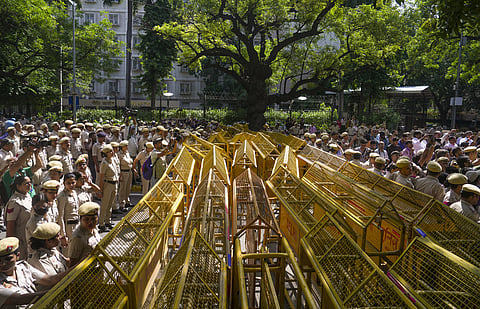
On paper, Jantar Mantar can hold 1,000 protesters. In practice since July, it has held zero. After the Cockroach Janta Party-led protest over electoral roll revision, Delhi Police has denied every permission citing "open calls", crowd uncertainty, and last-minute requests.
Ahead of October 10, the playbook is familiar but upgraded. Police are not just denying permission; they are conducting preventive outreach with PG owners, market associations and RWAs, asking shops to shut 30 minutes early. Facial Recognition System is set to track 2,800 flagged individuals from July protests. Orders to pre-emptively detain under BNS Sections 126 and 170 have been issued.
Read more - Gate Closed, Hunger Ignored
For India, the paradox is stark. Jantar Mantar was designated to protect dissent, to keep it away from Parliament yet visible. Now, by demanding 10-day advance notice, fixed headcounts, and undertakings, the state makes spontaneous democratic expression procedurally impossible.
Youth groups like AISA, AISF, SFI and CJP calling for a Dilli Chalo to demand Chief Election Commissioner Gyanesh Kumar's resignation over Special Intensive Revision (SIR) is a political issue. But the police response is an administrative one - managing law and order. When the administration becomes the gatekeeper of a constitutional right, the line between regulation and suppression blurs.
Read more - Badges Off, Democracy Out
The Indian test for democracy has never been how we handle quiet compliance, but how we handle noisy disagreement.
Tags: Delhi Police, Jantar Mantar, Right to Protest, October 10 Protest, SIR, CEC Gyanesh Kumar, BNS, Facial Recognition, Indian Democracy, CJP