
Mounting questions over electoral sanctity, executive accountability, and the unyielding resistance of the Opposition have brought Indian democracy to an existential crossroads. The brewing storm over Chief Election Commissioner Gyanesh Kumar, compounded by street mobilizations spearheaded by the CJP and student formations, has reignited an urgent debate on institutional autonomy, constitutional credibility, and the sanctity of the ballot.
It remains an enduring axiom of political philosophy that the vitality of a republic cannot be measured solely by the calendar of its polling schedules or the scripted civility of its transfers of power. The living pulse of a constitutional democracy beats neither in the hollow metal of ballot boxes nor in the silicon architecture of electronic voting machines; it thrives in the incorruptible sanctity of the electoral roll, the untethered sovereignty of regulatory institutions, and the uninhibited breath of civic dissent. When dissenting voices rise in New Delhi against Chief Election Commissioner Gyanesh Kumar, and when, on October 10, citizens and youth cadres pour into the capital's boulevards under the banner of the Cockroach Janata Party (CJP) and allied platforms, what unfolds is not a transient political skirmish. It is a profound, structural confrontation with the conscience of the republic itself, at a delicate juncture where the chasm between institutional authority and public trust threatens to become unbridgeable.
The Special Intensive Revision (SIR) of electoral rolls is not, in its abstract conception, an anomaly or an intrinsically flawed enterprise. In any demographically fluid republic, purging voter registries of departed souls, migrated households, and duplicated entries is an imperative of administrative hygiene. Yet a technical purge turns perilous the moment its bureaucratic edge falls, like a blunt guillotine, upon the disenfranchised margins of the eligible citizenry.
Investigative revelations by The Indian Express have stripped this exercise of its routine bureaucratic veneer, demonstrating that Election Commissioners Sukhbir Singh Sandhu and Vivek Joshi formally recorded their dissent in writing on at least fourteen separate occasions over ten months. Their concerns struck at the core of the machine: the velocity of mass deletions, procedural lapses in processing claims, and the opacity surrounding centralized database stewardship. The Election Commission may attempt to domesticate these fractures as standard deliberation culminating in institutional consensus, but official dissents etched into the constitutional ledger remain an indisputable testament that behind the facade of unanimity, the institution was profoundly unsettled.
On the unsparing terrain of cold arithmetic, this purge delineates a chilling landscape, nearly 130 million voter entries earmarked for excision. While the state machinery cloaks this seismic upheaval under the innocuous rhetoric of administrative pruning and post-facto re-registration, the opposition's underlying anxiety is far from hollow: did this statistical deluge quietly wash away the democratic citizenship of millions on the margins? This is the tipping point where rhetorical theater loses all meaning and transparent, forensic auditing of the data becomes a constitutional imperative.
At the epicenter of this institutional malaise lies the creeping shadow of the executive. The 2023 enactment, which excised the Chief Justice of India from the selection panel and installed a triumvirate of the Prime Minister, a designated Union Cabinet Minister, and the Leader of the Opposition, cast a long shadow over the foundational canon of regulatory independence. This asymmetrical arithmetic of two-against-one may not furnish prima facie proof of personal prejudice in any individual appointee, but it irreparably dims the luminous aura of institutional neutrality. The executive's dismissive posturing, insisting that the Commission remains entirely independent and that the opposition is merely nursing the neuroses of electoral defeat, cannot heal this constitutional rupture. Procedural transparency must be laid bare in the sunlight of open scrutiny.
Concurrently, the political opposition must overcome its own strategic myopia. Reducing a deep, systemic crisis to the singular demand for the Chief Election Commissioner's resignation misdiagnoses the malady. The decapitation of a single bureaucrat cannot rectify algorithmic infirmities, flawed data pipelines, or systemic vulnerabilities in the roll-cleansing apparatus. Lamenting electoral defeat as foul play and producing hard, actionable evidentiary proof in a court of law remain two fundamentally divergent undertakings. If the opposition aspires to stand as the authentic guardian of the constitutional ethos, it must move past sensational soundbites and present sworn affidavits, constituency-level discrepancies, and empirical testimonies of disenfranchised citizens before judicial forums.
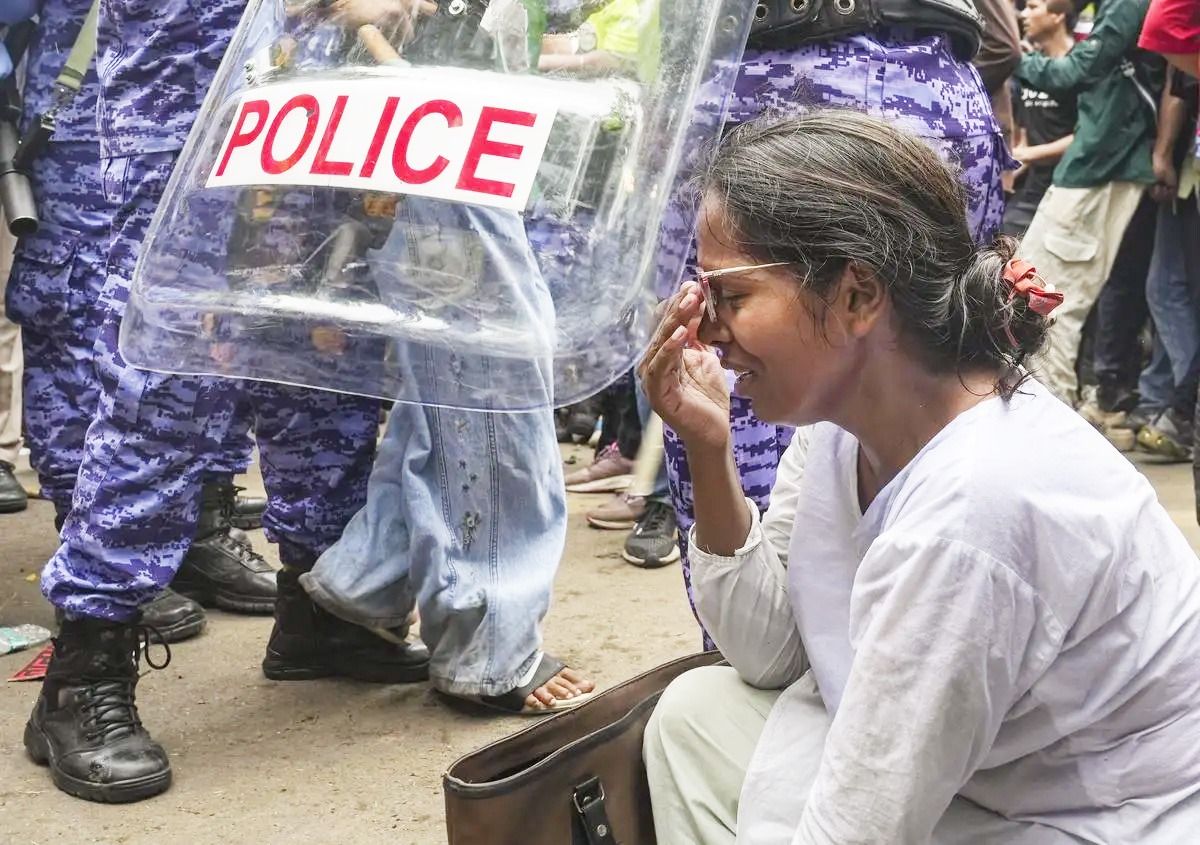
When dissent spilled onto the thoroughfares of Delhi on October 10, the state's apparatus retreated into its familiar, heavy-handed repertoire: sweeping prohibitory edicts, digital blackouts through telecom shutdowns, and preemptive detentions of peaceful demonstrators. Such draconian reflexes ill become the poise of a mature democracy. Constricting the organic channels of assembly and civic expression beneath the convenient rubric of public order betrays an insecure constitutional order. Movements led by civil society and student groups will secure enduring historical resonance only if they transcend targeted personal vitriol and articulate an unyielding blueprint for institutional renewal and comprehensive electoral reform.
This widening impasse is neither a testament to executive infallibility nor an ephemeral whimper born of opposition despair, nor will it find resolution in the ritual sacrifice of an electoral referee. Transcending the claustrophobic arena of partisan combat, this moment serves as a trial by fire for the sovereignty of the citizen's franchise, the eroded credibility of constitutional organs, and the resilience of civic liberty.
For Prime Minister Narendra Modi, perched at the pinnacle of executive authority, this presents a historic moment of introspection. Legitimacy is never sustained by the hubris of parliamentary majorities alone, but by the moral readiness to offer transparent answers when the autonomy of public institutions is called into question. For the opposition, the crucible demands transforming transient political outrage into substantiated, forensic accountability. And for Nirvachan Sadan, this marks the final window to reclaim its institutional stature by demonstrating that its adjudications are forged not under the shadow of the executive, but within the dispassionate, egalitarian light of constitutional law.
In a republic, victory at the polls delivers a mandate to govern; it does not confer an indulgence of immunity from procedural accountability. By the same token, defeat on the electoral battlefield is not an automatic indictment of fraud. Strengthening India's democratic foundations lies neither in arbitrary absolution nor in preemptive condemnation, but in fortifying an unassailable system where the ballot of every citizen remains sacrosanct, every doubt is met with neutral scrutiny, and every constitutional body stands willing to bow before the altar of public accountability. The ultimate vindication of the present dissent will be found not in political destabilization, but in the restoration of institutional integrity, and that remains the supreme democratic test of our republic.