

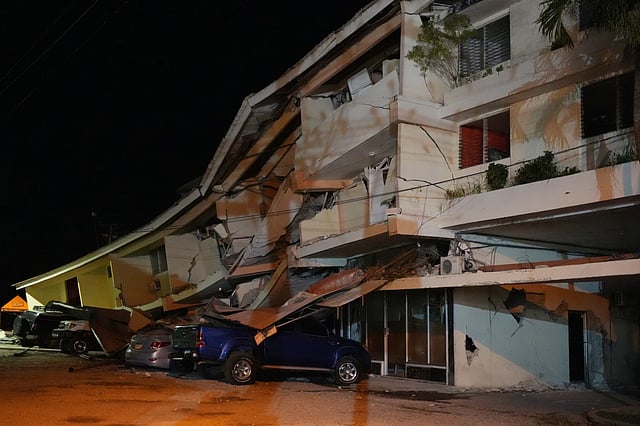
The world shook literally and figuratively on October 10.
In Panama, twin earthquakes of magnitude 7.7 and 6.6 struck southern Panama near Pitaloza Arriba in Herrera province, 6 miles southwest of the epicenter, at 10 km depth. Buildings collapsed in Penonome, vehicles crushed under a hotel. USGS initially reported 8.0 then revised to 7.7 and 6.6. Residents of Panama City gathered outside. "We felt it very strongly. It knocked things over in the kitchen," said Rosendo Dominguez, 60. President Jose Raul Mulino said no deaths documented yet, but warned toll may rise. Over 45 aftershocks, including 5.8 and 5.5, were recorded. Panama, sitting on a complex tectonic boundary, rarely sees such high double quakes.
Read more - Spain says no more evictions
In France, the state's response to student protests came under scrutiny. Fourteen-year-old Eden suffered a broken jaw and smashed teeth when hit by a tear-gas canister at close range by police in Saint-Ouen-l'Aumone. His lawyer Elsa Marcel said an officer approached, hit him with a baton, then another fired a Cougar launcher in his face "without evencalling emergency services." The family has filed attempted murder complaint. The case is one of 24 under investigation by IGPN, the police watchdog, linked to policing of a two-week student unrest over school conditions. The symbolism is stark for France, which prides itself on right to protest.
Read more - France's Tear Gas Test
In Warsaw, Poland's third school attack in less than a week injured three, when a 21-year-old used a "dangerous object" to attack a 17-year-old girl. Police detained 76 people and checked 50,000 schools nationwide.
From tectonic plates to streets, October 10 was a reminder: disasters are natural, but how states respond defines legitimacy, whether in Panama's evacuation, France's policing, or Poland's school safety.
Tags: #PanamaEarthquake #FranceProtests #PolandAttack #StudentProtests #PoliceBrutality #Earthquake #GlobalNews #IGPN #Warsaw #AssociatedPress