

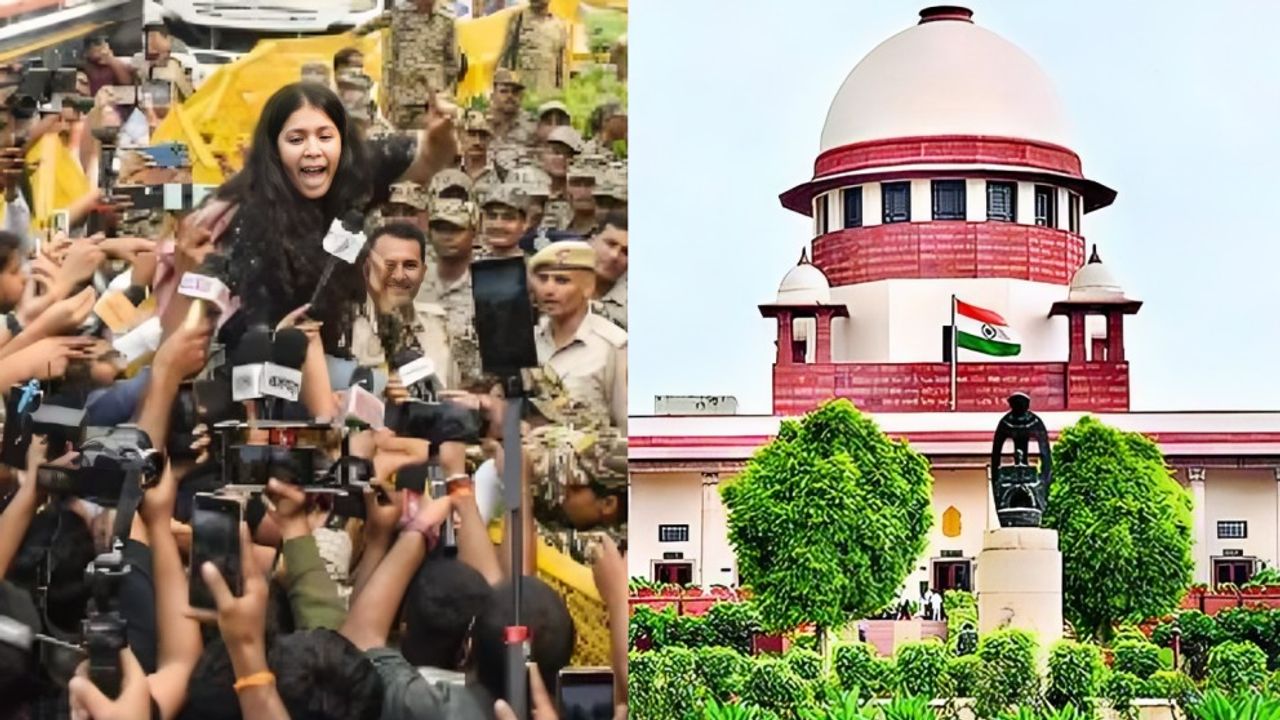
Amid the capital's lockdown, the Supreme Court did what it is meant to do - step in as a check. On Sunday, a bench of Justices Joymalya Bagchi and V Mohana held a special sitting to hear petitions challenging restrictions put in place on Saturday to thwart the Cockroach Janata Party [CJP] protest demanding resignation of Chief Election Commissioner Gyanesh Kumar over alleged SIR irregularities.
The bench's directions were unambiguous: ensure no illegal detentions, allow free movement of people, let Metro and train services function normally, and ensure internet services are not disrupted. The court noted there is "no complete prohibition on movement of Metro/trains" and the detention of protesters, including political leaders, must be justified.
Read more - Jantar Mantar, Shifted
The court issued notice to the Centre, Delhi Police and DMRC to file affidavits and submit compliance reports by 13.10.2026. It said it was prima facie satisfied that petitioners have made out a case.
What is significant is the court's framing. It did not go into the political merit of the CJP's demand for CEC's resignation. It went into procedure - can you shut 45 Metro stations, snap internet, detain a Rajya Sabha MP on the roadside in the name of law and order?
The answer matters for Delhi. Since October 2, Delhi Police has registered over 45 FIRs related to similar protests. On Saturday-Sunday alone, sources say over 20 FIRs were filed for disrupting law and order and obstructing public servants, and over 800 people detained across Delhi and Mumbai.
Read more - Barricades and the Street
The court's intervention restores a balance lost in the last 72 hours: barricades and detentions do not fortify the Election Commission, as The Editorial Page argues today. Transparency does. If the court ensures Metro runs and people are not illegally held, it protects both public order and the right to question electoral rolls.
For the executive, this is a reminder that managing dissent cannot mean disappearing dissent.
Tags: #SupremeCourt #DelhiProtest #CJP #IllegalDetention #Metro #InternetShutdown #GyaneshKumar #DelhiPolice #Article32 #Democracy