

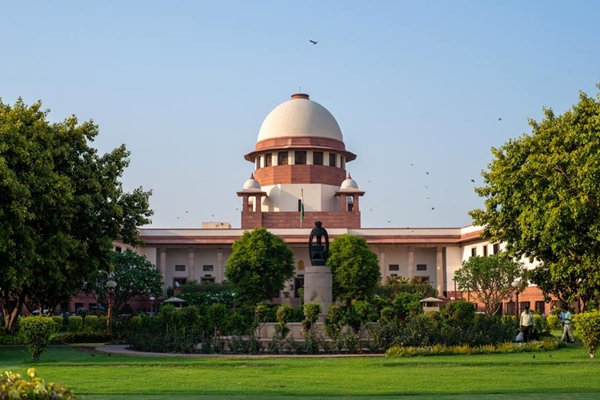
The debate over immunity to CEC, ECs - Text & Context - Supreme Court has recently issued notices to Centre on petition filed by Association for Democratic Reforms (ADR) challenging lifelong immunity granted to Chief Election Commissioner and Election Commissioners (CEC and EC) for actions taken in discharge of official duties.
What is Section 16?
The Chief Election Commissioner and Other Election Commissioners (Appointment, Conditions of Service and Terms of Office) Act, 2023 passed in December 2023 contains Section 16 that provides that no court shall entertain or continue any civil or criminal proceedings against any current or former CEC or EC for actions taken or purported to be taken in discharge of official duties.
Why should provision be removed? Immunity from arrest and criminal proceedings for President and Governors is colonial relic continued in Constitution. It must however be noted that immunity is only during term of office. While Parliamentary privileges are exception to equality, largely confined to actions inside Houses and period when Houses in session. Diplomatic immunity based on functional necessity and reciprocity.
Read more - The Court Draws A Line
The provision granting life-long and unconditional immunity to CEC or ECs was not part of original Bill that was introduced in Parliament. Hence, there is no rationale provided for inclusion of this clause in Statement of Objects and Reasons submitted along with Bill at time of introduction. This clause was added as amendment on day Bill was passed in Rajya Sabha that was subsequently cleared by Lok Sabha and assented to by President.
Union Law Minister while introducing amendment had said it was brought in to enable CEC and ECs to discharge their functions in unhindered and independent manner.
Equal protection of law under Article 14 does provide for creation of separate classifications for application of laws. However, classification for equal protection must not be arbitrary or irrational. It must be based on intelligible and reasonable distinction. Further, classification must have reasonable relation to objective or purpose of legislation.
There are various constitutional and statutory authorities required to discharge functions in independent manner judges, Comptroller and Auditor General, Public Service Commission Chairpersons, Lokpal and Lokayuktas, Information Commissioners. None enjoy such life-long and unconditional immunity for official actions.
The Election Commission (Conditions of Service and Transaction of Business) Act, 1991 which was earlier law that governed terms of office of CEC and ECs did not contain such provision.
In view of these aspects, provision of blanket immunity under CEC & EC Act must not remain in statute books, argues ADR.
Read more - The Roll Reboot
Analytically, timing matters. PIL comes amid SIR controversy, Opposition demanding resignation of CEC Gyanesh Kumar over 47.5 lakh deletions and detention of protesters, and Rahul Gandhi alleging approver offer to CEC. Lifelong immunity if upheld would mean no court can ever examine actions even if mala fide, unlike President who at least faces impeachment process and whose immunity ends.
For democracy, question is whether independence needs impunity. ECI needs protection from frivolous cases during tenure, not forever.
Tags: #CEC #ElectionCommission #Section 16 #SupremeCourt #ADR #Constitutionallmmunity #Article14 #GyaneshKumar #ElectoralReforms #CECAct2023