

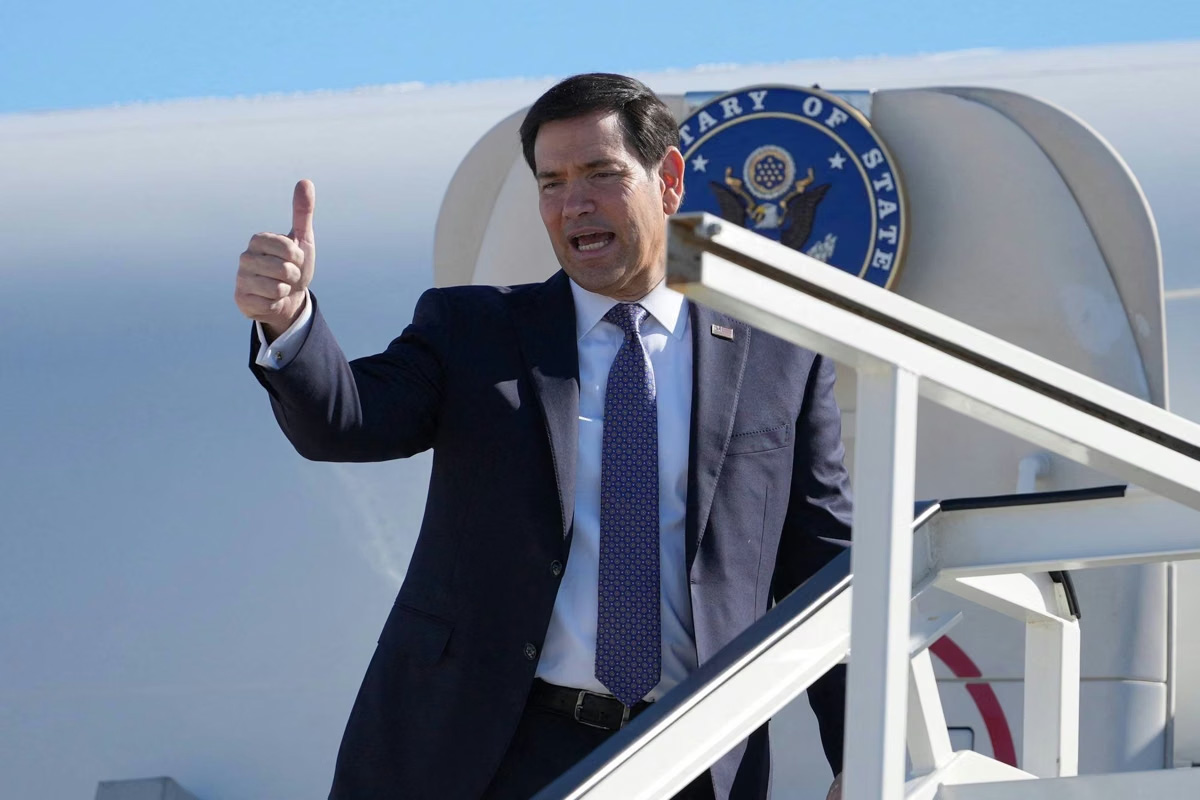
Imagine the scene. In Jamnagar, Gujarat, towering chimneys rise above one of the world's largest refining complexes, transforming crude oil into the lifeblood of modern economies. Thousands of miles away, in Washington, policymakers are recalibrating America's economic and strategic engagement with India. Meanwhile, Elon Musk, one of the world's most influential technology entrepreneurs, takes a public swipe at Mukesh Ambani. And now, US Secretary of State Marco Rubio is visiting Jamnagar, bringing American diplomacy into the orbit of India's energy powerhouse.
Are these developments merely coincidental? Or are they intersecting currents in a larger contest involving global capital, energy security, technological competition and geopolitical influence?
The answer lies in connecting the dots without confusing coincidence with conspiracy.
Read More: Espionage War in the Stratosphere
Musk vs Ambani: The Battle for India's Digital Market
In October, Elon Musk criticised the obstacles facing Starlink's expansion in India and questioned the influence wielded by Mukesh Ambani. Musk suggested that powerful business interests were impeding his company's entry into the Indian market. However, the allegations have not been substantiated by publicly established evidence. The Indian government rejected claims of preferential treatment, maintaining that the companies were at broadly comparable stages of the regulatory process.
At first glance, this appears to be a dispute between two billionaires. In reality, it reflects a much larger struggle over access to India's vast digital economy.
Reliance Jio transformed India's telecommunications landscape by expanding affordable mobile internet access to millions of consumers. Starlink, meanwhile, seeks to establish a foothold in the satellite internet market, offering connectivity that could prove particularly valuable in remote and underserved regions.
Musk invokes competition and consumer choice. Ambani's business empire represents domestic investment, infrastructure development and the expansion of digital services at scale. Yet India's national interest cannot be reduced to choosing sides between two powerful entrepreneurs.
The real test is whether regulation remains transparent, competition is fair, consumers benefit from better services and pricing, and national security considerations are addressed without becoming instruments of commercial protectionism.
Why Jamnagar Matters to Rubio's Visit
Marco Rubio's India visit, scheduled from October 17 to 22, includes Mumbai and Jamnagar. His meeting with External Affairs Minister S. Jaishankar is scheduled for October 20, with energy, trade, investment, defence and emerging technologies among the key areas of engagement.
Jamnagar is significant because Reliance Industries operates a massive refining complex there, making the location central to India's energy-processing capabilities. For Washington, the visit offers an opportunity to strengthen commercial engagement, explore energy cooperation and deepen economic ties with one of the world's largest emerging markets.
Read More: Modi -Trump Reset
Reliance's reported plans for a major refinery investment in the United States add another dimension to the commercial context surrounding the visit.
But a larger question emerges. At a time when Washington wants to expand trade with India, encourage energy cooperation and influence India's approach to Russian oil, can a visit to the country's most prominent private-sector refining hub be viewed purely as an industrial engagement?
Not necessarily. The location gives the visit wider economic and geopolitical significance. Yet it would be premature to conclude that Rubio is visiting Jamnagar to respond to Musk's allegations or to extend political protection to Ambani. There is no established evidence for such a connection.
The more defensible interpretation is that the visit brings several overlapping interests into focus: American investment, India's energy infrastructure, commercial opportunities and the strategic relationship between the two countries.
American Pressure vs India's Strategic Autonomy
Trade negotiations and Russian oil remain important sources of friction in India-US relations. Washington wants its economic engagement with New Delhi to reflect American commercial priorities and broader strategic objectives. India, however, must preserve access to American markets and technology without compromising its energy requirements or independent foreign policy.
This is where Jamnagar becomes more than an industrial destination. It represents the intersection of energy, capital and geopolitical bargaining.
For the United States, India is simultaneously a major consumer market, a potential destination for investment and an important strategic partner in the Indo-Pacific. For India, the challenge is to benefit from this relationship without becoming excessively dependent on American policy preferences.
The same tension is visible in the digital economy. Is India merely a lucrative market for foreign technology companies, or can it also establish the regulatory and commercial conditions necessary for domestic enterprises to compete on equal terms?
The answer should not depend on the identity or influence of individual business leaders. It should depend on transparent rules, competitive markets, technological innovation and the protection of legitimate national interests.
India's Real Test
Rubio's visit could create opportunities for progress on trade, energy investment and technological cooperation. But success for India should not be measured solely by the volume of American investment attracted or the number of commercial agreements announced.
The more important questions are whether India's energy security remains protected, whether competition in its digital markets is fair, and whether cooperation with Washington strengthens rather than constrains India's long-term strategic choices.
The chimneys of Jamnagar tell a story that extends far beyond oil refining. They symbolise an era in which energy, data, capital and diplomacy are becoming increasingly interconnected.
For Washington, India is a vast market and a strategic partner. For Musk, it represents an opportunity to expand satellite connectivity and compete in a major digital economy. For Ambani, it is a landscape of investment, infrastructure and commercial competition.
For India, however, the stakes are considerably higher.
Will India remain merely an attractive marketplace for global powers, or will it acquire the capacity to shape the rules of engagement through its own economic strength, regulatory institutions and strategic choices?
The real significance of Rubio's visit to Jamnagar lies in that question. The answer will depend not on diplomatic photographs or corporate declarations, but on the agreements reached, the concessions avoided and the strategic space India manages to preserve.
The Author is the Editor of Cult Current.
#JamnagarPowerGame #IndiaUSRelations #AmbaniMuskRubio #EnergyGeopolitics #IndiasStrategicAutonomy