

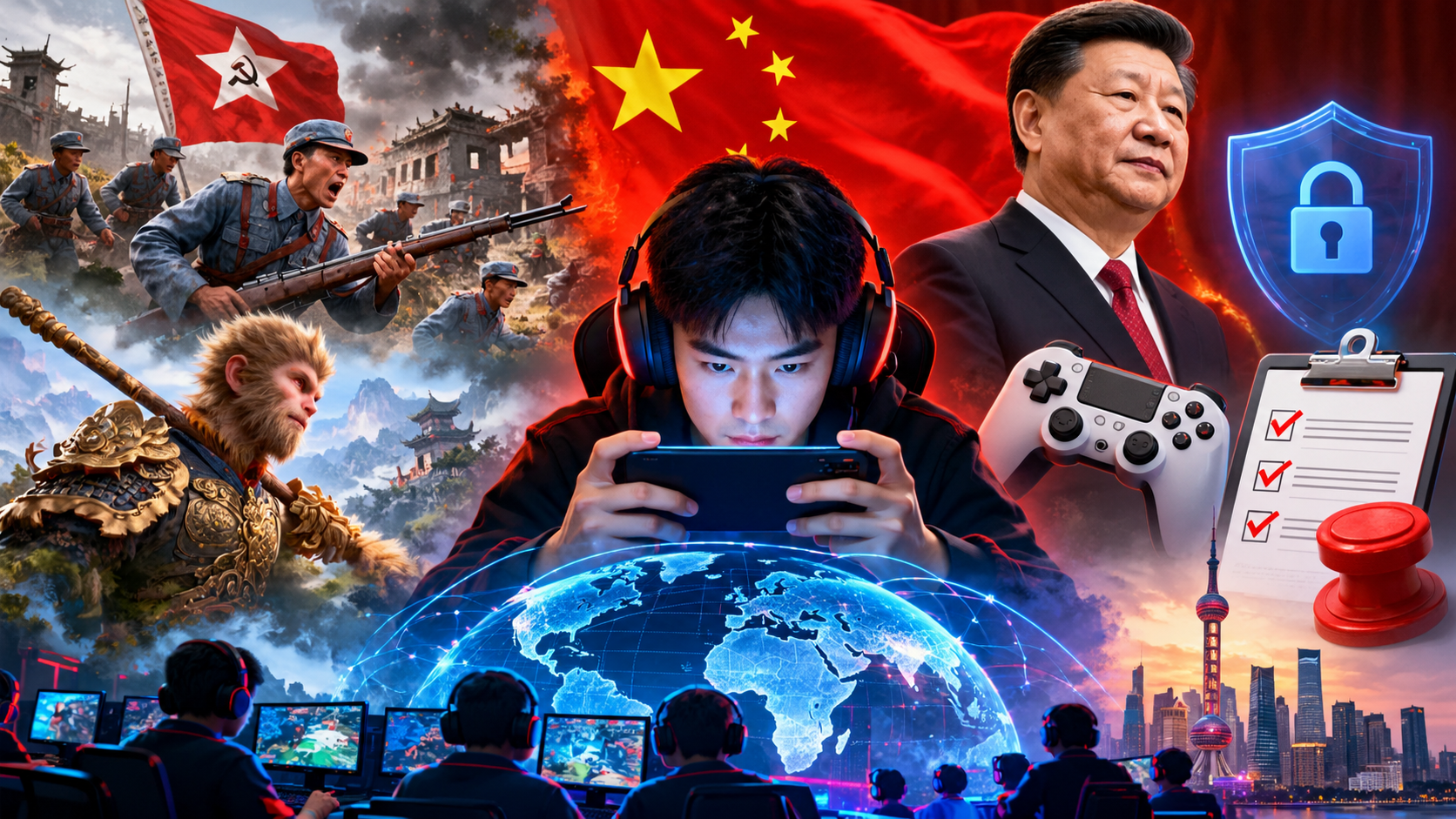
Through video games, China is not only consolidating its grip on the global market but also exporting its culture worldwide. Yet, escalating tension between state oversight and creative freedom remains a defining test for the industry.
The universe of video games hosts endless realms of conflict, adventure, and imagination. In one realm, gunfire echoes across snow-covered forests; in another, legendary figures from ancient civilizations wield mythic powers against formidable foes. Today, this medium has evolved far beyond casual entertainment: it is an emerging frontier of economic dominance, cultural diplomacy, and geopolitical rivalry—a domain where China’s footprint is expanding rapidly.
Home to hundreds of millions of players, China represents one of the largest video game markets on earth. Despite tight state control, pervasive censorship, and exhaustive licensing protocols, Chinese studios are successfully breaking out into international markets, producing titles that captivate gamers across the globe.
When History Becomes Gameplay
An illustrative example of this shift is The Defiant, a project underway in Hangzhou. Set during the 1930s and 1940s, the game centers on the Chinese resistance against invading Japanese forces.
Depicting intense battlefield engagements and period-accurate weaponry, the game addresses a chapter largely overlooked in mainstream global gaming. According to developer Connor Xu, the historical context and arsenal remain unfamiliar to many Western players. His team's objective is to bring these overlooked historical narratives to a global medium.
This transition marks a pivotal departure from the past. For decades, domestic titles heavily mirrored popular Western templates. Now, Chinese developers are drawing directly from their own literature, historical struggles, and cultural touchstones for global audiences.
The implications go far beyond capturing market share; it is a question of cultural projection. Just as cinema, literature, and television have long shaped international perceptions of nations, video games increasingly influence how global audiences perceive a country's heritage and historical identity.
A Market of Hundreds of Millions
In China, gaming is woven into the fabric of everyday life. Played across PCs and smartphones, games serve as primary avenues for social connection and communal interaction. As Xu notes, games offer players the rare freedom to inhabit alternative identities and experience realities unattainable in day-to-day life.
China’s domestic ecosystem developed along an atypical trajectory. A 14-year state ban on gaming consoles between 2000 and 2014 severely restricted the domestic footprint of platforms like PlayStation and Xbox. As a result, PC and mobile gaming expanded rapidly to fill the void.
Today, domestic giants like Tencent and NetEase rank among the most powerful players in global entertainment, expanding their reach not only through internally developed titles but also via major investments and acquisitions across prominent Western studios.
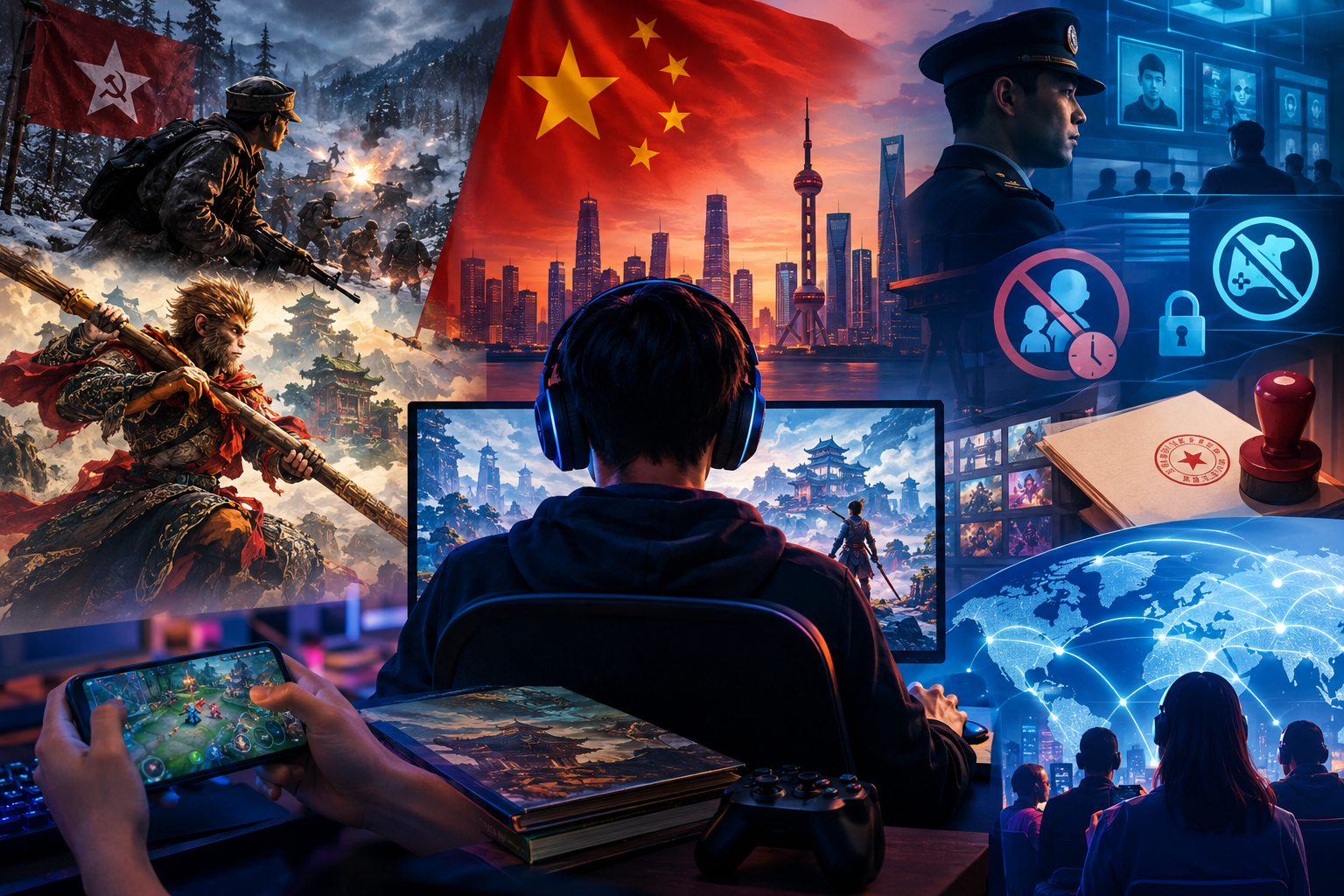
The Architecture of State Control
The defining pillar of China’s domestic gaming ecosystem is its rigid licensing regime. Every title requires official regulatory approval before it can launch commercially, undergoing exhaustive scrutiny for content, thematic framing, and policy alignment.
Regulators justify these interventions on public welfare grounds, arguing that strict measures combat digital addiction and protect minors. Under rules enforced since 2021, minors are generally restricted to an hour of online gaming—from 8:00 PM to 9:00 PM—strictly on Fridays, Saturdays, Sundays, and public holidays.
Compliance is enforced through mandatory real-name identity verification. While effective at enforcing curfew policies, the system fuels ongoing concerns regarding privacy and digital surveillance.
Content guidelines remain equally stringent. Authorities prohibit any themes deemed a threat to national security, territorial sovereignty, or public order, alongside longstanding bans on obscenity and gambling. The breadth and ambiguity of these regulations often leave creators second-guessing approval boundaries, frequently resulting in preemptive modifications or cut content before formal submission.
Black Myth: Wukong and Cultural Export
The 2024 launch of the action role-playing game Black Myth: Wukong signaled a turning point for China’s international gaming stature. Inspired by the classic 16th-century Chinese literary epic Journey to the West, the title achieved massive commercial and critical acclaim across international markets.
Its success demonstrated that deep immersion in Chinese mythology can achieve runaway global success without adapting to Western cultural frameworks. High production values, striking visuals, charismatic characters, and compelling gameplay proved capable of carrying indigenous themes to mainstream global audiences.
For Beijing, this serves as an effective conduit for soft power. Familiarity with a country’s mythological archetypes and folklore naturally sparks wider interest in its heritage. However, commercial success should not be conflated with state messaging: distinguishing between organic cultural storytelling and official state promotion remains vital.
The Shadow of Self-Censorship
Because access to China’s massive consumer base requires regulatory sign-off, international developers frequently modify their releases to comply with local standards. Over time, this market leverage can exert an indirect chilling effect that travels well beyond China’s borders.
Gaming journalist George E. Osborn points to self-censorship as one of the industry's most pressing concerns: studios may preemptively abandon complex narratives or controversial themes simply to preserve market access.
This cautious approach disproportionately risks the representation of historically marginalized communities, such as LGBTQ+ characters, dampening narrative diversity across an interactive medium that millions rely on for empathy and identity exploration.
Balancing local regulation with artistic intent is not unique to China. Many nations enforce boundaries: Germany, for instance, maintains specific restrictions on unconstitutional symbols outside clear educational or artistic exemptions. However, the sheer size of the Chinese market magnifies the commercial incentive for global studios to conform.
Balancing History, Play, and Expression
Connor Xu emphasizes that his wartime project aims to honor historical reality rather than glorify violence. His perspective highlights a central creative dilemma: should a game be judged solely by its combat mechanics, or by its broader historical context and narrative depth?
There are no easy answers. The interplay between historical depiction, gameplay conflict, and thematic messaging requires nuanced evaluation. More crucially, regulatory intervention must not needlessly stifle creative expression.
China’s modern gaming landscape encapsulates this central contradiction. On one front, visionary studios are deploying cutting-edge technology to share rich cultural heritage with the world. On the other, comprehensive state surveillance and regulatory volatility continue to constrain creative independence.
Ultimately, China’s stature in the global gaming sphere will not be defined solely by commercial revenues or active player counts. It will depend equally on whether creators can preserve their artistic voices while navigating state oversight—and whether the global ecosystem maintains space for genuine diversity, imagination, and uncompromised expression.
Credit: This article is based on original reporting by German cultural journalist Christina Rämin-Schneider for DW (Deutsche Welle) Hindi, curated and adapted for readers by the Cult Current editorial desk.