

The RSS at 101, between change and continuity - Editorial page - As Rashtriya Swayamsevak Sangh (RSS) concluded its centenary celebrations on Vijayadashami (October 20) 2026, organisation that began in 1925 as cultural response to Hindu subjugation has grown into one of most influential socio-political forces. It runs 88,949 daily shakhas at 55,683 locations, while one of 32 organisations it inspired, BJP, governs India. Yet its legacy remains deeply contested.
For many liberals, RSS evokes history of exclusion, communalism, ideological bigotry. For supporters, discipline, service, proud assertion of Hindu identity.
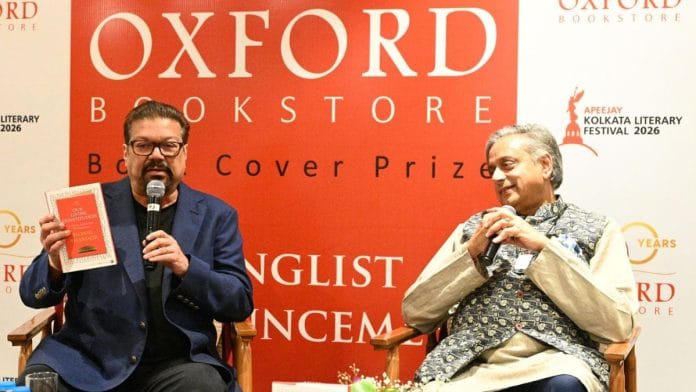
A fourth-term Member of Parliament (Congress) from Thiruvananthapuram, and Sahitya Akademi Award-winning author Shashi Tharoor, writes of duality. Discomfort of secular and liberal Indians with RSS is not without foundation. Organisation's early years marked by conspicuous silence and distancing from freedom struggle. While Congress leaders courted arrest and endured colonial repression, RSS abstained from anti-British agitation, its tactical accommodation with British Raj, and Hindu Mahasabha's with Muslim League in Bengal reflected prioritisation of Hindu consolidation over Indian nationalism.
Read more - Women-Led, Not Women-Only
Post-Independence, RSS's image stained by association, however indirect, with assassination of Mahatma Gandhi. Organisational ban and exoneration, ideological proximity between Nathuram Godse and Sangh Parivar left lasting scar. Subsequently, RSS and affiliates frequently accused of complicity in fomenting communal discord, from demolition of Babri Masjid 1992 to Gujarat riots 2002.
Its intellectual canon too appalling: M.S. Golwalkar, second Sarsanghchalak from 1940-73, praised Nazi Germany's racial policies and commended Hitler's treatment of Jews as model for Hindus in dealing with Muslims. His writings, once central to RSS pedagogy, portrayed minorities as threats to national unity.
Yet to reduce RSS to stereotype of intolerance ignores its vast social footprint. During Partition riots, RSS volunteers played critical role protecting, rescuing and rehabilitating Hindu and Sikh refugees, especially in Punjab. In times of national crisis - wars, earthquakes, floods, landslides - organisation and its social service arm Seva Bharati mobilised swiftly and effectively, often outpacing state machinery. Its educational initiatives, through Vidya Bharati schools and Ekal Vidyalayas, brought basic literacy to remote tribal areas.
Signs of a 'shift' - This duality - ideological bigotry on one hand, genuine civic engagement on other - has long confounded observers. But recent years suggest shift toward more conciliatory posture. Under Mohan Bhagwat, RSS has adopted noticeably softer tone, publicly affirming Islam's place in India - "Islam arrived in India and will remain in India" - and cautioning Hindus against religious provocation, famously urging Hindus to "stop looking for a Shivling under every masjid", notable departure from earlier combative rhetoric. Leadership now reinterprets "Hindu Rashtra" not as majoritarian rule but as inclusive civilisational ethos, quietly omitting from new editions Golwalkar's most incendiary views.
Outreach to Dalits and tribals expanded alongside cautious interfaith dialogue; during August 2026 visit to United States, Bhagwat championed pluralism, declaring that excluding Muslims contradicts Hindutva itself. Concurrently, RSS frames its link with BJP as hands-off: "We only give suggestions," Bhagwat said, distancing organisation from day-to-day decisions.
“Things cannot be achieved through politics alone.”
Still, widespread view among secular liberals that Bhagwat's recent remarks are tactical manoeuvre to make Hindutva acceptable to broader, international audience rather than fundamental change in core RSS ideology.
Tharoor argues test of RSS 2.0 lies in demonstrating commitment to inclusion and protecting India's pluralist traditions. It should clearly oppose initiatives that violate spirit of Places of Worship Act 1991 — particularly temple reconstruction in Mathura and Varanasi, which Bhagwat says RSS itself would not back while swayamsevaks free to join. It should deplore how anti-conversion legislation in Maharashtra shifts burden of proof onto minorities during ordinary acts of worship, prompting churches in Mumbai to require self-attestations before permitting entry to non-Christians. It must demonstrate moral leadership by actively opposing physical attacks on Christians, priests and nuns, prayer meetings and burial grounds, while ensuring law not weaponised against minorities, especially Muslims, through selective first information reports for offering namaz or hasty use of bulldozers against religious structures without due process.
Institutionally, Bhagwat and RSS should sanction leaders of BJP and Sangh Parivar organisations for engaging in hate speech, while expressing his own anguish over why India's communal atmosphere has become increasingly toxic despite decade of inclusive public rhetoric.
Read more - Scholarship Gaps
Next generation watching - There is generational test here, and it may well prove decisive one. Majority of Indians are under 35, and they will judge RSS by what they see it do on street and on their phones. By that measure record is thin: meme pages, troll armies and vigilantes who act against everything Mr. Bhagwat has said, and do so in Hindutva's name, have only multiplied, and it is hard to point to any instance of RSS publicly disowning, let alone disciplining, any of them. If its words meant, young Indians will expect to see them enforced. If they are not, young will draw own conclusions, and organisation that has always prided itself on shaping character of India's youth will have failed one audience that will decide its second century. At 101, both organisation and nation stand at political and civilisational crossroads. While its tone softer and outreach broader, elements within Sangh ecosystem still traffic in hate and exclusion. As RSS's influence grows across institutions, secular Indians face profound dilemma. Acknowledging that cultural nationalism now entrenched does not warrant embracing it, but it does demand engagement. Rather than seeking reconciliation at expense of principle, secular liberals can challenge its inconsistencies, insist on inclusive governance, and achieve coexistence without surrender.
Tags: #RSS101 #MohanBhagwat #ShashiTharoor #Hindutva #SanghParivar #Secularism #Pluralism #HinduRashtra #Centenary