
Uncertainty has always been an intrinsic part of human existence. No matter how advanced we become as a species, whether through our intellectual endeavors or the marvels of technology, the chaotic nature of life persists. The world, as much as we may wish to control it, often defies our attempts to bring order to it. While many today place their hopes in artificial intelligence (AI) to offer clarity in an increasingly complex world, two new books shed light on why this expectation may be misguided. Instead of hoping that AI will tame the chaos around us, they suggest that we might need to embrace the uncertainties that shape our lives.
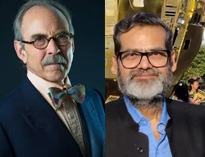
In their books, David Spiegelhalter and Neil D. Lawrence, both professors at the University of Cambridge, explore the fundamental nature of uncertainty and its persistent presence in our daily lives. Spiegelhalter, a renowned statistician, and Lawrence, a specialist in machine learning, draw on their diverse professional experiences to examine how humanity has historically sought to measure, manage, and cope with uncertainty. Their analyses provide a deep dive into how we perceive risk, how trust is built or eroded, and the role of AI in shaping the modern world.
The Enduring Nature of Uncertainty
The English poet George Meredith encapsulated the frustration of uncertainty more than 150 years ago when he wrote, "What a dusty answer gets the soul when hot for certainties in this our life!" This sentiment is at the heart of both Spiegelhalter and Lawrence’s work. The two authors recognize that uncertainty is not just a byproduct of human ignorance or lack of control, but rather a fundamental aspect of existence. Despite our advances in science and technology, uncertainty remains an unavoidable constant.
In his book, Spiegelhalter discusses the historical approaches humanity has taken to measure uncertainty. He explores how different statistical methods, such as frequentist approaches and Bayesian analysis, have been developed to provide a sense of predictability in an unpredictable world. Frequentist methods are useful when risks can be physically defined, such as the likelihood of a coin flip. Bayesian analysis, on the other hand, incorporates subjective risk estimates and is often more adaptable to real-world scenarios, where uncertainty is less tangible.
Neil D. Lawrence brings a different perspective to the discussion, blending his background in machine learning and engineering to explore how uncertainty shapes technological progress. Before his academic career, Lawrence worked as a well-logging engineer on a North Sea drilling platform, where he witnessed firsthand how unpredictable events could disrupt even the most well-planned operations. His experiences in both the corporate and academic worlds give him a unique lens through which to analyze how modern systems, including AI, attempt to grapple with uncertainty.
Trust in the Age of Uncertainty
A central theme that unites both Spiegelhalter and Lawrence's works is the idea of trust. In a world full of uncertainties, trust becomes a critical currency. Without trust, societies cannot function smoothly. Whether it’s trust in governments, institutions, or individuals, this intangible but essential element holds societies together.
Spiegelhalter draws on the work of philosopher Onora O’Neill, particularly her concept of "intelligent transparency." According to O'Neill, for policymakers to foster trust in the face of uncertainty, they must be transparent in a meaningful way. This means not just sharing information but presenting it in a way that allows the public to understand and engage with it. Spiegelhalter argues that this kind of transparency is essential for building trust, especially in an era where misinformation can spread rapidly.
Lawrence also touches on the importance of trust, particularly in the context of AI. Since the rise of generative AI models like ChatGPT, there has been much debate about whether these systems can be trusted. These models process vast amounts of human-generated data and produce responses that often appear thoughtful and accurate. But Lawrence questions whether this trust is warranted. He invokes O'Neill’s argument that trust is not intrinsic to systems, but rather must be earned by the people who operate them. If AI models are divorced from human oversight, how can they be trusted to make decisions that affect our lives?
The Rise of Generative AI
The launch of ChatGPT in late 2022 marked a turning point in public discourse around AI. Generative models like ChatGPT have become a focal point for debates about the future of technology and its role in society. These models generate text and visual responses based on massive amounts of data, leading many to believe that AI could bring order to the chaos of modern life.
However, both Spiegelhalter and Lawrence caution against placing too much faith in these systems. AI models, they argue, are tools created by humans, and like any tool, they have limitations. They are designed to produce plausible-sounding responses, but they do not have a true understanding of the world. This distinction is critical because it means that AI cannot offer the kind of certainty that many hope it will. If anything, relying too heavily on AI could lead to greater uncertainty, as these models are not infallible and are prone to producing misleading or incorrect outputs.
Laplace’s Demon and the Limits of Predictability
At the core of both books is a discussion of the famous thought experiment known as “Laplace’s demon.” In 1814, French philosopher Pierre-Simon Laplace imagined a demon with perfect knowledge of the universe’s present state, including all forces of nature and the positions of every atom. With this knowledge, the demon could predict the future with absolute certainty, rendering the concept of chance obsolete.
Laplace’s demon represents a deterministic view of the universe, where everything follows a predictable path. However, both Spiegelhalter and Lawrence argue that our world is far from deterministic. Despite our best efforts to understand and control our environment, uncertainty persists. Lawrence refers to this reality as “Laplace’s gremlin,” a nod to the fact that unpredictability remains a defining feature of human life. No matter how sophisticated our tools become, there will always be factors beyond our control—whether it’s blind chance, luck, or ignorance—that shape the course of events.
Embracing Uncertainty
Ultimately, both authors come to a similar conclusion: uncertainty is here to stay. While we can develop better tools to manage risk and navigate complexity, we cannot eliminate uncertainty entirely. This realization forces us to reconsider our relationship with uncertainty. Rather than trying to banish it, we must learn to live with it. Trust, transparency, and human oversight will remain crucial as we move forward into an increasingly unpredictable world.
In a time when many are looking to technology to bring clarity and control, Spiegelhalter and Lawrence offer a sobering reminder that uncertainty is not something we can ever fully escape. It is an inherent part of the human condition, and learning to navigate it—rather than conquer it—may be the key to thriving in the 21st century.
Taming Uncertainty: Navigating the Unpredictable with Spiegelhalter's Insights
Uncertainty, an intrinsic aspect of human existence, has captivated scholars, scientists, and philosophers for centuries. It is not simply an abstract concept but a real, tangible force that impacts our daily lives and decisions. In "The Art of Uncertainty," David Spiegelhalter explores humanity's ongoing struggle to understand, manage, and make sense of the unpredictable world around us. Through the lens of probability theory, he presents an engaging analysis of how we grapple with uncertainty, highlighting its profound effects on our perceptions, choices, and models of reality. Spiegelhalter's work sheds light on how probabilities are intertwined with both randomness and our own ignorance, offering readers a deeper understanding of the complex forces that shape our futures.
Personalizing Probability and the Nature of Uncertainty
One of Spiegelhalter's core arguments is that probability is not an external, objective force that exists independently of human observation. Instead, it is highly personal and shaped by our experiences, knowledge, and biases. This perspective challenges the traditional view that probabilities are purely mathematical constructs waiting to be discovered. Rather, they represent our relationship with uncertainty, reflecting the degree to which we are conscious of our own ignorance.
To illustrate this point, Spiegelhalter introduces a classic example: the simple act of flipping a coin. In this scenario, he explains that two types of uncertainty are at play. The first is aleatory uncertainty, which refers to the inherent randomness of an event like a coin toss. The second is epistemic uncertainty, which arises from a lack of knowledge about an event that has already occurred (such as whether the coin has landed on heads or tails). While we can model the probability of a coin landing on heads or tails (aleatory), we cannot know the outcome of a particular toss unless we directly observe it (epistemic).
Spiegelhalter uses this example as a gateway to understanding how we can use statistical analysis to reduce uncertainty in more complex scenarios. For instance, when rolling a six-sided die, we know that each side has an equal chance of landing face-up. This straightforward frequentist approach, based on past outcomes, allows us to narrow the range of possible future outcomes. However, the situation becomes significantly more challenging when the outcome cannot be clearly defined by physical constraints or when human behavior is involved.
The Limitations of Models and the Role of Game Theory
Spiegelhalter emphasizes that while models can help us navigate uncertainty, they are not perfect representations of reality. A model, like a map, is a useful abstraction that simplifies the world, but it can never capture all of its complexities. This insight is crucial when dealing with human behavior, which is often difficult to predict with accuracy.
For example, game theory has added rigor to our understanding of strategic decision-making, particularly in situations where individuals must respond not only to others' actions but also to their expectations of those actions. Yet, as financier George Soros demonstrated, reflexive behavior—where individuals' actions are influenced by their expectations of others' actions—creates a recursive loop that pushes the boundaries of our predictive capacity. This feedback loop adds an additional layer of complexity, making it even harder to model and predict human decisions.
Spiegelhalter reminds us that all models, no matter how sophisticated, are inherently limited. They are approximations of reality, not reality itself. This acknowledgment of the imperfection of models is a central theme in his work, highlighting the need for flexibility, skepticism, and continuous reassessment when dealing with uncertainty.
The Power of Bayesian Analysis
One of the most powerful tools in probability theory, according to Spiegelhalter, is Bayes' Theorem. Formulated by the English minister Thomas Bayes in the 18th century, this theorem revolutionized the way we think about probabilities. At its core, Bayes' Theorem allows us to update our beliefs in light of new evidence. It relates the prior probability (our initial assessment of the likelihood of an outcome) to the posterior probability (the updated likelihood after considering new evidence).
Spiegelhalter demonstrates the practical applications of Bayes' Theorem through thought-provoking examples. For instance, why might more vaccinated individuals die of COVID-19 than unvaccinated individuals? At first glance, this might seem counterintuitive. But through Bayesian reasoning, we can account for the fact that, in a population where most people are vaccinated, there will be more vaccinated individuals overall, and hence, a greater absolute number of deaths in this group, even though the risk of death for vaccinated individuals is lower.
Another example involves police imaging software that flags potential threats. Using Bayesian analysis, we can assess the likelihood that a person flagged by the software is actually a threat, considering factors like the overall accuracy of the software and the prevalence of threats in the population.
These examples underscore a key point: probabilities are not always a function of physical properties, like those of a coin or a die. Often, they are shaped by subjective expectations and interpretations of evidence. Bayes' Theorem provides a framework for incorporating this subjectivity into our analysis, allowing us to refine our understanding of uncertainty as new information becomes available.
Cromwell’s Rule: Embracing Uncertainty
Despite the power of probabilistic reasoning, Spiegelhalter acknowledges that our ability to tame uncertainty is inherently limited. He draws attention to Cromwell’s Rule, which cautions against assigning probabilities of zero or one to any event unless it can be shown to be logically impossible or certain. Named after Oliver Cromwell’s 1650 plea to the General Assembly of the Church of Scotland, the rule serves as a reminder to remain open to the possibility of error and reassessment, especially in complex, real-world situations.
In practical terms, Cromwell’s Rule warns us not to be overly confident in our predictions. Even when probabilities seem low, there is always a chance that the unexpected will occur. Spiegelhalter uses this rule to highlight the dangers of absolute certainty in an uncertain world. Outside the realm of formal logic, where outcomes can be clearly defined, there is always room for doubt, ambiguity, and surprise.
Embracing the Uncertainty of Life
In "The Art of Uncertainty," David Spiegelhalter offers a compelling exploration of how we perceive, model, and navigate the unpredictability of life. By blending statistical analysis with philosophical insights, he invites readers to embrace uncertainty as an inescapable part of the human condition. Rather than seeking to eliminate uncertainty, we must learn to live with it, using tools like Bayesian analysis and game theory to make more informed decisions. At the same time, we must remain humble in the face of uncertainty, acknowledging the limitations of our models and our knowledge.
Ultimately, Spiegelhalter’s work serves as a reminder that uncertainty is not something to be feared but understood. In a world where unpredictability is the norm, the art of uncertainty lies in our ability to adapt, reassess, and navigate the complexities of life with curiosity and openness.
The Trusting Animal: Expanding the Concept of Human Intelligence in a World of AI
In his insightful exploration of human intelligence and artificial intelligence, Spiegelhalter's reflections in The Art of Uncertainty present a nuanced argument against radical uncertainty. While Frank Knight and John Maynard Keynes famously argued that there are circumstances where “we just don’t know,” Spiegelhalter offers a different perspective on this human relationship with unpredictability. He rejects the notion that we are entirely blind to the future, suggesting instead that uncertainty exists as something manageable, though not entirely controllable. By emphasizing a personal connection to uncertainty, Spiegelhalter reaffirms the limits of formal analysis but does not abandon it entirely. His argument is both philosophical and practical, revealing how humans approach the unknown and how subjective probabilities shape our understanding of events.
Spiegelhalter's “personal conclusion” illuminates the tension between analytical rigor and the need for adaptive thinking in the face of deeper, ontological uncertainty. This kind of uncertainty transcends the simple unknown and touches upon the inherent unpredictability of existence itself, which is governed by the laws of nature. The second law of thermodynamics, for instance, illustrates how order inevitably gives way to randomness in a closed system. Spiegelhalter accepts this entropy as a part of life and insists that rather than relying solely on formal models, humans must develop strategies that can adapt to both foreseeable and unforeseeable outcomes. In this way, uncertainty becomes not something to fear but a challenge that humanity has been dealing with throughout history.
This relationship between uncertainty and adaptability is central to Lawrence’s work in The Atomic Human, where he examines the human essence in the context of technological advancement, particularly in the field of artificial intelligence (AI). Lawrence draws a comparison between Spiegelhalter’s analysis of human intelligence and the adaptability required to thrive in an uncertain world. He introduces the idea of the “atomic human,” a metaphorical concept highlighting human intelligence as something that emerges from our ability to adapt to unpredictable conditions. Lawrence’s analysis bridges the gap between AI and human cognition, raising a core question that permeates the history of technology: can machines ever truly replicate human intelligence?
The Limits of Formal Analysis and the Power of Adaptability
One of the most compelling examples of this adaptability is seen in General Dwight Eisenhower’s decision-making process on the eve of D-Day during World War II. As the commander of Allied forces, Eisenhower had access to a vast amount of intelligence, including the critical decrypts of German ciphers cracked by Alan Turing and his team. However, even with all the available information, Eisenhower had to make a judgment call based on uncertainty. In making this decision, he embodied the “atomic human” by acknowledging the limits of formal analysis and embracing the unknown with personal conviction. Eisenhower’s reflective act of writing a memorandum accepting full responsibility in the event of failure serves as a powerful testament to human intelligence's capacity to navigate uncertainty through trust and decision-making, rather than cold calculation alone.
This episode resonates deeply with Lawrence’s broader thesis about the role of intelligence in human history. He argues that human cognitive power evolved through natural selection to deal with the unpredictability inherent in the environment. Over time, humans developed the ability to communicate complex narratives, sharing knowledge and experiences to build trust and cooperation within societies. This capacity for communication and narrative construction is what sets humans apart from machines. It is an evolutionary trait that allows us to form “theories of mind,” meaning we are capable of modeling other people’s thoughts and intentions—something that artificial intelligence, at least in its current form, cannot replicate.