

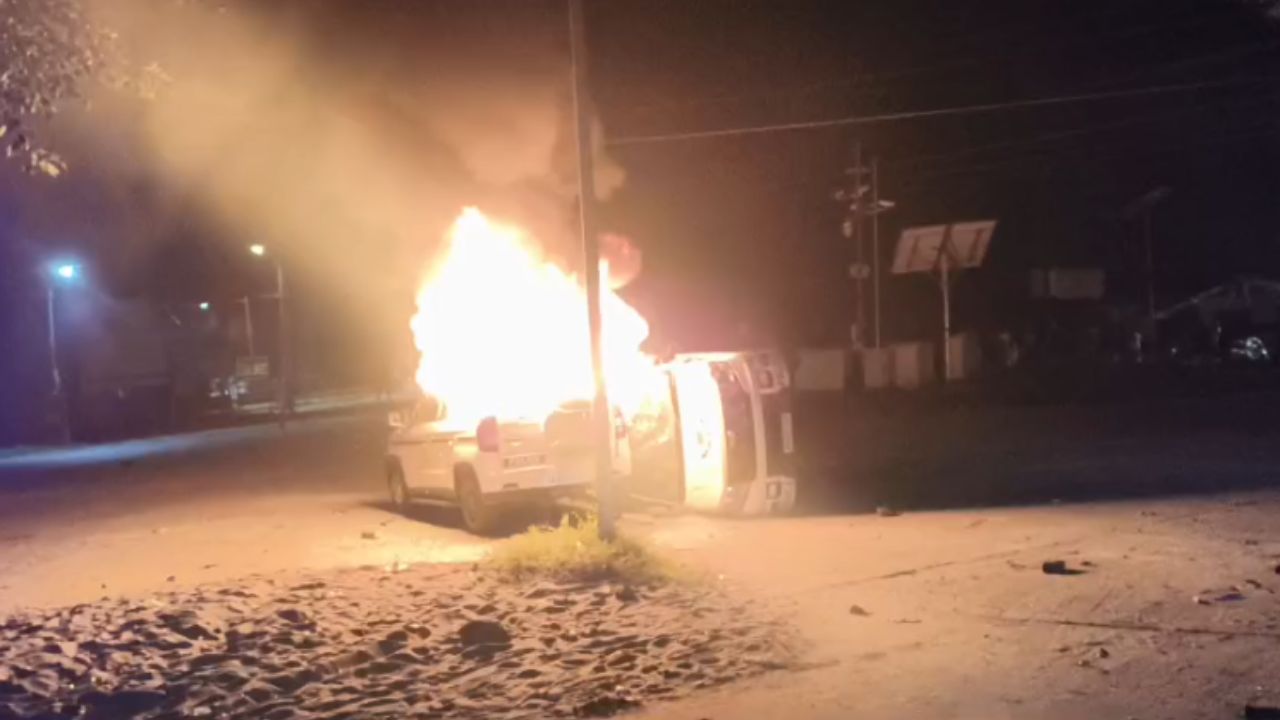
Pasighat burned on Friday night. What began as a 12-hour bandh called by anti-dam groups to oppose the Upper Siang Multipurpose Dam turned into Arunachal Pradesh's worst political violence in years. By Saturday morning, residences of MLAs Ninong Ering and Oni Panyang and state BJP president Kaling Moyong had been vandalised. An NHPC office, a police station and police vehicles were set on fire in East Siang. Four women were injured when security personnel fired tear gas to disperse protesters demanding release of 10 detained activists.
Chief Minister Pema Khandu, calling the incidents regretful, said the bandh was largely peaceful except Pasighat. He said the government was open to discussion with all organisations on concerns around the project of public sector NHPC.
Read more - The Siang Paradox
Upper Siang is not just another hydel project. At 11,000 MW, it is India's largest proposed dam, a strategic storage dam designed to counter China's 60,000 MW Medog dam on the Yarlung Tsangpo just across the border. It would store 9 billion cubic metres of water, giving India leverage to prevent China from weaponising water flow in dry season or releasing flood in monsoon. The dam would submerge an estimated 300 villages in the Siang Valley, homeland of the Adi tribe, whose identity is tied to the river.
That duality — strategic necessity versus cultural survival — is at the heart of the unrest. Villagers fear loss of farmland, forests and sacred sites. They point to lack of gram sabha consent under PESA Act, which mandates tribal consultation. NHPC says it has only done survey, no land acquired, but trust is low after Lower Subansiri project delayed 20 years, cost overrun 5 times.
For Delhi, Upper Siang is critical for two reasons. Energy: India needs 50,000 MW hydropower potential of Arunachal for net-zero 2070 target; hydro is only reliable peaking power for grid balancing solar and wind. Security: Without storage, China's dam can reduce Siang flow by 40% in lean season, hitting Assam and Arunachal.
Khandu's line — consensus key to dam project — echoes Narmada Bachao lesson. Forcing dam without social audit will invite insurgency in a sensitive border state where China already claims Arunachal as South Tibet. The state has witnessed similar agitation in Dibang Valley against 2,880 MW Dibang Multipurpose Project.
Analytically, the violent turn helps no one. Torching MLA houses shifts narrative from legitimate tribal rights to law-and-order, allowing Centre to justify central forces. For Adi community, which had peacefully protested for two years with memorandums to Governor, violence risks delegitimising movement.
Read more - The Doctor Who Stayed
What next? High-level committee formed in 2023 for Article 370 safeguards is still negotiating constitutional protections for Arunachal. If Upper Siang proceeds without credible rehabilitation package — land-for-land, revenue sharing, cultural preservation — protests will intensify. If it is shelved, India loses its only counter to China's water bomb.
For India, solution lies in transparency: publish Detailed Project Report, hold public hearings in Adi language, offer 10% free power to affected families as done in Sikkim, and make NHPC accountable, not just contractor.
*Tags:* #UpperSiang #ArunachalPradesh #Pasighat #NHPC #PemaKhandu #NinongEring #AdiTribe #Hydropower #ChinaDam #SiangValley