

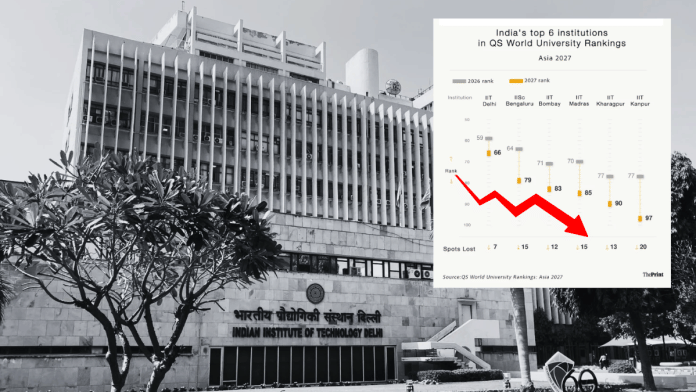
In QS Asia University Rankings 2027, Indian universities slipped again. No Indian institute in top 50. Best is IIT Delhi at 57, Bombay at 63, Madras at 71. In 2023, three were in top 50.
China has 7 in top 10. Singapore's NUS is No 1. Even Malaysia's University Malaya at 32 beats us.
Parameters: academic reputation (30%), employer reputation (20%), faculty-student ratio, citations, international faculty/students.
Why India lags? Research impact. India's citation per paper 8.2 vs 14.3 global average. Funding: India spends 0.6% GDP on R&D vs China 2.4%, Korea 4.8%. Faculty shortage: IITs have 35% vacancies. International faculty: less than 2% vs 25% in Hong Kong.
Delhi University ranked 115, improving from 124, but still low. Its international student ratio is 0.5%.
The report notes Indian universities score high on employer reputation (industry loves IIT grads) but low on international outlook and research.
For policy, this is red flag. NEP 2020 promised foreign universities, more PhDs, but implementation slow. R&D budget cut in real terms. 71% of IIT budget goes to salaries, not labs.
Analytically, QS favours English-speaking, research-heavy systems. Indian universities focus on teaching, not research. Also, no incentive for top faculty to publish high-impact, as promotions based on seniority.
Solution: give autonomy, allow higher foreign faculty pay, increase research grants tenfold, and count social impact not just citations. Tamil Nadu's 71% women's employment shows inclusion can be metric.
Until then, Indian students will continue to pay Rs 40 lakh for Masters abroad, while our top institutes struggle to break top 50 in own continent.
Tags: #QSRankings #Asia2027 #IITDelhi #IISc #IndianUniversities #ResearchFunding #NEP2020 #HigherEducation #Citation