
The vermilion soil of Jharkhand, once clothed in verdant life, now stands as witness to the tribals’ anguish and destitution. Here, the rays of progress have yet to penetrate, and the indigenous communities, though bound to their ancestral roots for centuries untold, remain deprived of modern healthcare.
Here, healthcare is sustained by the crutch of the cot, and each day finds expectant mothers embarking on a precarious journey, gazing into the very maw of mortality, yet clinging to the hope of bringing forth their child.
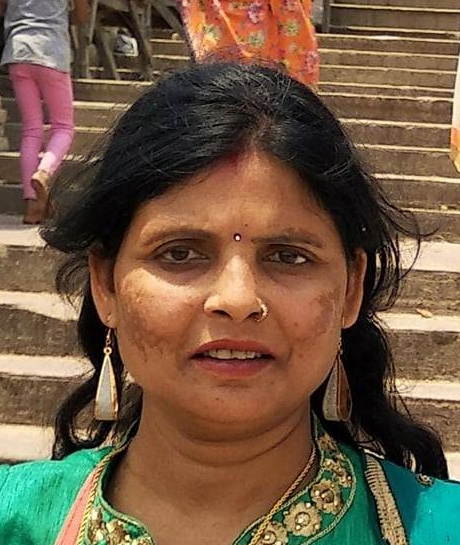
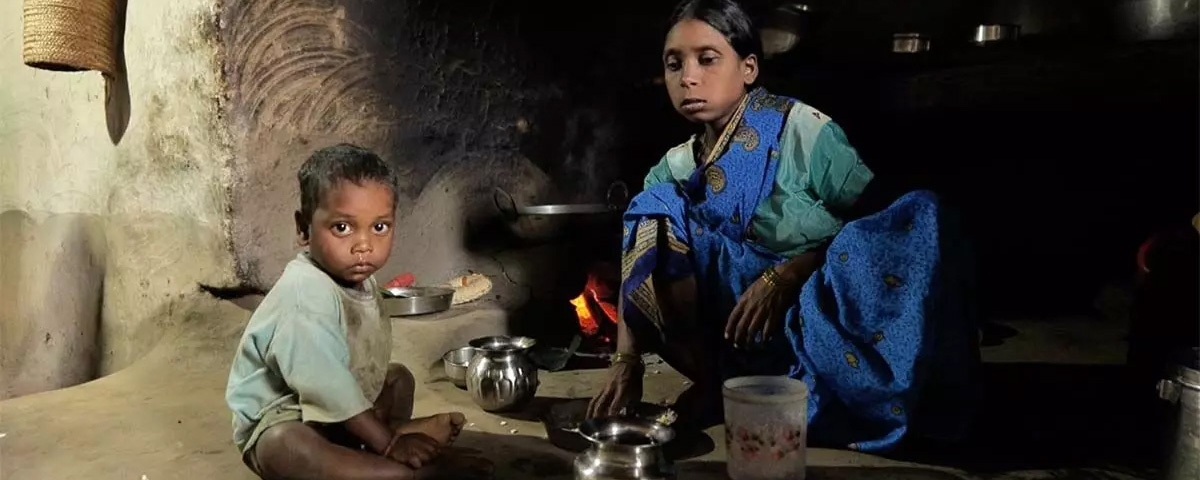
On the morn of the seventeenth of October, in the year of Our Lord two thousand and twenty-four, such was the dawn for Amarmuni Nagesia, a woman eight months gravid with child. This morning was not merely the commencement of a day, but a dire decision to wager two lives. On one hand lay Amarmuni’s own mortal coil, and on the other, the nascent life within her womb, yearning for the light of the world it had yet to behold. Amarmuni tenderly fed her son, a mere two and a half years of age, unaware that his mother was about to undertake a journey from which there was no assurance of return. She steeled herself, this preparation not for revelry, but for a harrowing pilgrimage.
This preparation was to endure a four-hour passage, seated in a basket borne towards the hospital. This basket was no opulent palanquin, but a makeshift contraption of wood and rope, to be carried in turn upon the shoulders of four men. For Amarmuni, this was no novel circumstance; two and a half years prior, when her first child was nigh, she had faced like tribulation.
This is not merely Amarmuni’s tale, but the plight of thousands of tribal families in Jharkhand, for whom healthcare remains a chimera, more distant than any dream. This narrative embodies the bitter truth of Bharat, where every tenth child is brought forth without the aid of physician, nurse, midwife, or any other health practitioner, thus bereft of any form of medical succor at the time of birth.
When we speak of the indigenous peoples, the state of affairs is yet more dire. The figures from the National Family Health Survey of 2019-21 reveal that in the tribal community, nigh every sixth child is delivered sans the aid of any trained medical person. Jharkhand, where two and thirty tribes reside, among whom eight are categorized as Particularly Vulnerable Tribal Groups, sees the fifth highest number of such births in the whole of the nation.
According to a report of the Comptroller and Auditor General (CAG) of India in the year of Our Lord two thousand and seventeen, "Due to the absence of healthcare services and want of transportation, the vulnerable tribal communities are deprived of timely access to healthcare." According to the census of the year of Our Lord two thousand and eleven, the population of tribal peoples in the state numbers six and eighty lakhs, which constitutes six and twenty percent of the state’s population. This figure is three times greater than the national statistic of six and eighty percent.
Sukdev Nagesia, the father of Amarmuni Nagesia, together with two other villagers, fashioned a palanquin from a wooden basket and secured it to a bamboo pole with ropes. Amarmuni was to be conveyed to the Mahuadar Community Health Centre, some seven kilometers distant from her village, for antenatal examination. Amarmuni Nagesia, a woman of six and twenty years from the Kisan tribe, was soon to give birth to her second child.
Guwalkhar village lies ensconced amidst the forests of Mahuadar Block, in the Latehar district, approximately one hundred and seventy-eight kilometers from Ranchi, the capital of Jharkhand. The village numbers some fifteen hundred souls, the greater part being farmers, Korwa and Birjia tribals. For these communities, to journey to Mahuadar means to traverse perilous paths, where even a bicycle dare not tread. In inclement weather, and when the rains descend, this path becomes fraught with yet greater peril.
According to the "Tribal Health in India" report, only eight and seventy percent of tribal women receive but a single antenatal examination, whereas a mere fifteen percent receive three such examinations. This is the lowest rate among any community in the nation.
Amarmuni ensconces herself in the basket, and two villagers take up the burden and set forth. Great stones, thorny thickets in places, to scale the mountain is no easy feat. After nigh two hours of unremitting progress, they pause to rest in a single place. Weary and exhausted, lines of anxiety are etched upon their faces.
Sukdev speaks: "Here the conditions are grievous. The rain which descended last night has rendered the path more treacherous. Should one slip, who knows what might befall mother and child?" In his voice are manifest both fear and resignation.
The local community health worker, Pyari Negesia, speaks: "This is commonplace in Jharkhand. Here, particularly for tribal communities living amidst the forests, the health center is far beyond reach." Pyari, herself issuing from this community, has witnessed these tribulations with her own eyes.
Recalling an incident of May in the year of Our Lord two thousand and twenty-three in Guwalkhar, the six and forty-year-old community health worker recounted that a woman had given birth at home. Suffering severe hemorrhaging, she was conveyed to the Mahuadar Primary Health Centre. Her condition being critical, she was referred to the Latehar District Hospital, some ninety kilometers distant from that place. But from grievous blood-loss, she perished in the hospital. Even now, in Pyari’s eyes, the pain of that day remains fresh.
Pyari related, 'Three years past, when yet another woman endured grievous pangs of parturition, she too was borne to the hospital in like manner, cradled in a basket. When her throes intensified, she was compelled, with the assistance of the women of the village, to deliver her babe in the midst of the forest.'
According to the 'Tribal Health in India' report, more than a fourth part, yea, some twenty-seven percent, of tribal women bring forth their children at home, a proportion higher than all population groups.
Pyari, who accompanied Amarmuni upon this four-hour pilgrimage along the perilous and slippery mountain path, stated that such a state of affairs is commonplace in districts such as Chaibasa, Gumla, Sahibganj, Pakur, Simdega, Khunti, and even the state capital of Ranchi. In these regions, the indigenous peoples are oft compelled to rely upon such arduous paths and the succor of fellow tribals in order to access medical facilities. Thus, a vicious circle is formed, wherein poverty and destitution, the remoteness of healthcare, and death are intertwined.
When asked how long this difficulty in accessing healthcare had persisted, Sukdev responded, 'This has continued for more than two or three generations. The absence of a road has ever been the source of woe. We have importuned for a road without surcease, yet the situation remains unchanged. For want of a road, people perish. Three or four children from our village have already fallen. In the year of Our Lord two thousand and twenty-one, my wife was stricken with paralysis. Lacking the resources to procure her treatment, she too passed. What can we do?' Sukdev’s query is a lamentation, calling into question the very claims of progress.
These tribulations are not confined to Jharkhand alone. On the twenty-seventh of September past, a pregnant woman in the village of Pinjarikonda in Andhra Pradesh was forced to cross a stream overflowing from a dam in order to be conveyed to a hospital. Each year, manifold such incidents come to light, exposing the lamentable condition of healthcare in the remoter regions of the nation.
In forest villages such as Guwalkhar, the absence of roads is a matter ensnared amidst bureaucracy and environmental regulations. It is a complex conflict between progress and preservation, wherein the indigenous communities are most gravely impacted.
A joint survey conducted in the year of Our Lord two thousand and twenty-one by the Jharkhand Forest Rights Forum (JVAM), an alliance of seventeen small and large voluntary organizations dedicated to the rights of forests and indigenous peoples, and the Indian School of Business, revealed that there exist in Jharkhand's forest regions some fourteen thousand eight hundred and fifty villages.
According to Sudhir Pal, the convener of the Jharkhand Forest Rights Forum, if one were to reckon but one hundred souls per village, this estimation still yields some fourteen and eight-tenths lakhs who reside in these distant regions, many of whom are compelled to rely upon makeshift conveyances such as cots in order to reach hospitals in times of emergency.
In the recent assembly elections in Jharkhand, many elected to abstain from voting in protest against the government’s failure to provide basic infrastructure. As an example, consider the villages of Bamanabad in the Tundi constituency of Bokaro district and Taratand in the Bengabad block of Giridih district. The denizens of these places abstained from voting, being excluded from the classification of forest villages. This abstention was emblematic of their outrage toward the system and their longing for transformation.
The Ministry of Environment informed Parliament in December of the year of Our Lord two thousand and twenty-three that there are approximately six hundred and fifty thousand villages in Bharat, among which one hundred and seventy thousand lie proximate to forests. Some thirty crore souls depend upon the forests for their livelihood. The want of coordination between the forest and environment ministries constitutes a grave impediment to the path of progress in these villages.
A response given in Parliament in the year of Our Lord two thousand and twenty-one stated that one hundred and forty-two posts for physicians remained vacant in the primary health centers of Jharkhand’s tribal areas. In the central budget for the years two thousand and twenty-three and two thousand and twenty-four, some one lakh seventeen thousand nine hundred and forty-four crore rupees were allocated from the total planned budgetary allocation of forty and two ministries and departments as the Development Action Plan for Scheduled Tribes (DAPST) fund. The allotment of budgets doth occur, but their implementation upon the ground proves a grave challenge.
In the recent assembly elections of the year two thousand and twenty-four, political promises were made in the manifestos of both the Jharkhand Mukti Morcha (JMM) and the Bharatiya Janata Party (BJP). These included an ambulance for every five thousand families, a health sub-center in each panchayat, a fifty percent increase in the emoluments of healthcare workers, and the allocation of sufficient funds to improve healthcare. The promises made during elections oft become mere rhetoric, and the tribal community finds itself deceived, buoyed each time by fresh hopes.
Concerning these pronouncements of the parties, Sudhir Pal says, 'These promises are fair to behold upon paper, but they fail to address the fundamental problems. The greater query lies in how, in sooth, one may reach these distant villages. Without clear plans for the construction of roads or the improvement of basic infrastructure, these promises remain but empty declamations.'
The health secretary of Jharkhand, Ajay Kumar Singh, in offering the government’s defense of this entire situation, stated that mobile medical units are in operation to convey healthcare in the state. Singh averred, 'In a manner of speaking, these units furnish OPD services, but in those regions or villages where roads are lacking, these units are likewise unable to function. In such areas, the Rural Development Department must needs act.' More than one hundred units are in operation throughout the state. Mobile medical units provide a temporary remedy, but the development of basic infrastructure is requisite for any enduring solution.