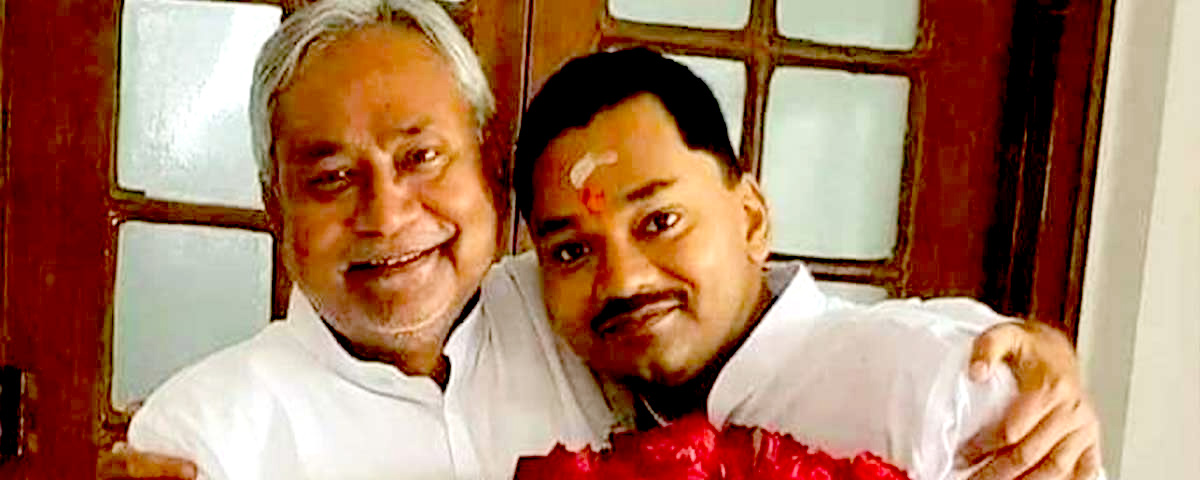
Of late, a question of considerable import hath arisen within the politics of Bihar: What shall become of the Janata Dal (United) following the tenure of Chief Minister Nitish Kumar? Will this party, in time, be subsumed into the Bharatiya Janata Party, or shall Nishant Kumar, son of Nitish, assume the mantle of leadership within the JD(U)?
At present, Chief Minister Nitish Kumar prepares for what may prove to be his final electoral contest, the Bihar Legislative Assembly elections being but six months hence. His aim is to secure a fifth term as Chief Minister. Kumar's current focus lies in navigating the intricate politics of coalition with a strengthened BJP, and in achieving victory in the forthcoming Bihar elections.
In this essay, we have endeavoured to analyse the question, "Who after Nitish?" This query is not merely a matter of political discourse or academic consideration, but rather serves to redefine the very identity of the JD(U). Whereas other parties rest upon stout ideological foundations, the JD(U) is largely identified solely by the persona and political adroitness of Nitish Kumar. Viewing the present state of affairs, it seemeth that "Nitish is the JD(U), and the JD(U) is Nitish." Though this personality-driven leadership hath been effective in consolidating power, it hath also suppressed the development of a robust second-tier leadership capable of seamlessly assuming the reins.
Here, several potential scenarios present themselves. One possibility is that Nishant Kumar, son of Nitish Kumar, shall formally enter the realm of politics and eventually emerge as the heir apparent. The recent increase in Nishant's public appearances lends credence to this notion, suggesting a well-planned effort to introduce him to the political sphere. However, this path is fraught with challenges. Nishant's previous disinclination toward politics, coupled with Nitish Kumar's own opposition to dynastic succession, pose a significant obstacle upon this road. Moreover, declaring Nishant as the successor could ignite discontent and rebellion within the party ranks, potentially leading to a schism within the JD(U) itself, as senior leaders seek alternative political havens within the BJP, the RJD, or the Congress.
Though the possibility of internal discord cannot be discounted, elevating Nishant may prove to be the most practical option for the continued existence of the JD(U). The argument being that a clear line of succession, even if dynastic in nature, provides a central point of focus for the party and forestalls an anarchic power struggle among senior leaders such as Lallan Singh, Ashok Chaudhary, or Sanjay Jha. In the absence of a designated heir, the party could become a rudderless vessel, susceptible to being preyed upon by rival parties, particularly the BJP, which might perceive an opportunity to strengthen its power in Bihar by absorbing the JD(U) into its own ranks.
Examples such as the smooth transition of Akhilesh Yadav within the Samajwadi Party (SP) and Lalu Prasad Yadav's strategic placement of Tejashwi Yadav as his Deputy, may illuminate the path forward. The strategic utilisation of cabinet positions and other incentives, while in power, may serve to quell potential dissent and maintain party unity. Conversely, the experience of the Congress Party, with Sonia Gandhi's transference of power to Rahul Gandhi occurring while the party was out of power, serves as a cautionary tale against internal strife and the potential marginalisation of experienced leaders.
Therefore, should Nishant desire to enter the field of politics, now is the opportune moment. It would establish him as the de facto leader and permit Nitish to employ the power of office to control any potential insurrection. Though Nishant's lack of political experience is a legitimate concern, the long-term stability of the JD(U) may outweigh this deficiency. This strategic manoeuvre of entrusting the reins of the party to Nishant may effectively prevent an existential implosion within the JD(U) following the departure of Nitish Kumar.
However, alternative scenarios cannot be disregarded. In the absence of a designated successor, a vacuum may well arise, leading to a fierce competition for control of the JD(U). This internal discord could weaken the party and render it vulnerable to a hostile takeover by the BJP. The BJP, perceiving an opportunity to bolster its influence in Bihar, could actively encourage defections and press for a merger, effectively absorbing the JD(U) and erasing its independent identity.
Furthermore, party affiliation here is often fluid, and historical context suggests that disgruntled JD(U) leaders may find it relatively easy to switch allegiances, further destabilising the party in the post-Nitish era.
Comparisons with other regional parties facing succession crises, such as Naveen Patnaik's Biju Janata Dal (BJD) in Odisha, Jayalalitha's All India Anna Dravida Munnetra Kazhagam (AIADMK) in Tamil Nadu, and Mayawati's Bahujan Samaj Party (BSP), fortify the argument that a clear succession is essential for the continued existence of regional parties. These parties, lacking either a strong family dynasty or a well-defined successor, are wrestling with internal conflicts and dwindling political fortunes.
In conclusion, the future of the JD(U) following Nitish Kumar is shrouded in uncertainty. Though elevating Nishant Kumar as successor presents a viable, albeit contentious, solution, it is not without peril. The possibility of rebellion and internal fragmentation remains a significant threat. On the other hand, the absence of a clear successor could lead to a chaotic power struggle and, ultimately, the absorption of the JD(U) by the BJP or other regional factions. The coming months shall prove pivotal in determining the fate of the JD(U). Nitish Kumar's capacity to navigate the complexities of succession planning whilst simultaneously securing victory in the upcoming elections shall ultimately determine whether the JD(U) faces an internal implosion or succeeds in reorganising itself for a new era. The destiny of the party hinges upon a delicate balance between dynastic succession, party unity, and the ever-shifting political landscape of Bihar.
POLITICS
Nitish's Legacy:Succession or Dissolution?
Of late, a question of considerable import hath arisen within the politics of Bihar: What shall become of the Janata Dal (United) following the tenure of Chief Minister Nitish Kumar?