

NEW DELHI: The 100-day gap is the longest so far in India's parliamentary history, having beaten the previous record of 87 days from 2008.
A procedural reason can explain why the government is in no hurry to prorogue the current session. A session that hasn't been prorogued can be recalled at less than a week's notice, while a fresh summons after prorogation needs two weeks.
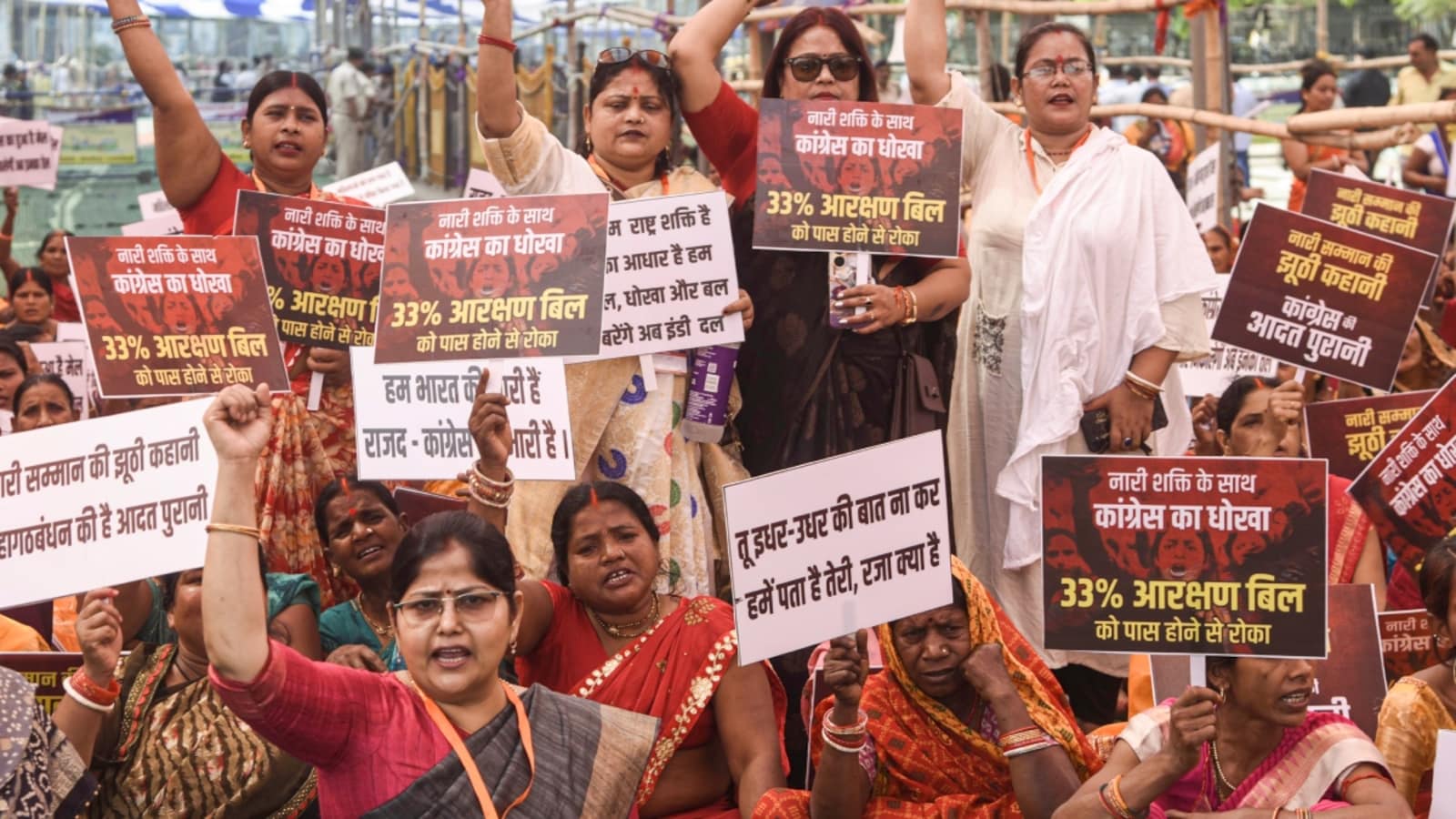
The government is learnt to be using the time to work towards the two-thirds majority it needs to pass the delimitation bill, which it has linked to operationalising the reservation of 33 per cent of seats in Parliament and state legislatures for women.
The Congress, which has said the quota as granted by a 2023 law should be delinked from census and delimitation, has set out roughly four conditions. The DMK and AAP, Opposition parties that are not part of the Congress-led INDIA bloc, are learnt to be largely on the same page on this count. Caveats remain regarding the DMK, though, besides some INDIA bloc members too.
*Government's December plan:*
Sources in the BJP-led NDA government have already said there would be no special session, despite weeks of talk in Delhi of a three-day sitting as early as November 25-27.
Instead, technically, the next part of the Monsoon Session will meet in the second week of December for about a dozen sittings. The government plans to take up both bills in the first three days. Floor managers expect the rest of the sitting to be lost to disruption, with the parties' attention on the assembly elections in Uttar Pradesh, Punjab, and some other states.
The government wants delimitation by passing a bill that allows it based on any census, not having to wait for the ongoing Census 2027 to finish.
Its proposal seeks to increase the number of Lok Sabha seats from 543 to 850, with approximately one-third reserved for women on a rotational basis. It would also permit delimitation using the 2011 Census or another census specified under the proposed framework.
Time is also a critical factor: unless the legislation clears Parliament in December, there will be insufficient runway for a Delimitation Commission to redraw boundaries ahead of the 2029 Lok Sabha elections.
Because the bills amount to constitutional amendments, they need a two-thirds majority.
The government's earlier attempt to pass the Constitution (131st Amendment) Bill failed in April, when the proposed legislation received 298 votes in favour and 230 against, falling short of the required two-thirds majority.
The BJP-led NDA is learnt to have calculated that it needs the support of about 100 more MPs from the Opposition to cross the line.
The BJP has pitched Congress' objections to delimitation as a bid to block women's reservation.
*Opposition's 4-point counter:*
The Congress-led INDIA bloc, Tamil Nadu's DMK, and the Aam Aadmi Party have four demands.
*1. Lok Sabha stays at 543 seats:* The first is that the Lok Sabha stay at 543 seats after delimitation, with no increase or decrease.
*2. Each state keeps its seats:* The second is that each state keep the number of seats it has now. This is to ensure states that stabilised population growth — like Tamil Nadu, Kerala, and other southern states — do not lose political weight to states with higher population growth.
*3. Women's reservation now, on existing seats:* The third is that the Nari Shakti Vandan Adhiniyam, the women's reservation law of 2023, be put into effect, with 182 of the existing 543 seats reserved for women.
*4. 25-year freeze:* And the fourth is a constitutional amendment freezing this arrangement for the next 25 years.
Sources said the Congress, and the DMK and the AAP as well, would readily support the necessary bills if the government agrees to these demands.
Congress leaders say delimitation may be necessary but has to be carried out according to the Constitution.
Congress general secretary Jairam Ramesh has called for consultations involving all political parties before any fresh legislation is introduced. Party president Mallikarjun Kharge has accused the Centre of bypassing structured all-party consultations while warning against constituency gerrymandering.
Congress leaders have also accused the Centre of using delimitation to change the political map in its favour, by increasing seats in the Hindi heartland where the BJP is strong, and reducing the relative weight of southern states.
*Why delimitation is so sensitive:*
Delimitation is the redrawing of constituency boundaries based on population.
It was frozen in 1976, and again in 2002, precisely to avoid punishing states that controlled population growth. The freeze was supposed to last till the first census after 2026.
Now, with Census 2027 underway, the freeze is set to end. If seats are reallocated purely on population, southern states fear they will lose seats, while northern states will gain.
That is why the DMK has been the most vocal opponent. Tamil Nadu Chief Minister M.K. Stalin has called delimitation a threat to federalism.
The Congress's 4-point formula is essentially an attempt to do delimitation _within_ constituencies — redrawing boundaries inside a state — without changing the number of seats any state gets, and without waiting for a new census to change the balance of power.
*What happens next:*
If the government sticks to its December plan, the first three days will be decisive.
It will need to show it has the two-thirds majority. If it doesn't, the bills will fail again — as they did in April.
If it does, it will have to face the political fallout in the south, and the legal challenge of whether delimitation can be done on the basis of the 2011 Census.
For voters, the standoff matters: it will decide how many MPs your state sends to Delhi, whether 182 women will enter Parliament in 2029, and whether the map of India in Parliament will look very different after the next election.
Parliament is on hold. Delimitation is on hold. And the fight over both is just beginning.
#Parliament #Delimitation #BJP #Congress #DMK #AAP #NariShaktiVandan #WomensReservation #LokSabha #MonsoonSession