

NEW DELHI: Operation Sindoor was fought on land, in the air, and at sea. But according to a new report, it was also watched — closely, deliberately, and continuously — from space by China.
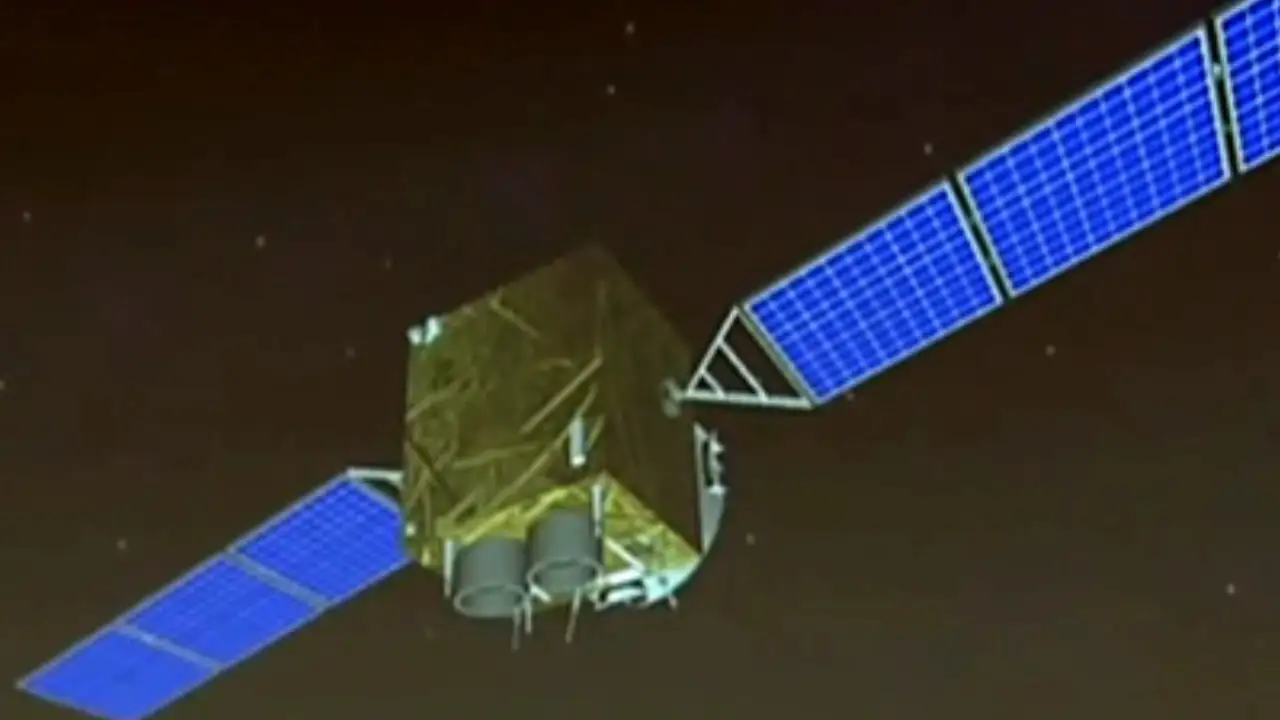
An analysis by Bengaluru-based space surveillance company Digantara, accessed exclusively by _ThePrint_, has found that three Chinese surveillance satellites equipped with radiofrequency tracking and electronic intelligence stayed focused on the Gujarat coast during the entire duration of Operation Sindoor.
The satellites — *Ningxia-14, Gaofen-11 and Yaogan-30* — were laser-focused on areas around Bhuj, Naliya and Jamnagar on May 10 and 11, even though the main fighting was concentrated in Jammu and Kashmir and Punjab.
That choice of location is telling. Bhuj hosts the Rudra Mata Air Force Station, a key airbase in Kutch near the Pakistan border. Naliya hosts a forward Air Force station, vital for air defence across the western frontier and Arabian Sea approaches. Jamnagar is home to both military infrastructure and Reliance Industries' massive refinery complex, which processes about 660,000 barrels a day, along with ports and naval assets.
In other words, Beijing was not watching the battle. It was watching India's capacity to sustain one.
The report notes a marked increase in what it calls adversarial reconnaissance efforts across various battlegrounds during the four-day operation. Another satellite, Yaogan-43 01G, conducted an orbital drift on May 7 — the very day India launched Operation Sindoor — resulting in extended passes over Indian military installations.
Gaofen-11, with a panchromatic resolution of 0.8 metres, can capture detailed images. Yaogan-30, orbiting at about 600 km, specialises in electronic intelligence — picking up radar emissions, communications and ship movements. As retired IAF Group Captain Ajey Lele noted, one good picture is enough to get a sense of maritime asset movement.
The findings come a day after a separate Digantara report revealed that Chinese Earth-observation satellites made around 37 unusual manoeuvres to focus on Pahalgam in the days before the April 22, 2025 terror attack that triggered Operation Sindoor.
The Congress has seized on the reports, with Jairam Ramesh accusing the Modi government of being in calibrated capitulation mode vis-a-vis China and downplaying Beijing's role.
For India, the analytical takeaway goes beyond politics. Modern war is no longer just about jets and missiles. It is about who sees first, who sees longer, and who can blind the other. The Digantara report concludes that Operation Sindoor exposed the growing vulnerability of India's critical military infrastructure to persistent space-based surveillance.
If China can watch Gujarat while India fights Pakistan, Delhi needs its own space shield — more indigenous ISR satellites, better camouflage and deception, and faster anti-satellite deterrence. Otherwise, the next war may be lost before it begins, in orbit.
*Tags:*
#OperationSindoor #China #Gujarat #Satellites #ISRO #IndianAirForce #Digantara #NationalSecurity #IndiaChina #SpaceWar