

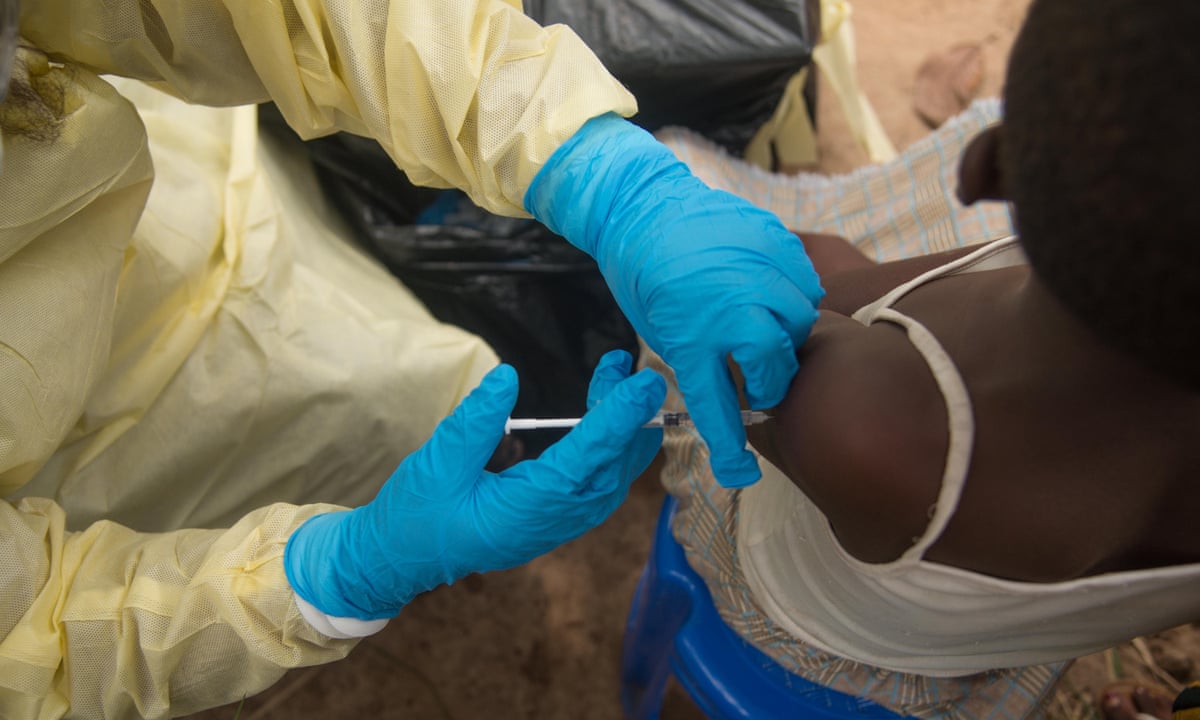
ITURI, DR CONGO: Two crises are colliding in eastern Congo — and women are paying the highest price.
Staff from the World Health Organization (WHO) and Ebola responders remain trapped in a hospital in Ituri province, as heavy fighting continues nearby, the UN said on Tuesday.
The health workers have been sheltering in a maternity ward since fighting began on Saturday near where the Ebola outbreak first emerged in May.
"Conflict as well as torrential rain yesterday meant that we were not able to move them safely. We're hoping to do this as soon as possible, ideally today," WHO Spokesperson Christian Lindmeier told journalists in Geneva.
He stressed that hospitals should be safe places where people can receive treatment, and called for an end to the fighting.
The workers are trying to contain Ebola disease caused by the rare Bundibugyo virus species. According to latest WHO figures, there have been more than 11,613 confirmed cases and 5,678 deaths. Ituri and Nord Kivu in the volatile east remain the most affected provinces.
But while the virus kills, a second epidemic is unfolding behind closed doors.
UNICEF on Tuesday released initial findings from what is believed to be the first real-time surveillance of violence against women and adolescent girls during an active disease outbreak.
The study, carried out with SOFEPADI, a veteran Congolese women-led organisation, and Washington University in the US, has so far spoken to 1,062 women and adolescent girls aged 15 and above across five health zones in Ituri, between August 28 and October 15. It also heard from about 11,500 young people via UNICEF's U-Report platform.
Nearly six in 10 women and girls said violence and abuse had started or increased in their lives since the Ebola outbreak began.
More than a third described someone taking more control over their lives — over where they could go, their money, their phones — followed by emotional and psychological abuse. Others reported physical and sexual violence.
Seven in 10 respondents live in households that have been through isolation, quarantine or contact tracing. Of them, nearly two in three reported new or increased violence, and nine in 10 linked it to the stress and fear caused by the outbreak.
"Women and girls are facing a growing threat of violence and abuse on top of a deadly disease outbreak and continued conflict," said UNICEF Executive Director Catherine Russell. “Too often, in the most impacted areas, there are no protective spaces outside the home that they can safely access.”
Women bear disproportionate risk during Ebola because they are more likely to care for sick relatives, accompany children to health facilities, and prepare family members for burial — activities that increase both exposure to the virus and pressure from containment measures.
Almost half of those who tried to access care and support could not. Some limited their own movements to avoid infection. Others were kept close to home. Some centres closed or were repurposed. Shame, fear of the perpetrator, and lack of trust were also cited.
Yet where safe spaces remain open, demand is soaring. Visits to eight safe spaces run by SOFEPADI in Ituri rose 200% — from 1,183 visits between January to March to 3,548 between July to September.
"In Ituri, years of conflict and displacement means women and girls were already living with very high level of violence. Now on top of everything else, this health crisis brings new threats of violence, stigma, fear and difficulty reaching essential services," said Sandrine Lusamba, SOFEPADI National Coordinator.
UNICEF says the findings do not prove Ebola caused the violence, but they show fear and disruption are intensifying pressures in households already broken by war.
The message is clear: an Ebola response that only counts cases will miss half the crisis. Protecting women must be part of the response — not an afterthought.
*Tags:*
#DRCongo #Ebola #WHO #UNICEF #Ituri #ViolenceAgainstWomen #WomenAndGirls #Conflict #Africa #PublicHealth