

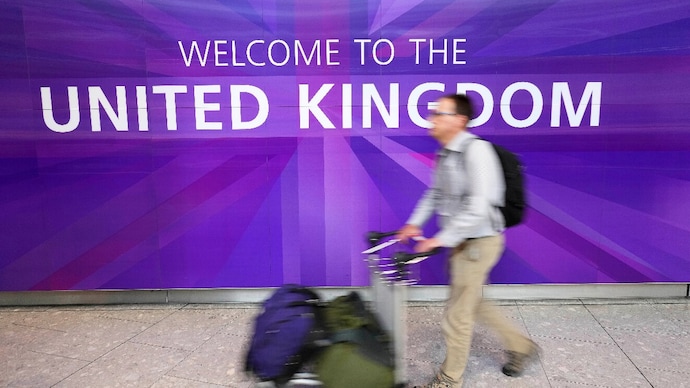
LONDON: Net migration to the UK has fallen to 77,000, its lowest level since 1997, excluding the pandemic, according to official figures released on Thursday, November 26, 2026.
The figure, from the Office for National Statistics (ONS), is down dramatically from 204,000 for the year ending June 2025, and from a record high of 944,000 in the year ending March 2023.
"This government has restored control," said Home Secretary Shabana Mahmood. “We have brought net migration to 77,000, down 92 per cent from its peak under the previous government.”
Net migration is the difference between long-term immigration and long-term emigration. In the year to June 2026, 738,000 people arrived — down 17% from 893,000 a year earlier — while 661,000 left, broadly stable from 689,000.
The drop was predominantly due to a fall in non-EU migration. Non-EU+ nationals arriving fell by more than 100,000 to 550,000. Work-related arrivals from that group fell by a quarter to 135,000. Study-related arrivals fell 11% to 257,000. Asylum-related immigration fell from 93,000 to 73,000.
The fall follows tighter rules by previous Conservative and Labour governments — bans on dependants for many students and care workers, and higher salary thresholds aimed at limiting arrivals to skilled graduate-level workers.
Indians: largest in, largest out-
Indians constituted the largest foreign nationality group both immigrating and emigrating long-term.
On arrivals: some 77,000 Indians arrived to study, 44,000 for work-related reasons (40,000 on work visa grants in Home Office data), and 5,000 for other reasons. They were followed by Chinese, Nigerians, Pakistanis and Americans.
On departures: 85,000 Indians left — 55,000 on study visas, 28,000 on work visas, and 2,000 under other categories. Chinese nationals were second, with 51,000 emigrants.
"Among people emigrating, Indian was the most common non-EU+ nationality," the ONS stated.
More than half of the 292,000 non-EU nationals who left had originally come to study, reflecting the large cohorts of international students who arrived in 2022 and 2023 and have since completed courses and post-study work periods.
Britons still leaving-
More EU+ and British nationals left than arrived. Some 245,000 Britons left long-term, with only 109,000 returning — net migration of Britons at -137,000. EU+ net migration was -45,000.
Ben Brindle, senior researcher at Oxford's Migration Observatory, said the UK still has relatively high emigration. “Most of those emigrants are non-citizens, including people who arrived a few years ago when immigration was very high.”
A slower-growing Britain-
The ONS also published population estimates. The UK population rose by around 80,000, or 0.12%, to 69.6 million in the year to June — the lowest annual growth since 1983. Only around 3,000 more babies were born than people died.
The ONS flagged more uncertainty than usual. The true net migration number is likely between 31,000 and 128,000.
Separately, Home Office data for the year to September 2026 showed 31,000 people detected arriving illegally, with small boats across the Channel accounting for 86% of them.
For India, the message is mixed: the UK remains the top destination for Indian students and skilled workers, but the door is narrower, the stay is shorter, and the return journey is now just as common as the arrival.
#UK #NetMigration #ONS #IndiansInUK #Migration #ShabanaMahmood #StudyInUK #WorkVisa #Britain #India