
BUNIA: The number of confirmed Ebola cases in Democratic Republic of Congo now exceeds 12,000, government data showed on Thursday, as responders continue to struggle to bring the second-largest outbreak on record under control.
Confirmed infections total 12,021, and 5,904 people have died, according to Congo's Ministry of Health. It is the fastest-growing Ebola outbreak in history and the country's deadliest on record.
The outbreak, caused by the rare Bundibugyo species of the Ebola virus, was declared in mid-May in Ituri province in northeastern Congo and has since spread to 8 of Congo's 26 provinces.
Delayed detection, conflict and strained health services have led to a more rapid spread than in previous outbreaks.
It is the second-largest and deadliest on record behind only the 2014-2016 West African outbreak, which infected more than 28,600 people and killed more than 11,000.
No vaccine, no control-
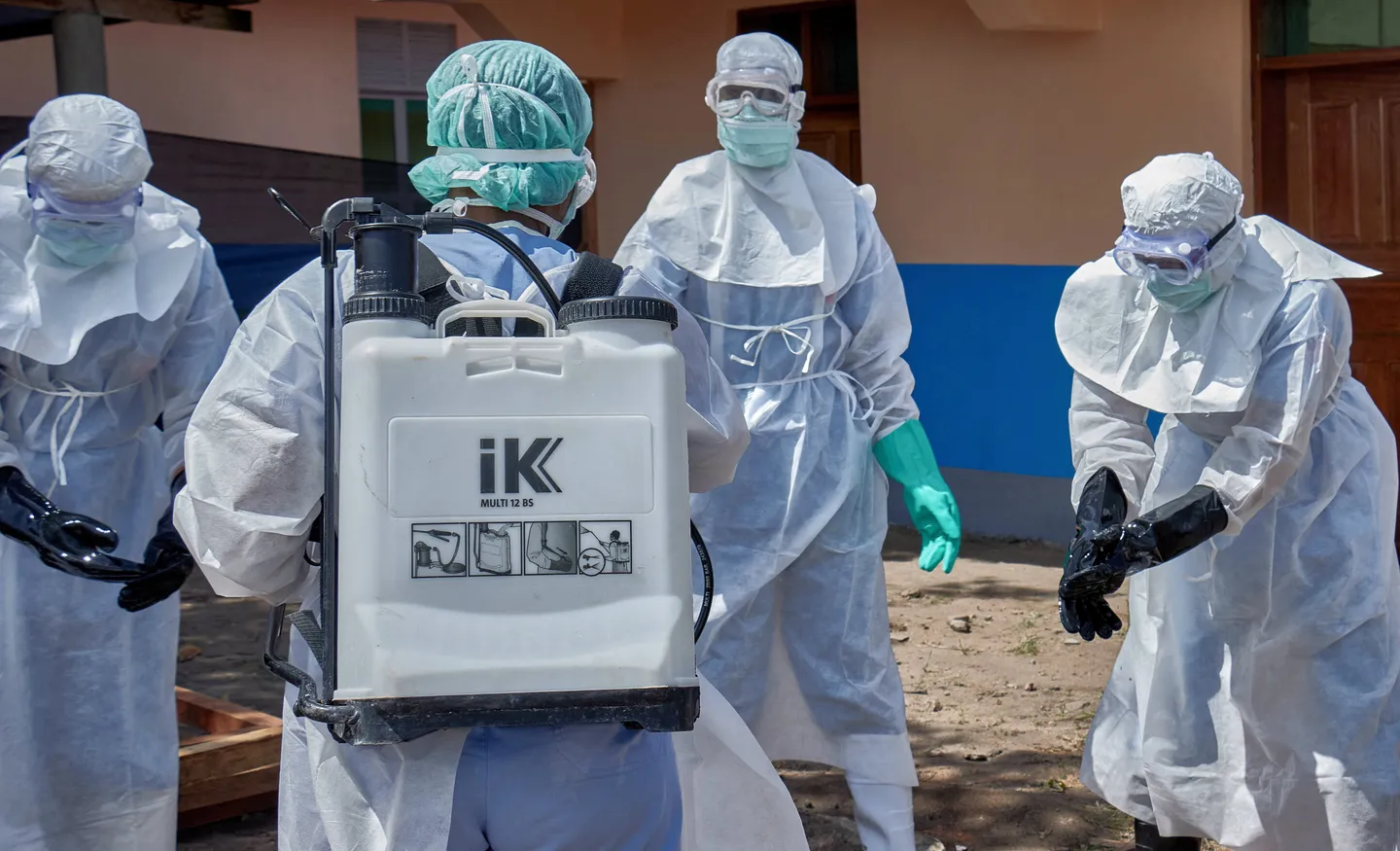
Unlike the more common Zaire species, there is no approved vaccine or treatment for Bundibugyo. Response teams are relying on the basics: quickly identifying and treating patients in isolation, monitoring people who may have been exposed, and safely burying the dead.
That system is breaking down. Only 15% of new cases come from contacts known to health authorities, according to data presented by Africa CDC earlier this month. That means many chains of transmission continue to be missed.
Ebola spreads through direct contact with the blood or other bodily fluids of people who are sick or have died. In communities where families care for the sick at home and wash bodies before burial, the virus moves fast.
War in the response zone-
Fighting between the army and the Convention pour la révolution populaire (CRP) rebels resumed Thursday morning in Iga-Barrière, a mining town about 25 km north of Bunia, sending new waves of displaced people toward the city. Bunia is the capital of Ituri and a major hub for the Ebola response.
Fighting earlier this week had already prevented teams from reaching some communities, disrupted monitoring of exposed people and left some treatment centres with fewer staff, said Dr Catherine Smallwood, the WHO's Ebola incident manager, on Wednesday.
Smallwood said about a dozen people, including two WHO personnel and Congolese health officials, were evacuated to Bunia on Tuesday after three full days trapped in a hospital in Akwe, northeast of the provincial capital, amid intense crossfire.
Sandrine Buju, a humanitarian worker involved in the response, said her team came under gunfire on Monday while returning to Bunia after training community volunteers.
The CRP is led by Thomas Lubanga, convicted by the International Criminal Court in 2012 of conscripting child soldiers. The group declared a unilateral ceasefire in May, but fighting has continued. It is one of more than 100 armed groups in eastern Congo.
Teams are also battling poor roads and violence from residents fuelled by mistrust and misinformation.
A 19-year-old burial-
On Tuesday in Beni, North Kivu, relatives and healthcare workers in protective gear buried Sylvain Kasereka Munganga, 19, a victim of Ebola.
His burial — in a sealed coffin, without the washing and touching that families consider dignity — is the reality of this outbreak: grief managed by protocol, in a place where protocol itself is under fire.
Until fighting stops, contacts are traced, and communities trust responders enough to report illness early, health officials warn the numbers will keep climbing.
#Congo #DRC #Ebola #Bundibugyo #Ituri #Bunia #WHO #AfricaCDC #Outbreak #Health