

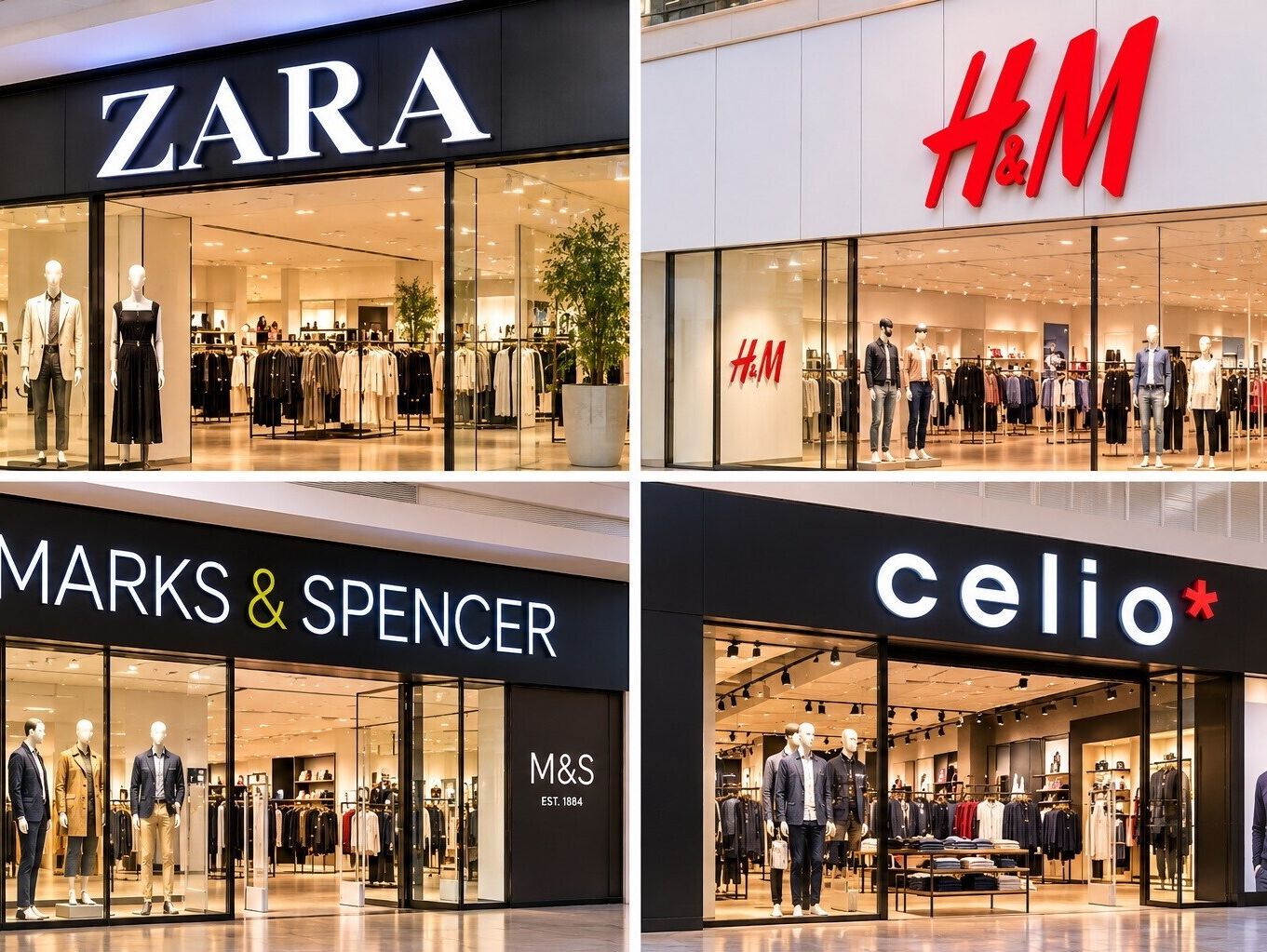
DHAKA: Global fashion retailers including Zara and H&M shifted nearly a tenth of their monthly orders from Bangladesh to other Asian manufacturing hubs in the first half of November, as labour unrest disrupted production and rising costs eroded the country's competitive edge, three factory owners told Reuters.
Between November 1 and 18, brands diverted about $254 million worth of orders from Bangladesh, with most moving to neighbouring India, the owners said, in a shift that represents a major blow to a key pillar of Bangladesh's economy and could extend beyond the current unrest.
Why workers are protesting?
Bangladesh garment workers have been protesting since early November, demanding more than double their wages.
On Wednesday (November 25), Bangladesh approved a 36% increase in the minimum wage for garment workers — the smallest rise in four decades.
The increase fell well short of workers' demands, triggering fresh clashes with police in Gazipur and Dhaka, even as Abdur Rahman Tarafder, secretary of the Ministry of Labour and Employment, said the wage increase was "satisfactory" and that he hoped all workers would resume work from Saturday (November 28).
Industry leaders said the increase would nevertheless narrow Bangladesh's labour-cost advantage over India, although union groups argue the wages remain low by global apparel industry standards.
The cost to Bangladesh—
The protests have caused more than $400 million in production losses, according to the Bangladesh Garment Manufacturers and Exporters Association (BGMEA).
That matters because garments are not just a sector in Bangladesh. They are the economy:
- 80% of Bangladesh's export earnings
- 40% of its manufacturing jobs
- World's second-largest apparel exporter after China
Manufacturers around Dhaka have lost an estimated 20 to 25 production days
"Since November 1, most of my buyers have stopped placing orders because of the unrest," said Khan Monirul Alam, managing director of Alps Apparels Group, which mainly supplies European brands.
Who moved, where?
Factory owners, speaking on condition of anonymity because of concerns about their relationships with international buyers, said the unrest had prompted Zara, H&M, Marks & Spencer, Celio and other global brands to divert orders, with India receiving the bulk of the business.
Zara owner Inditex declined to comment on Reuters' questions, while M&S, H&M and Celio did not respond.
India emerged as the biggest beneficiary, while buyers are also looking to Vietnam, Cambodia and Indonesia to reduce supply-chain risks and improve delivery reliability.
Indian textile stocks climbed after the Reuters report.
Why India — and why now?
It is not just wages. It is speed and reliability.
- India can offer buyers a delivery advantage of about a week
- Vietnam and Cambodia can cut lead times by as much as 15 days
- Rival sourcing hubs can typically complete production and delivery within 60 to 90 days, compared with about 120 days in Bangladesh
M Mohiuddin Chowdhury, a BGMEA director, said the wage rise came on top of higher utility and raw-material costs, just as buyers push for lower prices and competing countries sharpen their offers.
Brands, he said, are increasingly choosing suppliers on delivery speed over price, as they face strict deadlines.
Persistent energy shortages, worsened by the Middle East crisis, have further disrupted production and forced some factories to depend on more expensive alternative power sources.
The deeper problem—
Industry leaders have said rising wages, energy shortages and political uncertainty have weakened the low-cost advantage that helped make Bangladesh the world's second-largest apparel exporter after China, prompting global brands to diversify sourcing.
Factory owners said their bigger concern was that the shift in business to other countries could become permanent, even after the situation stabilises.
Once a brand moves a supplier, qualifies a new factory, and builds a new logistics chain, it rarely moves back just because the strike ends.
What next?
If workers return Saturday as the government hopes, production can restart. But backlogs, lost days, and lost trust will take months to recover.
For Bangladesh, the question is no longer just: how much to pay workers?
It is: can it still deliver on time, at cost, with power, in a country where buyers no longer feel safe placing an order?
For India, Vietnam, Cambodia and Indonesia, the question is the opposite: can they absorb $254 million in 18 days — and keep it?
*Tags:*
#Bangladesh #GarmentIndustry #Zara #HnM #Inditex #India #Vietnam #Cambodia #LabourUnrest #MinimumWage