

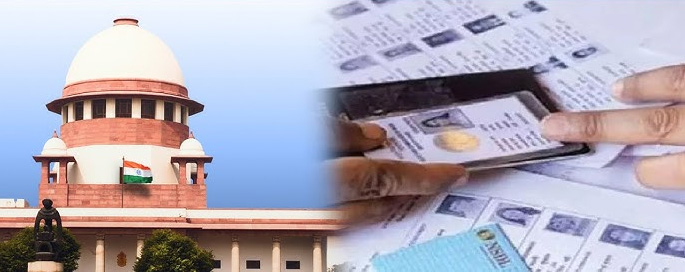
The Election Commission of India’s (ECI) Special Intensive Revision (SIR) of the electoral roll in Bihar, launched ahead of the 2025 Assembly elections, has ignited a political and legal firestorm. While the ECI maintains that the revision aims to ensure a cleaner, updated voter list, opposition parties and civil society groups allege it is a covert attempt to disenfranchise marginalized communities and manipulate the democratic process.
The SIR Process: Timeline and Documentation
The SIR began on June 25, 2025, with door-to-door verification led by Booth Level Officers (BLOs) and supported by nearly one lakh enumerators. The ECI plans to publish a draft electoral roll by August 1, with the final list scheduled for release by September 30. However, the documentation and verification procedures have raised significant concerns.
Voters added to the rolls after 2003 are now required to re-submit proof of Indian citizenship—one out of eleven specific documents, such as a birth certificate, domicile certificate, passport, or educational records showing place of birth. Strikingly, widely-held IDs like Aadhaar, PAN cards, and ration cards have been disqualified on the grounds that they do not establish citizenship. Existing voters from the 2003 roll only need to fill out a form, but new and young voters must meet these stringent documentation requirements.
Allegations of Disenfranchisement
Opposition parties have condemned the SIR as a deliberate attempt to disenfranchise voters, particularly the poor, marginalized castes, migrant workers, Muslims, and women. According to RJD leader Tejashwi Yadav, the process is “impractical and politically motivated,” warning that nearly 4 crore voters could be affected.
The requirement for hard-to-access documents places a disproportionate burden on individuals living in rural or semi-literate communities. Women who have changed their names after marriage, migrant workers lacking birth certificates, and students or laborers living outside Bihar face particular challenges in complying with the short 25-day window ending July 25.
Activists have likened this process to "votebandi"—a reference to the 2016 demonetization—arguing that this is an administrative maneuver cloaked as an anti-fraud measure, but with the potential to exclude millions of legitimate voters.
Civil Society Response and Legal Challenge
The SIR has drawn sharp criticism from civil rights organizations such as the People’s Union for Civil Liberties (PUCL) and the Association for Democratic Reforms (ADR), who warn of voter suppression disguised as voter purification. Several petitions have been filed in the Supreme Court, urging a stay on the process.
Although the apex court has refused to stay the exercise immediately, it has agreed to hear the matter, acknowledging its serious constitutional implications. Petitioners argue that the ECI's insistence on citizenship verification without a legislative mandate may violate Article 326 of the Constitution, which guarantees universal adult suffrage.
Furthermore, the Election Commission has been accused of overstepping its mandate, as the voter list revision rules under the Representation of the People Act, 1950, do not include stringent citizenship verification for existing voters.
Political Implications for 2025
The timing and scale of the SIR raise serious questions about its impact on the 2025 Bihar Assembly elections. Critics suggest the exercise could alter voter demographics in key constituencies, potentially skewing outcomes in favor of the ruling coalition. While the ECI claims it is upholding electoral integrity, the paradox remains: Can democracy be protected by excluding voters in the name of verification?
If the Supreme Court does not intervene with clarity, Bihar could witness widespread voter protests, legal uncertainty, and possible election boycotts—seriously undermining the credibility of the upcoming polls.
Voices from the Ground
Community leaders and affected individuals across districts like Darbhanga, Purnia, and Gaya report confusion, lack of awareness, and growing frustration. “I have voted since 2009, but now they ask for my school certificate—which I don’t have,” says Razia Khatoon, a 58-year-old resident of Araria. BLOs, many of whom are overburdened, admit the guidelines are “unclear and inconsistent.”
Conclusion
Though projected as a technical exercise, the Special Intensive Revision has become a politically charged and socially sensitive issue with far-reaching consequences. While safeguarding electoral integrity is essential, it must not come at the cost of excluding genuine citizens from participating in the democratic process. As Bihar inches toward elections, the Supreme Court’s decision will determine whether India can balance electoral security with inclusive participation.
Akansha Sharma is a trainee journalist at Cult Current. The views expressed in the article are
her ownand do not necessarily reflect the official stance of Cult Current.