

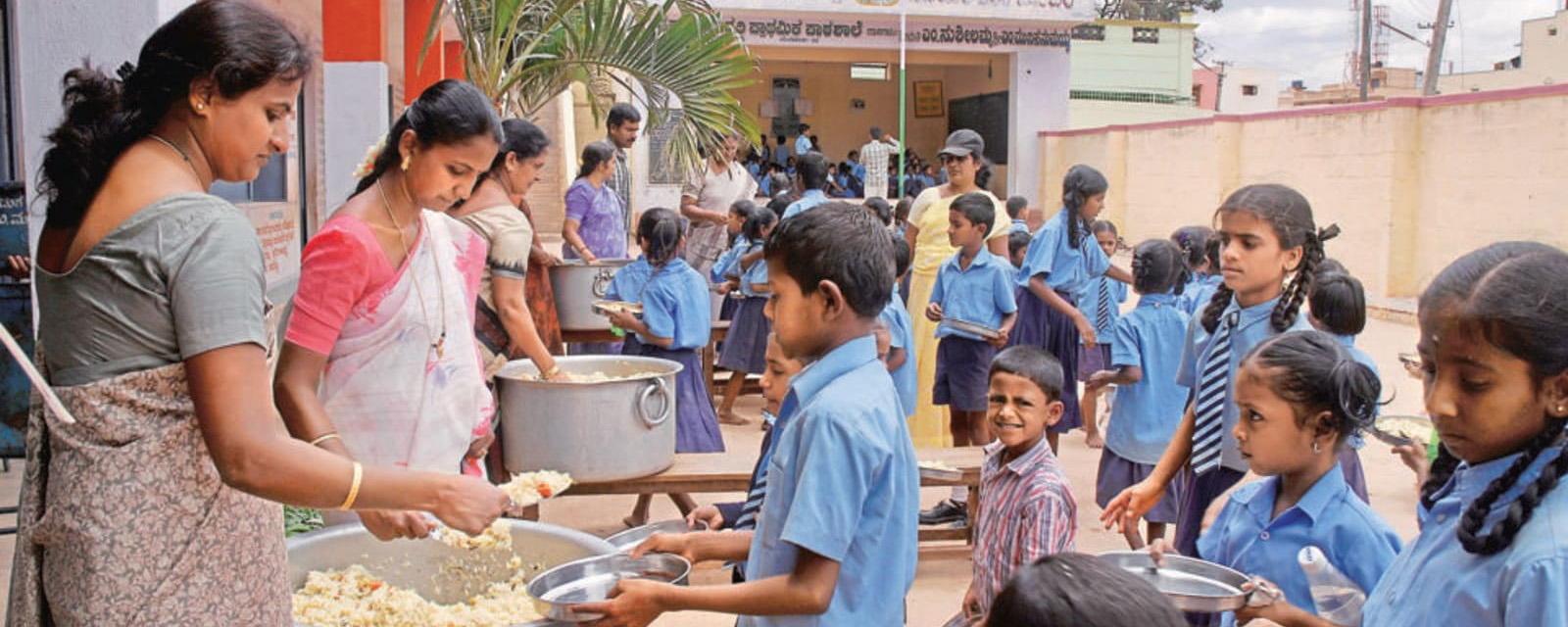
The Mid-Day Meal Scheme, now known as PM POSHAN, was never just about food—it was about assurance. An assurance that children would come to school, stay nourished, and be spared from the daily worry of hunger. But when COVID-19 shut down schools, that promise faltered. In Jharkhand, nearly 8.39 lakh students reportedly missed out on dry rations or the cooking cost that was supposed to replace their midday meals. It raises a painful question: when everything was already uncertain, why did even this basic support fail so many?
The state tried to shift from cooked meals to a combination of dry rations and direct cash transfers during the lockdown. For over 42 lakh students in government and aided schools, this was supposed to ensure continuity. But one in every five students never received what they were entitled to. Why? Because on paper, many students existed—but the system couldn’t locate them. Aadhaar-based verifications revealed ghost entries in school records, but in cleaning those out, did the state also erase real children? Those without IDs, from remote areas, from migrant or tribal families—children who already live at the margins?
The problem ran deeper in districts like Latehar and West Singhbhum, where tribal populations are higher. In some areas, less than 30% of students got the benefits. Reaching these forested, hilly regions was always hard. Transporting rice there costs more than what the government provides. A doorstep delivery pilot was launched but barely scaled. So, the state fell back on the Public Distribution System. But even there, ration shops ran dry or inconsistent, and families were left to fend for themselves.
The cash transfer model faced its own set of roadblocks. Account mismatches, missing bank details, and delays were common. In some districts, only 65% of eligible students got their money on time. And for those whose parents had never opened bank accounts, or who had migrated during the lockdown, what system was in place to reach them?
Worse still, the government didn’t have a clear picture of what was happening on the ground. There was no social audit conducted in 2021–22. The last proper audit was in 2018–19—and its findings were mostly ignored. When a headmaster in Dumka used his personal money to feed hungry children excluded from the official system, it showed how deeply disconnected policy was from lived reality.
Was the problem simply one of money? The Centre-State funding model required Jharkhand to contribute 40%, but delays in this portion affected the scheme’s rollout. The cooking cost—₹4.97 for primary and ₹7.45 for upper primary students—was already considered insufficient by nutritionists, especially in the middle of a pandemic where food insecurity was rising in homes across rural India. And as always, it was the most vulnerable who suffered the most—children from Scheduled Castes, Scheduled Tribes, migrant families—those who didn’t have Aadhaar, a permanent home, or an adult to deal with official paperwork. For them, it wasn’t just a question of delivery failures—it was a question of being seen.
So, what’s the lesson here? Experts are calling for better digital tracking, relaxed ID norms, community-led audits, and more funding transparency. But none of this will matter unless there’s political will to ensure that systems don’t just exist on paper—they reach people. Because at its core, this isn’t just an administrative lapse. It’s a moral one. A missed meal is a missed chance to grow, to learn, to thrive. And when 8.39 lakh children fall through the cracks, the cost isn’t just nutritional—it’s human. As we move forward, the real test is whether we remember this failure, and whether the next time a crisis strikes, we are ready to truly leave no child behind.
Riya Goyal is a trainee journalist at Cult Current. The views expressed in the article are
her ownand do not necessarily reflect the official stance of Cult Current.