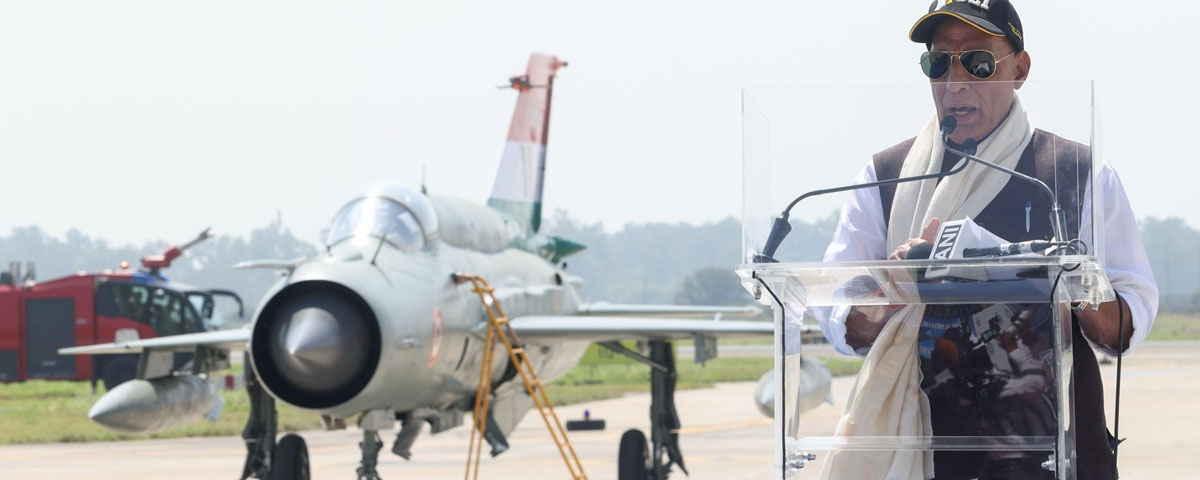
The Indian Air Force (IAF) is finally set to retire its MiG-21 fleet after over 60 years of glorious service. India was among the three major operators after the Soviet Union and China (licensed variant Chengdu J-7).
The MIG-21 has been the workhorse of the IAF. It was inducted in 1963 and has continued in service ever since. In August 2019, the IAF made headlines when its jets launched airstrikes on a Jaish-e-Mohammed (JeM) terrorist facility in Pakistan, known as the Balakot strikes. IAF Wing Commander Abhinandan Varthaman shot down a Pakistani F-16 while flying a MiG-21 Bison, during a showdown between the IAF and Pakistan Air Force (PAF).
The iconic MiG-21 protected the Indian skies through major conflicts. Its retirement is an emotional time for several generations of Indian fighter pilots. Indian media is replete with nostalgic reminiscences of great aviators and air veterans.
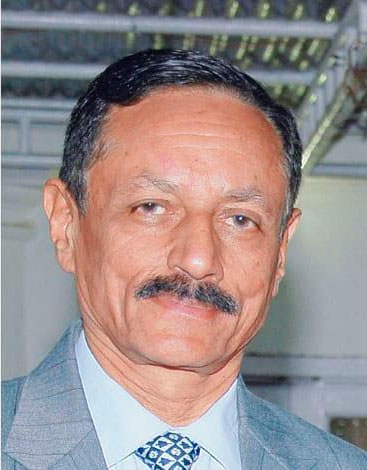
This author himself honed his combat flying skills in this aircraft starting in 1974, and was Team Leader of the MiG 21 Upgrade project in Russia during 1996-2000.
Legend in the making
The Mikoyan-Gurevich MiG-21 was designed as a supersonic jet interceptor aircraft by the MiG Design Bureau of the Soviet Union. The MiG-21 was an airplane that hewed to the classic ‘perfect is the enemy of good enough’ approach. The Soviets wanted to fill the sky with thousands of simple, lightweight, reliable jets. That strategy had worked splendidly with the Soviet AK-47 rifle.
Over 60 countries across four continents have flown the MiG-21, and it still serves in a few smaller air forces 65 years after its maiden flight. It made aviation records, and became the most-produced supersonic jet aircraft in aviation history (11,496), the most-produced combat aircraft after the Korean War, and once the longest production run of a combat aircraft, now exceeded by both the McDonnell Douglas F-15 and the Lockheed Martin F-16. Its baby brother, the transonic MiG-15, holds the all-time jet record with around 18,000 units produced. The MiG-21 had a long production run from 1959 to 1985, and the airplane was thereafter upgraded by India and Romania.
Development of what would become the MiG-21 began in the early 1950s, when Mikoyan OKB finished a preliminary design study for a swept-wing prototype designated Ye-1 in 1954. After evolution, the first prototype with a delta-wing was the Ye-4. It made its maiden flight on June 16, 1955, and its first public appearance at Moscow’s Tushino airfield in July 1956.
The MiG-21 was the first successful Soviet aircraft combining fighter and interceptor capabilities. It was a lightweight Mach 2 fighter with a relatively low-powered afterburning turbojet when compared to the American F-104 or F-5, or even the French Mirage III. The very characteristic shock cone in the front air intake was unique and peculiar, and left little space for a decent-sized radar. Like many aircraft designed as interceptors, the MiG-21 had a short range.
The MiG-21’s simple controls, engine, weapons, and avionics were typical of Soviet-era military designs. The use of a tail with the delta wing aids stability and control at the extremes of the flight envelope, enhancing safety for lower-skilled pilots. This, in turn, enhanced its marketability in exports to developing countries with limited training programs and restricted pilot pools.
The maximum permitted speed was 2,237 km/M2.05 at 13,000 m (42,651 ft), and 1,300 km/h/M1.06 at sea level. The service ceiling was 17,500 m (57,400 ft). The aircraft could operate from semi-prepared surfaces. The aircraft armament included one GSh-23 mm gun with 200 rounds. Aircraft had five hard-points with a capacity of up to 2,000 kg of stores, with provisions to carry combinations of bombs rockets and missiles or fuel drop-tanks. In later variants it included the latest air-to-air missiles the R-73, R-77, and R-27. Its low production and maintenance costs made it a favorite of many nations.
A total of 10,645 aircraft were built in the USSR. They were produced in factories at Moscow, Gorky (now Nizhny Novgorod) and Tbilisi. A total of 194 MiG-21F-13s were built under license in Czechoslovakia and India’s Hindustan Aeronautics Ltd (HAL) built 657 MiG-21 variants. About 2,400 J-7s were manufactured in China, including for export. Due to the mass production, the aircraft was very cheap. The MiG-21MF, for example, was cheaper than the BMP-1 Soviet amphibious tracked infantry fighting vehicle. The American F-4 Phantom cost several times as much as the MiG-21.
OPINION
The Iron Bird Retires: MiG-21’s Glory Days
The MiG-21, the legendary ‘Iron Bird’ of the Indian Air Force, is set to retire after more than six decades of unmatched service. From achieving supersonic flight to shaping India’s air combat legacy, this iconic fighter has defended the nation, trained generations of pilots, and earned a permanent place in aviation history.