
Think of the H-1B visa as the hidden scaffolding that has held up Silicon ader that not only helped America’s tech industry grow stronger and faster but also provided a pathway for millions of talented minds from India to reach American labs and startups. This was a two-way street: American companies gained access to skilled labor they couldn’t find at home, and Indian professionals found a global stage to showcase their genius.
Now, that ladder has been made heavier, pricier, and covered in flashing warning signs. The changes introduced to the H-1B visa regime by US President Donald Trump are not just minor tweaks; they represent a geopolitical earthquake. This move, while a blow to Indian tech exports, is fundamentally a self-inflicted wound on America’s competitiveness, its innovation ecosystem, and perhaps even its global soft power. More importantly, it presents a historic opportunity for India to reverse its decades-long brain drain and transform it into a formidable brain gain.
Politics Masquerading as Policy: An Electoral Gambit
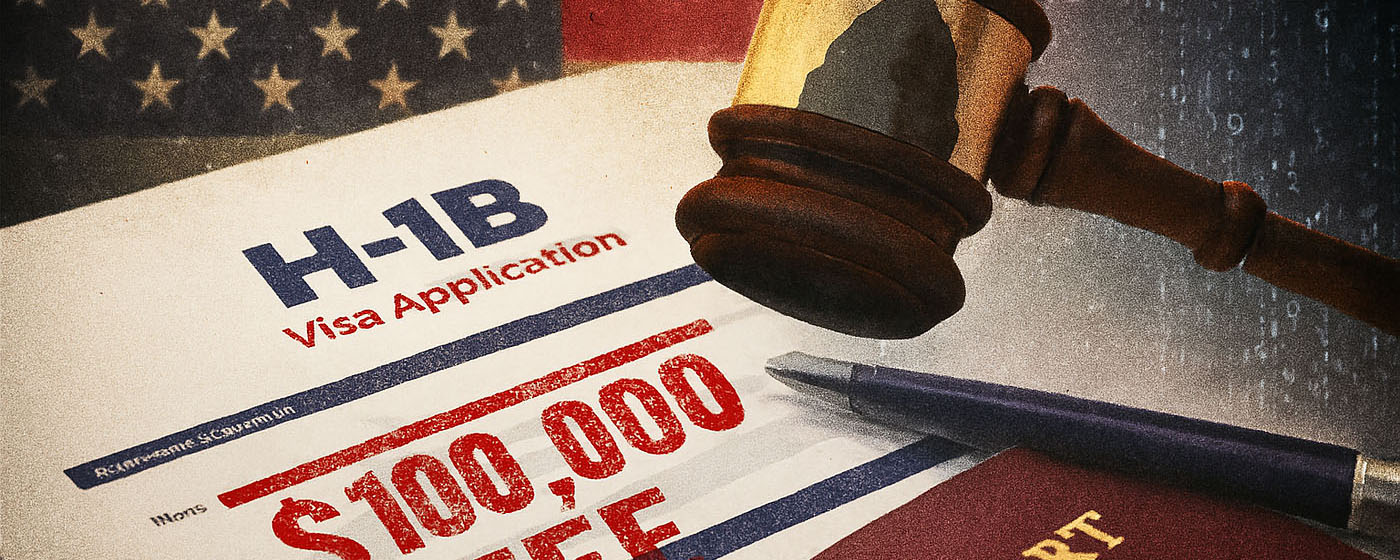
This year, Washington unveiled a suite of changes that fundamentally alters the H-1B landscape. A White House proclamation has effectively attached a six-figure price tag—a staggering $100,000—to the process of bringing many H-1B workers from abroad. Simultaneously, the Department of Homeland Security is shifting from the old lottery system to a wage-weighted selection process, prioritizing high-paying jobs.
The official rationale is a familiar refrain: protect American jobs, close loopholes exploited by employers, and level the playing field for US workers. These soundbites are politically potent and win votes. However, when policy is designed around optics and partisan theatre rather than the complex arithmetic of innovation, the outcomes look good on cable news but disastrous on balance sheets.
A $100,000 per-worker fee might deter low-paid or questionable placements, but it will also choke the legitimate flow of talent that keeps research labs running, startups innovating, and universities hiring the world’s best. To be blunt, this is protectionism and political drama rolled into one. Leaders can campaign on ‘bringing jobs home’ while appearing tough on offshore hiring.
But this policy conveniently ignores two inconvenient truths. First, the H-1B population is not a monolith of low-wage interlopers. The median salary for H-1B holders has historically been well above the national average, with many visas granted for highly specialized roles in engineering, research, and higher education. Second, when the US slams its doors, the global market for talent doesn’t just stop; it moves.
When America Closes its Doors, Where Does Talent Go?
Tech talent and capital are fluid. If hiring in the US becomes prohibitively difficult and expensive, companies will simply offshore entire functions. They will scale research in Bangalore or Krakow, or base their next unicorn where hiring policies are more welcoming. The consequences will extend far beyond Indian engineers; it will be an erosion of the very ecosystem that made America a magnet for cutting-edge innovation.
Analysts and tech leaders are already warning that these punitive measures will push investment and R&D overseas. The math is simple: if talent is blocked or taxed out of reach, the firm will always follow the talent or the market.
The immediate economic costs will be severe. Startups, often running on scarce cash, rely on their ability to hire the best engineers globally. A sudden spike in hiring costs or a shift to an income-based lottery skews the playing field in favor of only the wealthiest corporations, stifling the very engines of job creation. Universities and research labs recruiting top Ph.D. students will also feel the pinch. In short, innovation will become slower and more expensive.
The Erosion of Soft Power and the Rise of Global Rivals
The H-1B pipeline has also been a powerful tool of soft power. It creates a global alumni network of American institutions, whose members carry US norms, networks, and influence back to their home countries. Tightening this pipeline will not just inconvenience job seekers; it will diminish the number of global business and academic leaders whose formative years were shaped in the US. Over time, this is bound to shrink American influence.
And yes, global rivals will certainly take notice when you start charging $100,000 just to enter the room. While policy is fluid, and these measures may be diluted by lawsuits or a shifting Congress, the damage will be done. Firms that reorganize their supply chains and relocate teams do not instantly reverse course when a policy changes.
Elon Musk has famously championed the H-1B visa, stating, ‘H-1B makes America strong.’ He has argued that he and many other critical innovators who built great American companies are in the US because of this very program. His words underscore a fundamental truth about America’s innovation economy.
What should worry American policymakers is not that India will suffer. India, as it always has, will adapt. The real loss will be for the US, as it forfeits its reputation and its role as the world's premier builder of global talent ecosystems. A robust immigration policy balances protection for domestic workers with an openness to skills that drive productivity. This current tilt toward punitive, performative measures throws that balance into disarray.
India's Opportunity: From Brain Drain to Brain Gain
When the dust settles on the H-1B fee, the clear long-term winner will be India, and the long-term loser, America. President Trump’s executive order has shot US innovation in the foot and given India’s innovation industry a powerful shot in the arm.
As respected tech entrepreneur Vivek Wadhwa wrote, ‘For India, this is a historic opening. For decades, its brightest minds left because the US was the only place they could do cutting-edge work, and the H-1B visa was their bridge.’ Now, India boasts a thriving digital economy, a proven track record with technologies like UPI, world-class hospitals, and an ambitious startup ecosystem.
The new visa fee will undoubtedly face legal challenges in the US. Immigration lawyers have called it ‘blatantly unlawful,’ arguing the President does not have the authority to rewrite a fee structure mandated by Congress. But regardless of the outcome in the Supreme Court, the order has already served Trump’s political purpose. His MAGA base, deeply anti-immigration, has embraced the move.
Trump’s other objective is likely to use the H-1B fee as leverage in trade negotiations with India and China, the only two major economies that have defied him on purchasing Russian oil.
This $100,000 visa fee provides India with a chance to reverse its long-standing brain drain and convert it into a brain gain. Indian tech professionals who traditionally sought jobs abroad as a route to a green card are now increasingly looking to be part of the India growth story, especially in the face of rising racism in the West and burgeoning opportunities at home.
Conclusion: Protectionism or Self-Harm?
National strength is not built by erecting higher fences; it is forged by building better ladders. The H-1B visa was never perfect; it needed reform. Instead, it got a headline-grabbing sledgehammer. Closing the portal to global talent may feel like a 30-second political victory lap, but it is bound to disrupt an ecosystem heavily dependent on outside talent.
The Indian community has contributed spectacularly to America over the past few decades. Have Indians become a victim of their own success? Are they being punished for their contributions? Is this protectionism, or is it self-harm disguised as patriotism? Whatever the question, the answer is clear: in this game, America is hurting itself in the long run, while inadvertently opening a door for a new future for India.
POLITICS
Trump’s H-1B Hammer: A Golden Opportunity for India
Trump’s H-1B overhaul slams the door on Indian talent, sparking fears of a brain drain in Silicon Valley. But amid the chaos lies a historic opportunity: India can now reverse decades of talent flight, harness its innovators, and transform ‘lost dreams’ into a homegrown tech and research boom.