

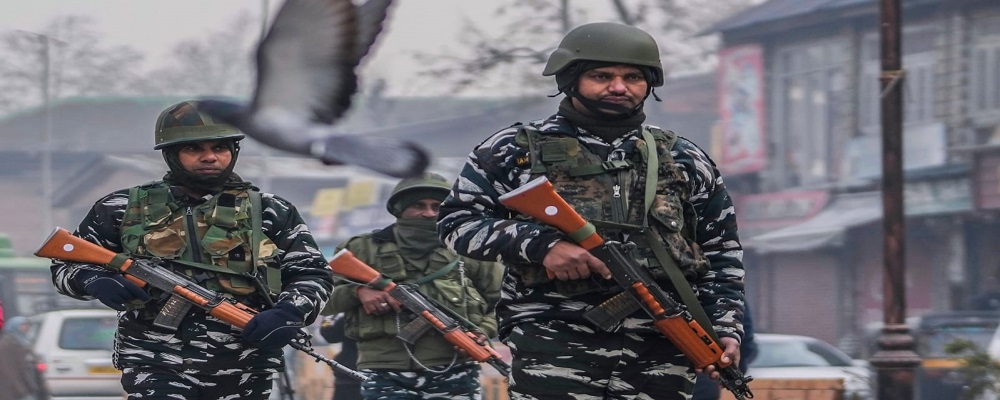
When the dreadful roar of guns takes a momentary respite in the picturesque valleys of Kashmir, it feels as if after a long, amavasya-dark night of violence, the crimson dawn of peace has knocked upon the horizon. The clamour of tourists on the streets, the patting of labour in apple orchards, and the returning pulsatile rhythm in the Valley's economy irrigate this belief that Kashmir has begun to push that horrific nightmare of terror into the abyss of oblivion. But, the nature of terror is like that invisible subterranean current, which is silent on the surface but extremely restless and agitated in the netherworld. The brutal murder of two innocent migrant labourers in the lanes of Kulgam in the sweltering environs of July and the martyrdom of a protector in the valleys of Anantnag - these incidents are an indication of that suppressed flame being rekindled.
These are not merely sporadic incidents of bloodshed, but the return of that devious strategy which in the lexicon of warfare is called 'Soft-Target Terrorism'. When terrorists accept their defeat in a direct encounter with the impregnable wall of the security forces and their imperialist ambitions begin to crumble, they make those unarmed hands their target which have never even touched a weapon. Terror has now shifted from the battlefield of the front to fight a war in the unfathomable corridors of psychology. That blood-stained chapter of Pahalgam in April 2025 was a hideous document of this very abhorrent thinking. That assault on tourists was not merely the killing of civilians, but a conspiracy to choke those arteries of Kashmir's economy which are the basis of life for five lakh families of this Valley. Tourism not only contributes seven percent to the economy here, but it also builds an unbreakable emotional bridge between Kashmir and the rest of India. One blast of terror does not just mangle a body; it also crushes the tender buds of investment and faith.
This irony of Kulgam has a deeper economic perspective as well. When the festival of apple plucking and harvesting takes place in the soil of Kashmir, the labour of five lakh migrant workers weaves the warp and weft of that prosperity. To riddle the chest of a non-local labourer is not merely the murder of an individual, but an assault on that national integration in which the prosperity of Kashmir and the enterprise of the rest of India are intertwined in an embrace. At its root is that imaginary and venomous fear of demographic change, which has been very cleverly propagated by the handlers across the border after the abrogation of Article 370. To alienate as 'outsider' the labourer who irrigates Kashmir's glory with his sweat is part of this very psychological war.
However, in the backdrop of this changed modus operandi of terror, the agony of its own defeat also reverberates. The frenzy of stone-pelting after 2019 and the local youth picking up arms has now become the dust of history. Where 166 youth had gone astray in 2020, that number has shrunk to just one in 2025. Today, the guns active in the Valley are mostly imported deaths from across the border. That social fertility which once grew the crop of terror has now become barren. That is why terror has now changed its garb. Criminals hiding in dense forests are now operating a new model of 'Hybrid Warfare' through the black screen of a mobile and an encrypted system. Here, before handing over a gun, the poison of digital radicalization is administered, due to which even an ordinary citizen unknowingly becomes an instrument of violence.
Yet, the question is not whether Kashmir is again dissolving into that dark tunnel? The answer is certainly not. The economic growth rate of 7.81 percent between 2023 and 2025 is testimony to the fact that the sapling of peace is now becoming a banyan tree. The figures of terrorist deaths in the first six months of 2026 show that the social impact of terror is continuously shrinking. But these incidents of July are a serious warning that this achievement of peace is still as tender and sensitive as Kalidasa's simile.
Kashmir's victory will be complete on the day when its valleys recognize not the echo of the gun, but the auspicious raga of life. The ultimate aim of terror is not merely the demise of the body, but to murder the unwavering faith in tomorrow from within man. And Kashmir's firm resolve lies in protecting that very faith.