

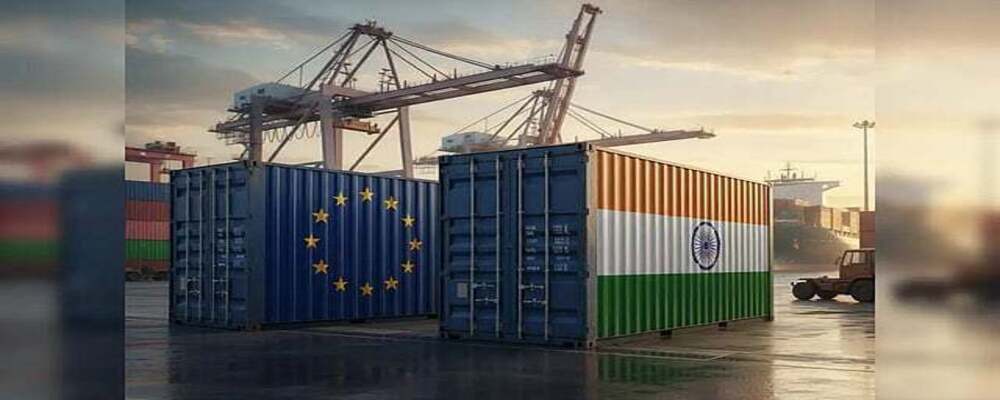
Amid tensions over steel exports to the EU due to CBAM, India has secured a 1.64 million tonnes steel export quota across 16 categories, including specialised items like metallic coated sheets and stainless hot-rolled quarto plates, under the free trade agreement, per the draft India-EU deal released by Brussels.
The quota is significant because it comes via Tariff Rate Quotas - TRQs - a tool that limits quantity eligible for lower duty to protect EU steel industry against global overcapacity. It sets free-of-duty quotas at 18.3 mt, with a 50% duty for out-of-quota imports and a melt-and-pour rule to enhance transparency.
India's total country-specific quota is split: 0.69 mt under the FTA component and 0.95 mt under the most favoured nation component available to all partners. This means only the FTA part is assured, and India's products will have to compete with others for the rest. India's steel exports to the EU currently stand at 4 mt.
For cars, the deal is a reverse bargain. EU has won a first year tariff-rate quota of 100,000 completely built-up internal-combustion and non-plug-in hybrid cars. India imported only 17,191 cars from the EU in 2025.
The quota rises to 160,000 cars by the 10th year, but only for cars priced above €15,000. For cars priced between €15,000 and €35,000, in-quota duty falls from 110% to 35% in the first year and to 10% in the 5th year. For cars above €35,000, tariffs decline from 66% to 30% in first year to 10% over same period. Below €15,000, no concession.
For EVs, battery-EVs, plug-in hybrids and cars using other technologies beginning in 5th year apply only to vehicles priced at €20,000 or more. Their Completely Built Unit quota starts at 20,000 cars in the 5th year, rises to 50,000 in the 10th year and reaches 90,000 from 14th year onwards. Cars below €20,000 get no concession.
Think tank GTRI says the EU becomes second major trade partner after UK to secure automotive tariff concessions. These precedents could prompt Japan and South Korea to seek similar preferential market access. The deal trades steel security for car market access - a classic FTA compromise, where tonnage is exchanged for showrooms.