

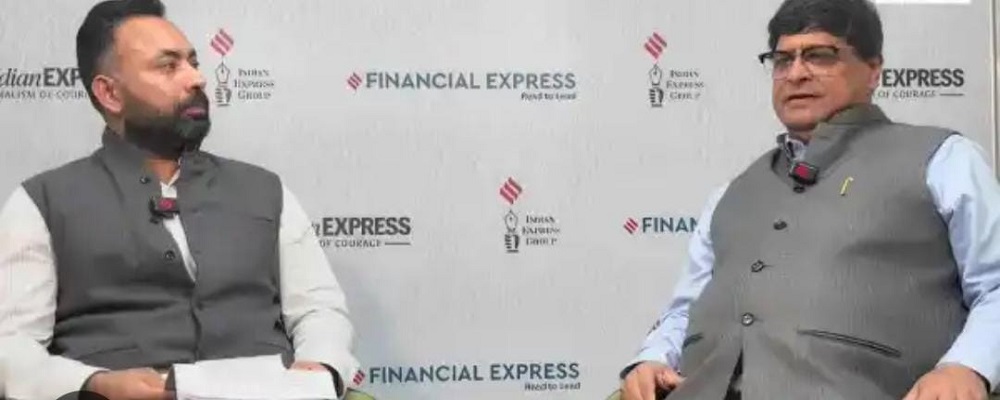
RETIRED Supreme Court judge Justice Sudhanshu Dhulia has strongly defended the right of students to protest, saying: "A university is meant to raise dissenting voices."
Asked about Supreme Court judge Justice Ujjal Bhuyan's remarks terming threats of punitive action against students asking questions as "unconstitutional" and a "misuse of power", Justice Dhulia said: "University toh dissent ke liye hoti hai hai. A university is a place meant for dissent... Why should you punish dissenting students? Imagine the day you enter a university. Don't you find a difference from your school life? It is for the first time when you enter a college or a university that critical thinking is developed."
The Supreme Court recently used its extraordinary powers under Article 142 to quash FIRs registered across the country against students who participated in protests over exam paper leaks, spearheaded by the agitation at Jantar Mantar.
However, the judge who during his three years at the apex court was known for his liberal stance on cases, said: "A line has to be drawn between dissent and outright disruption or things like that, or crossing a line."
Justice Dhulia added that he was also in favour of doing away with the sedition law. "My grandfather was charged with sedition...The old colonial laws should be given away."
On judicial appointments, Justice Dhulia, who was part of a Supreme Court Bench that questioned the government over "delay" on the issue, said he backed more openness. While the collegium system is working, he said, "Some changes are needed in the manner in which judges are recommended to high courts and the Supreme Court". "Some changes are required; some transparency is required. But that is a subject for a larger discussion and debate".
At the same time, he stressed: "These appointments should not be delayed. Once a collegium recommends certain names, unless the government has very strong reasons, some reports against the judge, in normal circumstances, they should not be stopped."
One of the notable cases heard by Justice Dhulia was on the right of a student to wear hijab to school, after the Karnataka High Court upheld the then BJP state government's ban on it. Part of a two-judge Bench that gave a split verdict, Justice Dhulia approached the case through the lens of choice and access to education, saying that "a girl child has the right to wear hijab in her house or outside her house, and that right does not stop at her school gate".
Justice Dhulia's intervention comes when campuses are under scanner from paper-leak protests to hijab bans to anti-terror FIRs. His phrase - “Agar aap issko daba doge, toh phir university kahan rahegi”, reframes dissent not as indiscipline but as pedagogy. His split verdict in hijab case, based on "tolerance" and choice, not religion and his stand against sedition show a consistent thread: the Constitution protects the uncomfortable question. His comment on collegium delay is equally pointed: if government sits on names without disclosing adverse reports, transparency dies. In an era of live-streamed courts, he warns, "Kuch prabhav padhta hi hai", some impact is inevitable.