

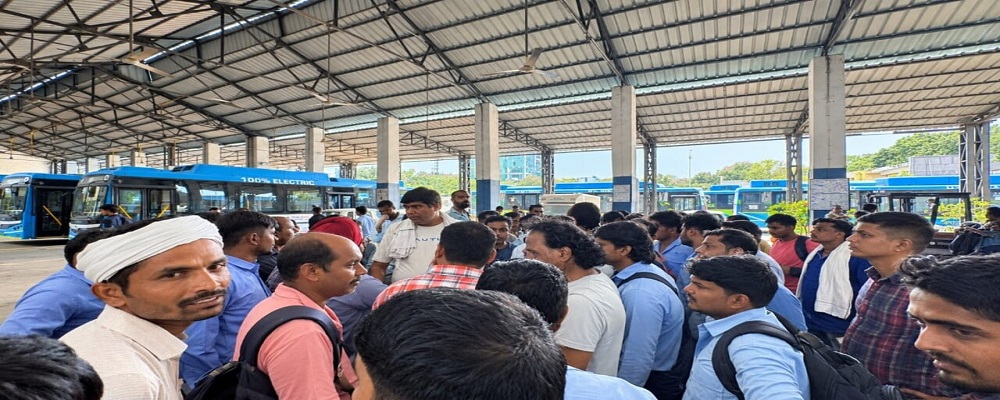
For six days, Delhi’s public buses became a political metaphor. About 6,000 contractual drivers hired via private agencies stopped operating DTC buses from September 15, demanding a basic-plus-DA structure and daily wages hiked from Rs 862 to Rs 2,000.
The state’s response followed a familiar script: police arrested 12 drivers in Begumpur and Kanjhawala under Prevention of Damage to Public Property Act for allegedly vandalising windows, citing a WhatsApp group instigation. The Transport Department brought in over 2,000 former drivers to run services.
The drivers’ story, however, is about privatisation’s underbelly. Shifts start at 4 am, but many living far must wake at 2 am, work 8-16 hours, no paid holidays, no medical insurance. “The vendors don’t come into the picture at all,” one driver said, pointing to unchecked buses leaving depots and breaking down mid-route. Their work is essential, their employment outsourced.
AAP’s Saurabh Bharadwaj demanded Rs 32,000 monthly salary, while BJP tries to paint the strike as law-and-order. With DTC running 4,564 contractual drivers in 2024 data, now close to 6,000, the model itself is on trial. Delhi wants world-class public transport on gig-worker wages. The buses may resume, but the fault line between service delivery and labour rights remains parked at the depot.