

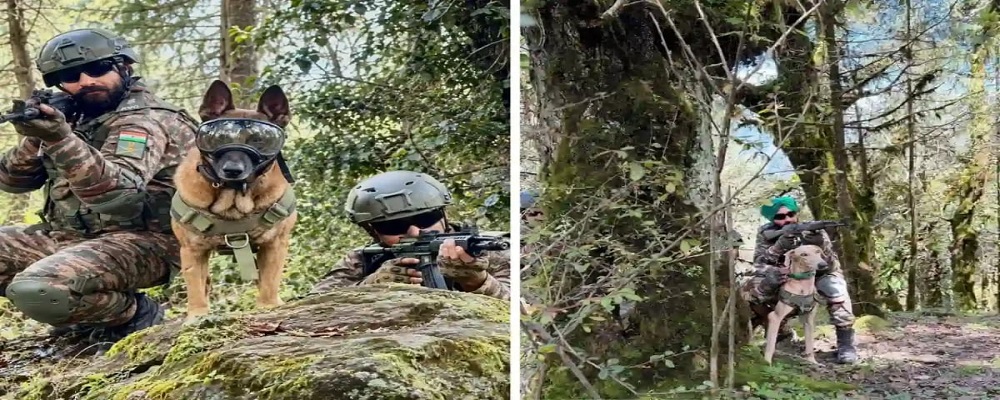
At Yudh Abhyas 2026, the India-US bilateral army exercise, four soldiers did not stand on two legs. Rampur Hounds Victor and Rowdy, Belgian Malinois Zac and Labrador Retriever Rice showcased specialised operational skills — room intervention and rappelling drills alongside US Army personnel.
The headline is Victor and Rowdy. Rampur Hounds, an indigenous breed from Uttar Pradesh, are increasingly being inducted for specialised military roles, moving beyond traditional foreign breeds like Labradors and German Shepherds. Their participation is deliberate — an Atmanirbhar footprint even in canines.
Why does it matter? Modern urban warfare needs dogs for close-quarter search, explosives detection and building intervention. A dog that can rappel from a helicopter and clear a room is force multiplier. Indigenous breeds adapted to Indian climate, terrain and food habits offer logistical advantage over imported breeds that struggle in heat.
Yudh Abhyas is about interoperability — Indian and US troops learning each other’s drills. Dogs need no translation. A Belgian Malinois working with an Indian handler and a Rampur Hound working with an American one is soft power with teeth. It also marks a cultural shift in Indian Army — from pedigree obsession to performance-based induction. For Rampur, once a royal hunting hound of Nawabs, its new role as a counter-terror operative is a second life. The message is simple: Make in India can also bark.