

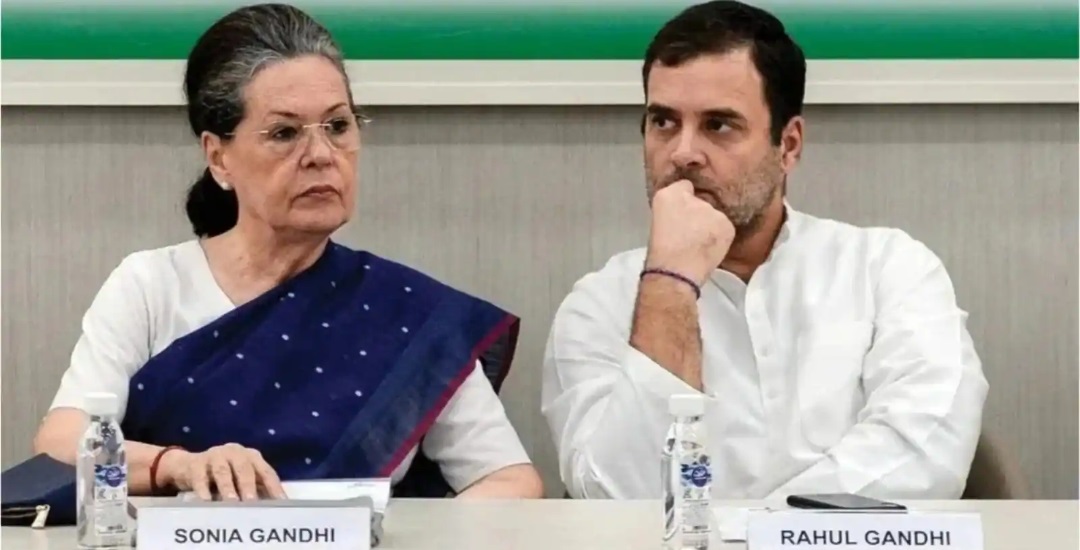
Senior Congress leaders Sonia Gandhi and Rahul Gandhi have filed a fresh, fact-based response in the Delhi High Court regarding the money laundering case linked to the National Herald. Opposing the petition filed by the Enforcement Directorate (ED) that challenges a lower court's order, the Gandhi family has termed the entire legal proceeding an "abuse of the legal process." The High Court has scheduled the next hearing for this sensitive matter on October 12.
The crux of this legal battle lies in the scope of the PMLA (Prevention of Money Laundering Act). Lawyers for the Gandhi family argue that the ED's entire case is predicated on a 'private complaint' filed by BJP leader Subramanian Swamy in 2013. Under the Indian legal framework, the ED can initiate action under the PMLA only if an FIR (First Information Report) has been registered by a statutory agency or if a police final report exists. The ED directly launching an investigation based on a private citizen's complaint runs counter to established legal principles.
The submission specifically cites the Supreme Court's landmark 2023 judgment in the *Vijay Madanlal Choudhary vs. Union of India* case. According to this ruling, the existence of a 'scheduled offence' and a corresponding FIR is a mandatory prerequisite for any investigation under the PMLA. The Gandhi family argued that since neither the CBI nor the Delhi Police had registered an FIR in this matter, the investigating agency lacked the statutory authority to initiate a direct probe into financial irregularities.
This case is not merely a legal dispute; it also significantly impacts India's political landscape. The Congress party characterizes it as the central government's political use of investigative agencies, whereas the ruling dispensation views it as an anti-corruption measure against the illegal transfer of assets worth over ₹2,000 crore. The lower court's decision to refuse cognizance of the ED's charge sheet has provided the opposition camp with significant moral and legal ground in this case.
If the Delhi High Court upholds the lower court's decision, it will place a significant check on the ED's investigative powers. This landmark ruling will determine whether central agencies can invoke the stringent provisions of the PMLA in the future based on non-governmental or private complaints. The country's political and judicial circles are keenly watching the hearing scheduled for October 12.