

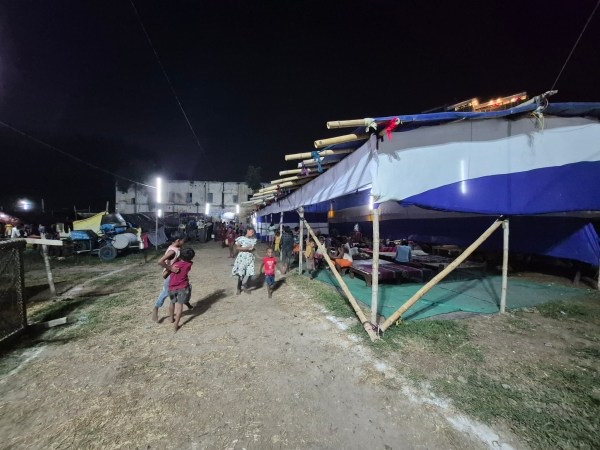
Outside a tent of black plastic and bamboo at Tilka Manjhi Bhagalpur University, Raj Kishore lies on a cot — the only possession his family saved. "Documents, cash, jewellery — everything was submerged, including the grain we had stored in drums," says the 25-year-old migrant worker who returned from Hyderabad to find his Dildarpur home underwater.
His kothi inside the university campus is now home to hundreds displaced by Bihar's floods. It is a village compressed into a few hundred metres: an Anganwadi centre, medical tent, and classes in two shifts.
At the TN B Collegiate Ground camp, two kilometres away, 650 people from Dildarpur, Shankarpur and Bairariya share space with 400 cattle. "Even the animals who survived need to be fed," says Ram Mohan. The maize crop, harvested in April, is now under water.
The loss is economic and cyclical. Surya Narayan Mandal, 52, says: "Whatever we earn every year, the Ganga takes it away." He owes Rs 80,000 to self-help groups taken for crops now gone. Usha Devi worries about the months after relief camps close: "How will people earn a living?"
According to the State Disaster Management Department, floods have affected 49.72 lakh people across 15 districts till September 21. Twenty-seven SDRF and eight NDRF teams are deployed, 112 community kitchens serve 1.95 crore meals.
Local artists try to soften the wait with Manjusha art therapy and storytelling. But as tube lights flicker at dusk and black sheets are adjusted for privacy, the question remains — how to rehabilitate people to higher ground, before the river returns.