

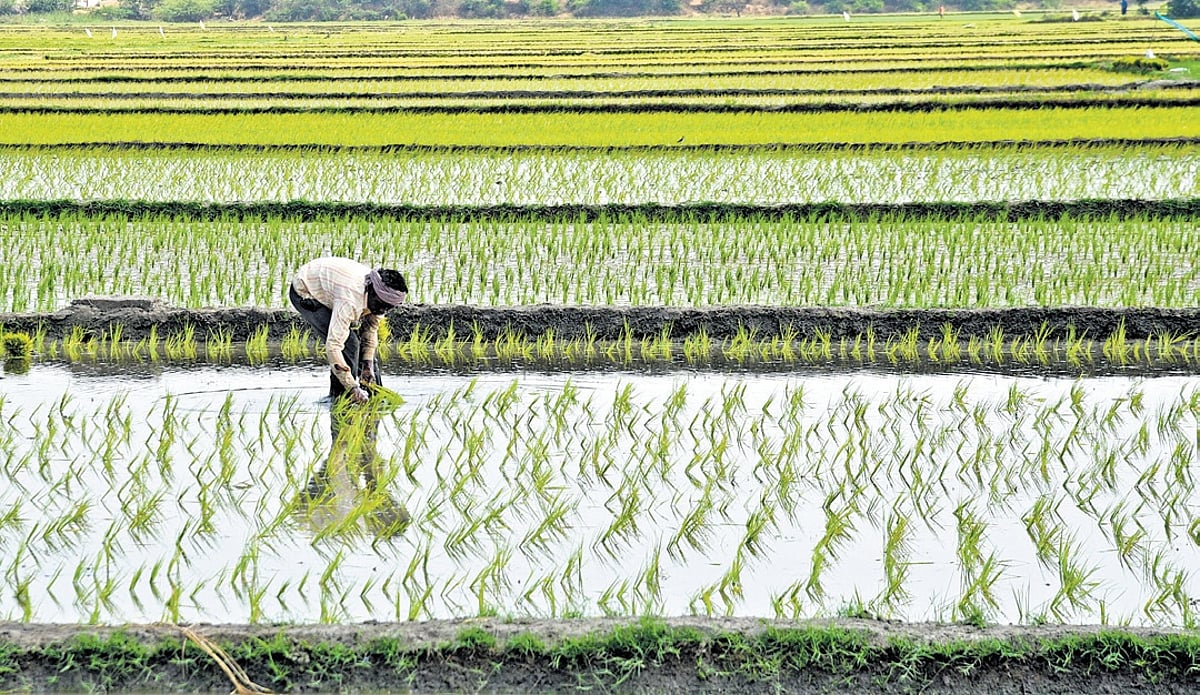
On paddy field conservation in Keralam - A conservation law meant to protect Keralam's paddy fields gradually becoming instrument facilitating its decline. State had 8.82 lakh hectares of paddy fields during 1974-75, reduced to 1.76 lakh ha in 2024-25, drop of 80%, owing to crop shifts, housing and commercial growth, developmental needs, and speculative land market.
Despite enactment of Kerala Conservation of Paddy Land and Wetland Act (KCPWA) in 2008, decline continues. Rather than ineffective enforcement, what unfolding is implausible dilution of conservation logic through ongoing bureaucratic redesign, effected by multiple circulars and orders. Shift astounding, as State rightfully recognised ecological value of paddy fields within KCPWA.
Read more - Kochi's Lost Jewel
A case of legal dilution - Structural and procedural modifications to KCPWA demonstrate how even strong conservation law can be diluted. Kerala Finance (No.2) Act 2015 amended KCPWA by adding Section 3A, which regularised unauthorised paddy field conversions prior to 2008 upon payment of nominal fee. This contravened Local Self-Government Department circulars of 2008 and 2011, which set 1998 as cut-off year for implementing conservation norms, thereby legitimising reclamations between 1998 and 2008. In 2016, State notification removed Section 3A without reference to regularisation cases during amendment period. Although KCPWA mandates development of verifiable databank of paddy fields, process remains incomplete. Consequently, no reliable data source exists to verify land status in many districts. This blatant administrative failure has become legal loophole, as KCPWA (Amendment) 2018 and successive revenue circulars facilitating larger extent of unnotified land (paddy fields in revenue records but not included in databank) for residential, commercial, or other purposes.
Building permits on unnotified lands facilitated by expanding eligibility criteria and expediting category change applications. In 2017, LSGD withdrew its 2008 and 2011 circulars, which declared 1998 as cut-off year for regularisation, and its 2012 and 2013 circulars, which restricted land transactions after obtaining housing permits. Despite High Court order in 2015 for strict legal compliance in building permit issuance, from 2016 onwards, multiple LSGD and revenue circulars facilitated rapid disposal of applications, with little emphasis on water conservation mandates.
Comptroller and Auditor General's revenue sector report of 2016 identified non-detection of illegal paddy field conversions, non-reporting of unauthorised reclamations, legal non-compliance, and non-reinstatement of illegally converted land as major lapses. Scrutiny turns challenging as State is fast-tracking conversion applications by deploying additional officials and infrastructure and processing land parcels in clusters.
Until 2002, Department of Agriculture, with direct agro-ecological stakes in wetland conservation, largely monitored non-agricultural land use. Post-KCPWA, Department of Revenue became primary monitoring authority. Department's dual role as both conservation regulator and revenue generator from regularisation confers immense power over land-use decision-making. Until 2024, Department earned up to Rs 1,606 crore through paddy field regularisation. Strict enforcement of conservation law remains constrained since regulator earns consistent revenue from conversion, causing structural dilemma.
Over years, bureaucratic enforcement appears to be facilitating regularisation - recategorisation to non-wetland status, dilution of water-conservation mandates, and widening of conversion eligibility - with limited conservation focus.Neglecting paddy fields as socio-ecological system that regulates local biodiversity, hydrological cycle, and microclimate constitutes grave failure, amid rising food insecurity and floods.
Read more - Ledger and Legacy
Given that KCPWA is progressive statute, political and administrative goodwill needed to achieve its conservation goals. Completion of verifiable wetland-paddy databank, strict monitoring, and ecologically informed conversion penalties are few immediate steps that can be taken.
For India, Keralam's paddy story mirrors Punjab's groundwater story - law exists, but revenue incentive kills it. Food security and flood resilience depend on paddy, not just houses.
Tags: #KeralaPaddy #KCPWA #PaddyFields #Keralam #WetlandConservation #LSGD #FoodSecurity #LandUse #CAG #EcologicalCrisis