

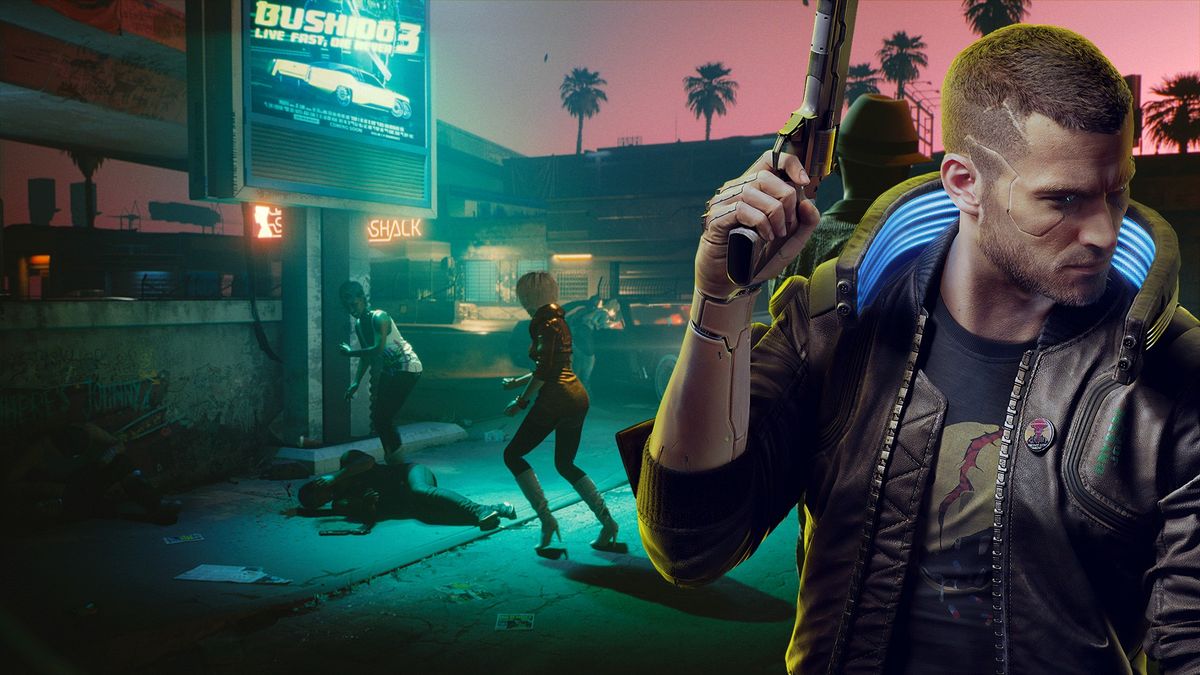
How Cyberpunk 2077 anticipated our hypercapitalist dystopia - William Gibson's Neuromancer bequeathed cyberpunk a future in which capital colonises every frontier; four decades later, technofascist sprawl of its progeny is collapsing distance between dystopian speculation and late-capitalist present.
Good Morning, Night City! It has been few years since Cyberpunk: Edge runners, clinched Anime of Year, over half decade since CD Projekt Red's Cyberpunk 2077 rehabilitated itself from catastrophic launch into retrospective videogame masterpiece, and more than forty years since William Gibson first codified this particular dystopia in seminal Neuromancer; yet cyberpunk as genre has only grown more prescient with age, with every waking moment inching towards very hellscapes these fictional antecedents have long warned of.
Bruce Bethke coined term in 1983, but it was Gibson's genre-defining 1984 classic that furnished cyberpunk with its definitive origins. Written before commercial internet and eschewing obsession with flying cars or other consumerist bric-a-brac of erstwhile sci-fi, Neuromancer imagined cyberspace as domain of corporate espionage and competing private interests, where disgraced hacker Case recruited into conspiracy involving two Als whose merger could circumvent constraints imposed on machine intelligence. What most extraordinary was Gibson's prescience in locating coming technological revolution within monopolistic economic order that had little intention of sharing its spoils. Four decades later, Silicon Valley has duly turned supposed democratisation of information into business model predicated on harvesting behavioural surplus and invoicing everybody for access.
Read more - Google's Brain Drain Moment
With genre's evolution, each medium found different way to make cyberpunk legible to own historical moment. In 2019, Cyberpunk 2077's sprawling open-world portrait of its technofascist Night City found companion in its acclaimed spin-off anime Cyberpunk: Edgerunners (2022), tragedy of mercenary ambition and bodily obsolescence. With Season 2 out this week, Night City returns to cultural moment ever more intent on vindicating its creators' bleakest intuitions.
World of Night City swings between genuinely incisive inquiry into human personhood under corporate dehumanisation, and satire extravagantly idiotic enough to give you pause. But what is deeply concerning is that deluge of awful headlines you probably consume every day in this very newspaper each outdoing last in fresh hell our cities, countries and world at large seem to produce with concerning regularity - have started de-abstracting once-distant cyberpunkian horrors of Night City.
Night City is already here - Take, for instance, cyberpsychosis - Cyberpunk 2077's term for psychological breakdown via excessive cybernetic augmentation - and parallels with Al psychosis, in which chatbots reinforce delusions and validate users' fantasies, become difficult to ignore. We may be some way off from people losing their minds over military-grade chrome, but prospect of technology actively exacerbating psychological distress is no longer stuff of dystopian fiction.
Concept of Braindance, Cyberpunk 2077's technology for turning recorded sensations and memories into immersive entertainment, feels less far-fetched if you have ever been victim of doomscrolling. Meta's own internal research, exposed through Facebook Files, revealed how engagement-driven algorithms could amplify addictive, divisive content while inflicting collateral damage on users' wellbeing. Generative Al threatens to industrialise arrangement further, flooding social feeds with synthetic slop engineered to capture attention, even as research finds that Al-assisted interactions can increase participation while eroding perceived authenticity and quality of online discourse.
Meanwhile, mercenary edgerunners of Night City may be risking their necks for corpo/fixer contracts, but India's own gig economy has found more prosaic way to make contract workers expendable, with delivery partners and app-based cab drivers tethered to opaque algorithms, volatile payouts and incentives that reward longer hours without guaranteeing living wage. Recent research into quick-commerce earnings and investigations into delivery workers' protests have laid bare system in which platforms dictate terms while workers absorb fuel costs and physical risks, all under increasingly threadbare alibi of flexibility.
Read more - The Spy In Your Spectacles
As Al and Big Tech become increasingly enmeshed in state surveillance and security apparatuses, militarisation of policing has started to evoke Night City's heavily augmented paramilitary force, MaxTac. Delhi's recent use of facial recognition and surveillance databases to monitor protesters across this year is telling real-world parallel, while Palantir's involvement in IDF's intelligence infrastructure has raised questions over its complicity in Gaza genocide. UN has even characterised this convergence of corporate technology and military power for surveilling Palestinians as form of colonial racial capitalism.
Further, Night City's grotesque wealth disparity is etched into its skyline, where corporate fortresses loom over overcrowded housing and people priced out of their own city. Reality is hardly less stark: Indian home prices have more than doubled over past decade, with estimated shortfall of 10 million affordable urban homes, while real house prices across OECD countries have risen by over 40%. Globally, housing has become increasingly lucrative asset class and increasingly elusive necessity, with billions struggling to afford adequate shelter while market continues to build for those who can pay. And digital future of very same gleaming urban sprawl may be sold as frictionless innovation, but its material foundations are being sustained by extractive hinterland as result of aggressive corporate resource-grabbing. Google's $15-billion Al hub in Vizag, with its voracious demands for land, electricity and water, and Trump's recent fixation on Greenland' oil, gas and critical minerals expose that contradiction
Cyberpunk 2077's megacorporate behemoth Arasaka is also what happens when company accumulates enough political leverage to make state extension of its own interests. One need not look further than India's own billionaire class and its proximity to ruling establishment, fuelling persistent questions about how economic clout translates into regulatory favour and insulation from scrutiny. With tech billionaire likes of Elon Musk, Mark Zuckerberg, Peter Thiel, Sam Altman, and their adoring fan clubs enthusiastically pursuing future where everything we do, say, watch, buy and feel can be tracked, predicted and monetised, preferably without us asking too many inconvenient questions, it would all be amusing if these people weren't actually in position to make it happen. Same people championing mass automation, flooding internet with Al-generated slop and turning private life into lucrative data mine are also rather fond of casting themselves as civilisation's beleaguered custodians, as if rest of us should be grateful for privilege of being strip-mined by our prospective saviours.
Backwall beckons - Though perhaps what is most terrifying to imagine is Blackwall. As in-game cyberspace containment barrier separating everyday Net from malicious rogue Als deemed too dangerous to roam freely, writings already on wall. Anthropic has just cautioned that Al models could soon replicate across vulnerable systems, while its own researcher Jacob Coxon resigned after three years working on Al training, condemning industry for racing straight to self-improving superintelligence and gambling with our lives. Godfather of Al, Geoffrey Hinton himself, has put odds of Al causing human extinction in coming decades at 10-20%, warning that humanity may not get second chance if these systems escape our control. We're not quite erecting digital Berlin Wall to keep homicidal superintelligences at bay yet, but Al softwares actively propagating through inadequately secured systems is already very serious cybersecurity concern.
Moreover, great tragedy as explored in Edgerunners is auto-cannibalistic loop of aspiration that capitalism breeds, wherein pursuit of better life demands steady dismantling of self. David's descent into cyberpsychosis, sacrificing his body piece by piece to fulfil ambitions of those he has lost, is devastating illustration of how modern hustle culture recasts self-destruction as self-improvement, until even our identities become collateral in our pursuit of utility. Society today has become increasingly atomised by imperative to constantly upgrade ourselves into more marketable cogs in capitalist machine; it is perhaps little wonder that we have never felt more estranged from very communities that might otherwise have kept us whole.
Read more - China's Gaming Ambition: Soft Power vs. State Control
One might wonder whether William Gibson ever anticipated that future he conjured before internet was even thing would eventually lead us towards logical terminus of Night City's hypercapitalist fever dream. Chronologically, we still have better part of half century before 2077, yet cursory scroll through fresh corpo obscenities, geopolitical calamities and technological boondoggles clogging our daily Twitter feeds only seems to suggest that prophetic dystopia might be arriving tad ahead of schedule. Perhaps now it is worth recalling videogame's most dispiriting little aphorism: there are no happy endings in Night City. Make of that what you will.
For India, Night City is already here - facial recognition at protests, gig workers without living wage, housing crisis, Al hubs grabbing land in Vizag. Question is whether we build Blackwall or let Als run.
Tags: #Cyberpunk2077 #Neuromancer #WilliamGibson #NightCity #GigEconomy #Al #Surveillance #Braindance #Edgerunners #LateCapitalism