

Microsoft carbon emissions up 23-30% since 2020 due to AI data center build-out — electricity, steel, concrete, chips — colliding with carbon-negative by 2030 pledge. Strategy: portfolio of removals plus AI to make measurement cheaper.
New model — TerraNova:
Carbon-removal startup Terradot co-founders James Kanoff, Anish Munukutla ex-Stanford AI — combined Microsoft Aurora weather foundation model with Terradot scientific field data to create TerraNova.
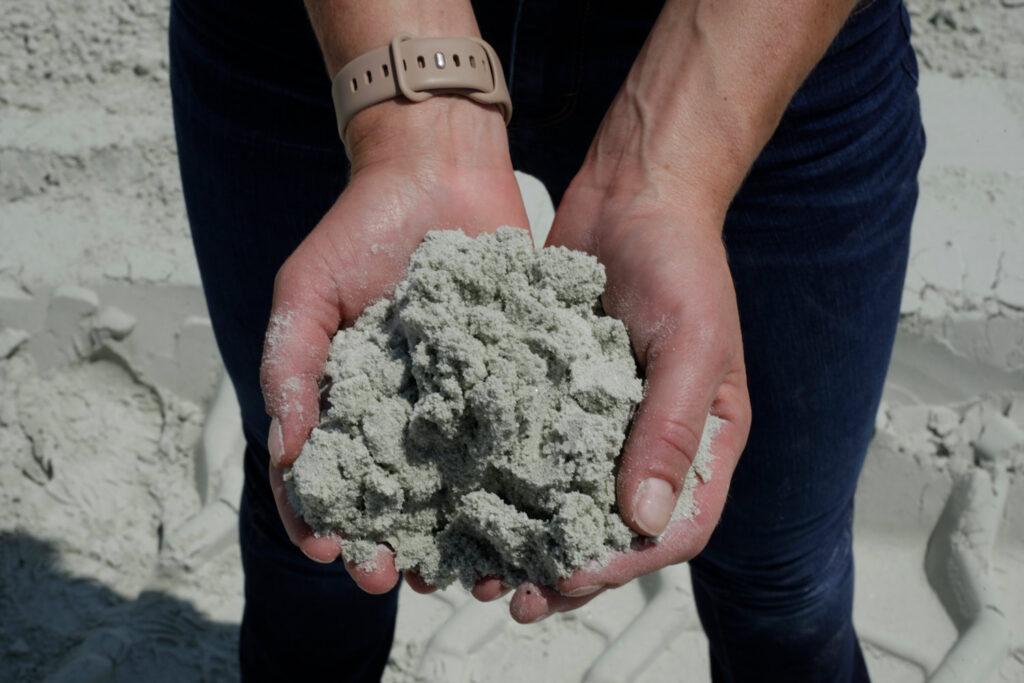
Technique: enhanced rock weathering (ERW) — spread crushed silicate-rich rocks like basalt as powder fertilizer over agricultural fields — reacts with rainwater + CO2 — speeds natural weathering that removes CO2 to oceans and carbonate.
Challenge: proving how much CO2 removed requires tens of thousands soil samples + lab analysis — large share of cost — plus picking suitable fields trial-and-error.
TerraNova analyzes:
- soil composition
- minerals in crushed rock from nearby quarries
- regional humidity, rainfall, temperature
- global patterns La Niña
Predicts soil chemistry change and carbon removal under different conditions.
Results so far: simulations using Brazil and US fields — model could reduce number samples needed at largest sites by 75% while maintaining same accuracy. Adapting training data from Brazil to make predictions for Mississippi fields shows scalability.
Microsoft Climate Innovation Fund early investor in Terradot — Erika Basham director natural capital: “We went for a moonshot together... We wanted to help solve a problem holding back growth.”
Terradot says rock powder already spread across fields Brazil and US expected to remove up to 100,000 tons CO2 over time — targeting 1M tons annual by 2035.
Research described in forthcoming preprint ahead peer review — earlier versions accepted for climate workshop NeurIPS 2026 and AI for science workshop ICLR 2026 — says Melanie Nakagawa Microsoft chief sustainability officer: “TerraNova is exciting example how AI can accelerate climate progress by addressing real barrier to scaling carbon removal.”
*Broader Microsoft carbon removal strategy:*
Microsoft dominant buyer — 4 of 5 largest offtake deals 2024 — but bake-off procurement model to create price discovery:
- InPlanet 300 kt/year ERW Brazil Germany until 2035 — $50-70/ton — $15-21M annually.
- Vaulted Deep 4.9M tons organic waste — manure, sludge, sewage — injecting 5,000 ft deep salt caverns over 12 years.
- Heirloom 300k tons direct air capture onto calcium oxide sheets.
- Chestnut Carbon 7M credits over 25 years afforestation.
- Mombak 1.5M credits Amazon restoration 5x Manhattan, Toroto 234k Mexico, World Bank $225M reforestation-linked bond.
- Canadian BECCS project with Indigenous ownership.
- Initiative Nov 12 with Amazon, Exxon, Weyerhaeuser — 17-member independent panel under Bipartisan Policy Center Voluntary Carbon Market Task Force — AI-driven verification + carbon certification to raise credibility.
Goal: "Need to remove nearly 10 billion tons CO2 every year" per Kanoff — AI not removing directly but helps measure, verify, scale at lower cost.
#Microsoft #AI #TerraNova #CarbonRemoval #ERW #Terradot #Aurora #Climate #NeurIPS #Sustainability