

Space-Based Data Centers Roadmap: The Case for Caution — released Nov 12 for Innovation for Cool Earth Forum (ICEF) Japanese government-backed climate tech conference, publicized by Columbia Climate School, reported by Axios Nov 15.
Lead author David Sandalow inaugural fellow Center on Global Energy Policy Columbia, 9 co-authors Columbia, Georgetown, Northwestern, Lawrence Livermore National Lab, Relae — Alexis Abramson dean Columbia Climate School co-wrote Cooling and Night Sky and Astronomy chapters, Colin McCormick, Julio Friedmann.
Working paper, not peer reviewed.
Scale:
- About 19,000 satellites in orbit today.
- Full implementation of proposed plans would raise LEO by >50-fold.
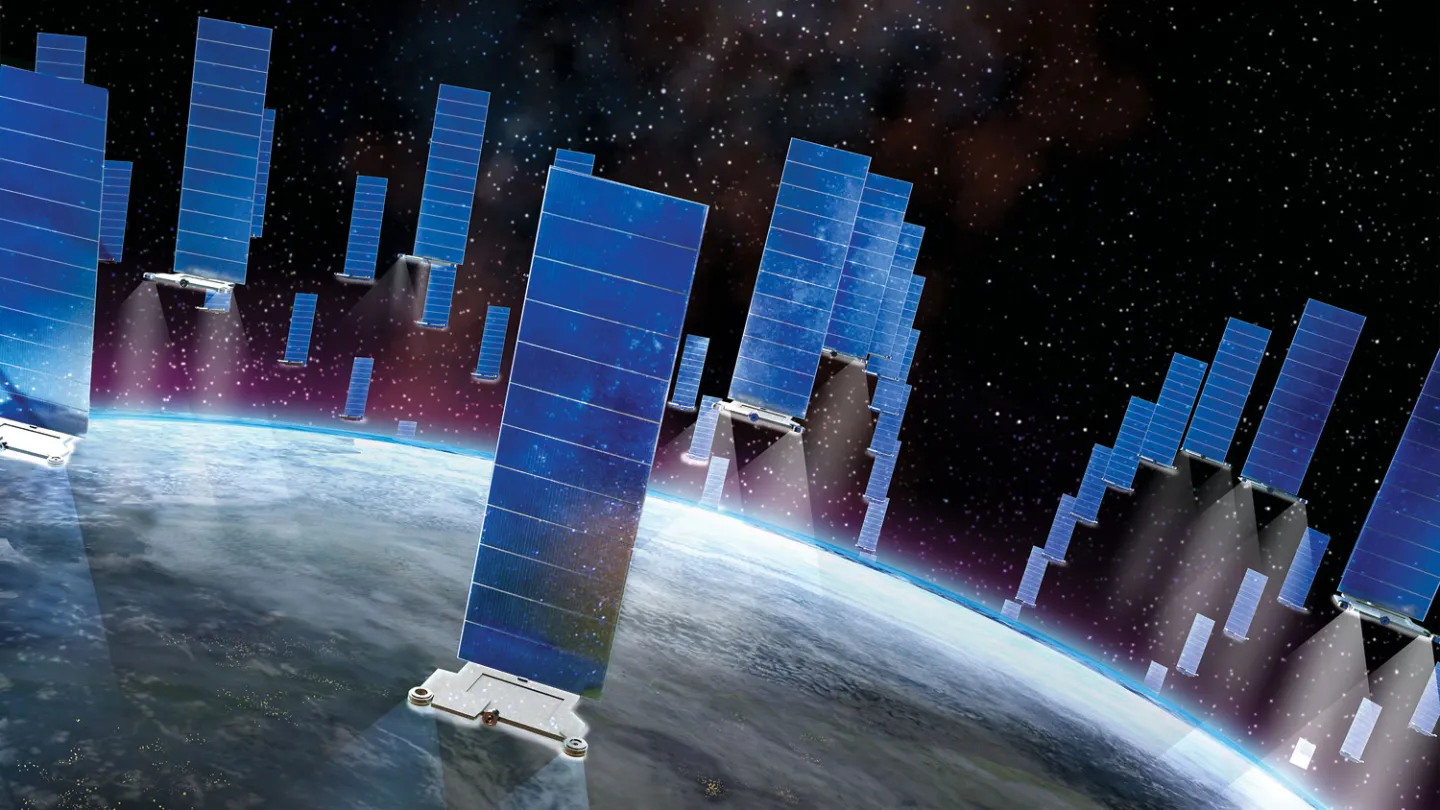
- SpaceX asked FCC Jan 2026 for up to 1,000,000 data-center satellites — AI1 satellite 70-meter wingspan >2x Starlink. Four others filed hundreds thousand more: Blue Origin Project Sunrise 51,600, Starcloud 88,000, Orbital 100,000, others. None approved/launched — filings may be aspirational per Quilty Space director Caleb Henry — companies overfile to avoid raising later.
- Serving 10% of projected 2030 AI data center demand from orbit would need at least 700 Starship-sized launches per year, about two per day in perpetuity, authors estimate. Radiators shed waste heat only by radiation — running AI chips hotter allows smaller panels lower mass.
Investment: Quilty Space — $197M in 2025 to $1.11B so far 2026.
Night sky warning:
"If announced plans for SBDCs are fully implemented, most visible points of light in the sky during much of the night in much of the world could be satellites, not stars" — report.
At many times in many places more satellites than stars visible — satellites become most visible points. Astronomers — Samantha Lawler, John Barentine — simulations show moving artificial objects would outnumber visible stars during certain hours. No dark time without impact.
American Astronomical Society called SpaceX plan an "existential threat" to astronomy per early reports.
Brightness depends on size/design — full build-out scenario not prediction of timing.
Other risks outlined:
- Large debris fields LEO — thousands at 17,000 mph (27,000 km/h) increase collision risk, Kessler syndrome.
- Loss of life and property damage from de-orbiting — Lawler estimate if 1M with 5-year lifespan — four-ton re-entry every three minutes.
- Stratospheric ozone depletion and global warming — rocket emissions black carbon, alumina particles.
- Major interference with observational astronomy research — technical mitigation brightness limits possible but operational trade-offs and need to radiate waste heat persists.
- Military target — if US military adopts, data centers could become targets in future space conflicts.
Recommendations:
Governments and companies should postpone large-scale deployment until risks and effects better understood and adequately managed. Phased deployment with annual license renewals, regulators should not license constellations visible from Earth's surface, brightness limits, pre-launch impact assessments, caps on numbers, international standards. Lesson from Deepwater Horizon and Fukushima.
Sandalow: effects still include "unknown unknowns" — “If this is going to happen, it should happen slowly and with care.”
#SpaceDataCenters #Columbia #ICEF #Satellites #NightSky #Starlink #SpaceX #Astronomy #LEO #Debris