

Copenhagen — Where are Europe's trees, what challenges they face and how green canopies change? European Environment Agency EEA published interactive visual data-led story map today — “Staying green under pressure, what is state of Europe's trees?”
After hundreds years over-exploitation, Europe's trees made remarkable recovery — per Copernicus Land Monitoring Service CLMS Snapshot on trees. By end 1800s, trees covered roughly quarter continent. Today they cover around 40% EU land area — ∼232 million hectares total pan-Europe, up 2M ha since 2020.
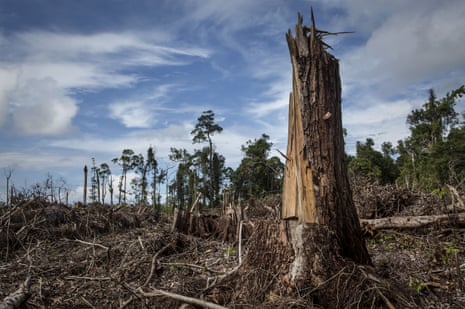
Free-to-use data tracks canopy growth, thinning, damage due to extreme events like wildfires, droughts, floods — many caused by climate change.
Pressures:
- Wildfires becoming more frequent intense due heatwaves, drought — story maps visualize impacts three recent wildfires Greece, France, Slovenia — northern vs southern divergence.
- Storm Vaia Italy 2018 — destructive windfall then bark beetle outbreak.
- Mortality doubled since late 20th century — 1% EU-27 forest area dying yearly — 1 in 4 trees moderately to severely defoliated — increasing — Flanders 2025 one in five damaged.
- Disturbance rate more than doubled past three decades — ESA study Nature Geoscience Aug 5 2026: biomass losses 46% more per hectare disturbed since 2018 — drought, windstorms, insect outbreaks affecting oldest biomass-rich forests Germany, Czech Republic, Poland — drought weakened trees, spruce bark beetle killed mature tree within weeks. Europe forests store 10.6B tonnes carbon above-ground — but between 1985-2023 lost 6.5B tonnes biomass — logging 82%, natural 18% but natural driving spike since 2018.
- State of Europe's Forests 2025 March report: standing stock rose 169 m3/ha 2020 to 171.5 2025 +45% vs 1990, but growth slowed 1.3% long-term to 0.3% last 5 yrs — aging, harvest intensity, damage. Utilization rate 73% to 81% — Estonia, Belgium, Sweden, Germany harvesting >100% increment — partly salvage logging.
City benefit:
Maps visualize Oslo, Berlin, Paris tree cover — cooling during summer, wellbeing — urban trees key.
Trade-offs:
SoEF 2025: Broadleaved share 37% to 40% — positive. Deadwood, biodiversity up. But 80% assessed forests conservation status unfavorable — homogeneous, dense plantations excellent carbon sinks but poor biodiversity — University Copenhagen associate Prof Sebastian Kepfer-Rojas. Carbon sink ∼360M tonnes CO2 yearly — weakening — eLTER policy brief "Forests at Risk" — compound events drought then fire/pests magnify, poorly captured monitoring — without adaptation EU climate targets harder.
Economics:
Marketed forest services value doubled €495M to €1.26B. Survey 207 foresters across 10 Living Labs: 84% expect climate mortality rise, 80% expect productivity decline under dry days, but 25% still preserve conifers over broadleaves due anticipated timber price increases — conflict adaptation vs commercial viability.
Solution:
EEA: EEA implements Copernicus Land CLMS, coordinates in-situ data. Governance capacity mediates — study 508 specialists Annals Forest Science — identical stressors produce opposing outcomes depending enforcement.
CLMS Snapshots free public data.
#EuropeTrees #EEA #Copernicus #Forests #Wildfires #BarkBeetle #CarbonSink #Biodiversity #ClimateChange #CLMS