

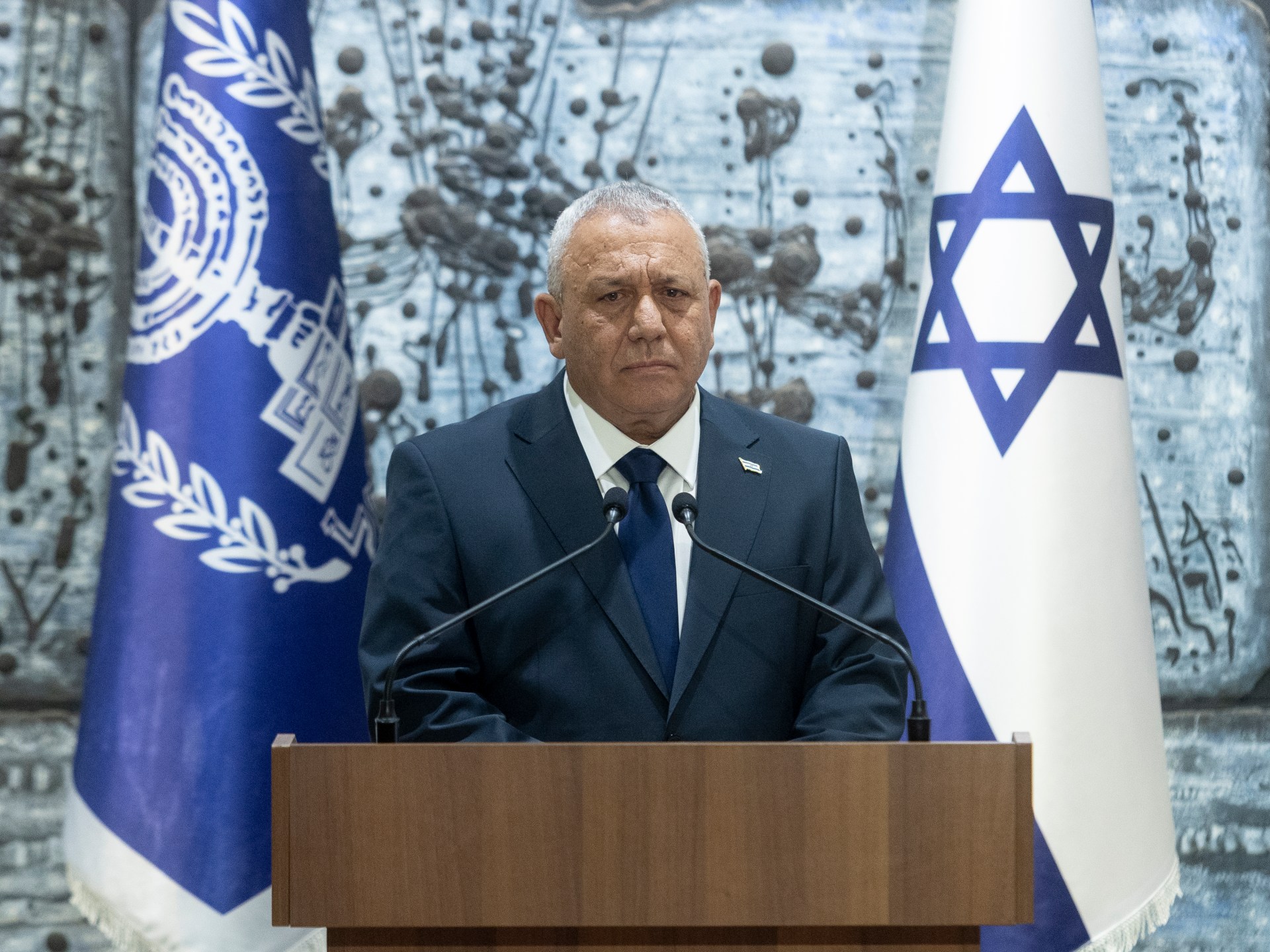
JERUSALEM: After weeks of deadlock, Israel's would-be prime minister has finally got something to show.
Gadi Eisenkot's centre-right Yashar party announced on Tuesday that it had agreed to sign a coalition pact with Avigdor Lieberman's Israel Our Home party — the first formal alliance since the October 27 election left Israel without a clear winner.
Eisenkot, the former military chief who emerged as the surprise challenger to Benjamin Netanyahu, met Lieberman earlier in the day. Hours later, Yashar confirmed the deal.
On paper, it is modest. Yashar won 21 seats in the 120-member Knesset. Lieberman's party won seven. Together, they hold 28 seats. With other patchwork partners in the anti-Netanyahu "change bloc", Eisenkot commands just 48 seats — still 13 short of the 61 needed for a majority.
Netanyahu, meanwhile, remains caretaker prime minister. His Likud-led bloc, allied with far-right and ultra-Orthodox parties, outperformed expectations but still lost its majority. It now holds 53 seats.
The Lieberman deal matters not for the numbers, but for what it signals. Lieberman has been vocal about two red lines: no government dependent on Arab parties, and no unity government with Netanyahu. His stated goal is to oust Netanyahu from power.
Yet the arithmetic points in an awkward direction. The Arab parties, aligned with Eisenkot in their opposition to Netanyahu, hold 19 seats. Without them, Eisenkot cannot reach 61 unless he peels away Likud lawmakers for a unity government — the very option Lieberman rejects.
That contradiction is the heart of Israel's crisis. The election stripped Netanyahu of his majority, but gave no one else a path to power either. Parliament was sworn in on November 10 without a government. President Isaac Herzog then tasked Eisenkot with forming one.
Eisenkot has until December 6 under his 28-day mandate, with the possibility of a 14-day extension. Talks are also ongoing between Eisenkot, some change-bloc partners and Likud on a unity government — a scenario that would keep Netanyahu out but keep his party in.
From an Indian perspective, the stakes are high. India has deepened defence, technology, agriculture and intelligence ties with Israel under Netanyahu, while also maintaining its traditional support for a two-state solution and its partnership with Arab states. A prolonged deadlock in Jerusalem means delayed decisions on defence deals, stalled Gaza ceasefire implementation, and uncertainty for the India-Middle East-Europe Corridor.
Eisenkot, a respected general with a reputation for pragmatism, is seen in New Delhi as a potentially steadier partner on security. But he is not yet prime minister.
His first coalition pact is a breakthrough. Turning it into a government will require breaking one of Lieberman's red lines, or breaking Likud. Until then, Israel remains governed by a caretaker — and waiting.
*Tags:*
#Israel #Eisenkot #Netanyahu #Knesset #Lieberman #MiddleEast #Coalition #Yashar #IsraelPolitics #IndiaIsrael