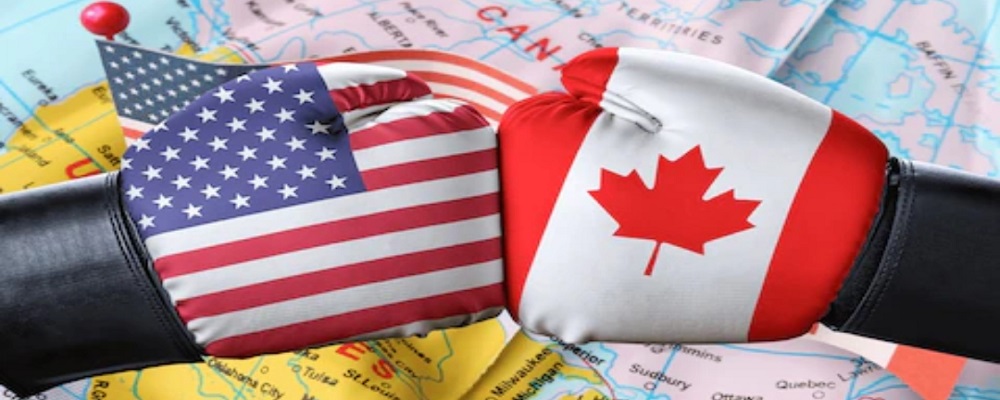
Relations between the US and Canada have historically ranked among the strongest, most open, and peaceful economic partnerships in the world. However, the foundations of this relationship have been shaken by the Donald Trump administration's decision to issue strict orders excluding Canadian products from General Services Administration (GSA) procurement and imposing heavy tariffs on Canadian imports. This aggressive expansion of the 'America First' policy demonstrates that the current US administration is in no mood to prioritize even its closest neighbour over its trade agenda.
The US administration argues that existing trade agreements with Canada are harming the interests of America's domestic manufacturing sector and local workforce. The US believes that low-cost timber, steel, aluminium, and agricultural products from Canada subject American companies to unfair competition. Consequently, in the name of protecting domestic industries and reducing reliance on foreign goods, the Trump administration has taken this drastic step—a move it is promoting as essential for US economic revitalization.
On the other hand, Canada has expressed deep dissatisfaction and anger regarding this decision. The Canadian government and business organizations maintain that this unilateral action violates the spirit of the historic free trade agreements established between the two nations. Canada has signalled that it will deliver a strong retaliatory response to this economic offensive by imposing counter-tariffs on key US products. This situation threatens to severely disrupt the supply chains linking the two countries—chains that span sectors ranging from automobiles to construction materials.
The most direct and serious impact of this 'trade war' will be felt by ordinary citizens and consumers in both countries. As tariffs are imposed on each other's goods, the cost of final products will rise. In the US, the timber and steel used in home construction will become more expensive, driving up real estate prices. Meanwhile, in Canada, American food products and electronic appliances will see price hikes. It will become difficult for the small and medium-sized industries of both nations—which rely on each other's raw materials—to survive.
From a long-term perspective, this trade tension is not merely a dispute between two countries; rather, it is a significant example of the world shifting away from globalization and moving towards protectionism. If two of the world's most integrated economies clash in this manner, it will erode confidence in the rules of the World Trade Organization (WTO). It remains to be seen whether Canada will seek new global markets to safeguard its economy or if a way to avert this tariff war can be found through diplomatic dialogue.
External Affairs
Trade Conflict Envelopes US-Canada Relations
Relations between the US and Canada have historically ranked among the strongest, most open, and peaceful economic partnerships in the world. However, the foundations of this relationship have been shaken by the Donald Trump administration's decision to issue strict orders excluding Canadian products from General Services Administration (GSA) procurement and imposing heavy tariffs on Canadian imports.

Cult Current
10 Sep 2026