

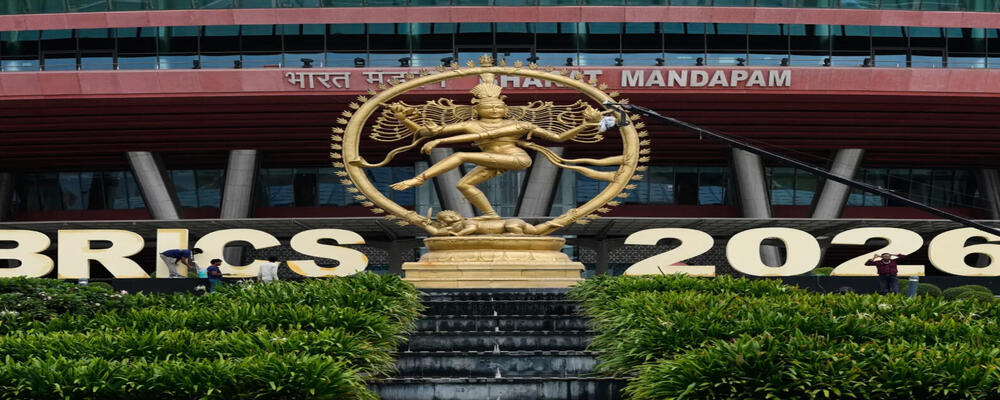
In diplomacy, sometimes a single paragraph is the summit.
For the BRICS Declaration in New Delhi, Paragraph 28 became that battleground. On one side, Iran, freshly attacked and wanting strong condemnation of aggressors. On the other, UAE, hit by Iranian strikes on its cities, demanding protection of civilian infrastructure. The US and Iran could not both be named, positions hardened, and the talks nearly collapsed into a "no declaration" scenario.
The 60-day ceasefire in West Asia, which lapsed in August, had opened a window. Indian officials saw an opportunity to get UAE and Iran to agree to a BRICS consensus for the first time since both joined in 2024. Failure would have meant the grouping could not address its most volatile region.
The groundwork was laid by the Ministry of External Affairs' MER division, led by BRICS Sherpa Sudhakar Dalela. But the breakthrough came on June 14-15, when Foreign Ministers noted "differing views" and left space for negotiation. Minister Narendra Modi and UAE ruler Mohamed bin Zayed spoke on May 15, and Iranian President Masoud Pezeshkian spoke to Modi on June 22. NSA Ajit Doval reached out to his counterparts during the BRICS NSAs meeting.
In the final days, Sherpas worked overtime, with sentences projected on a screen. Square brackets - diplomatic code for no consensus - were removed one by one. The final text was a masterclass in balance: “We express deep concern over the continued escalation of tensions in Middle East/West Asia... call for exercising maximum restraint...”
It acknowledged the UAE's suffering without calling Tehran a proxy of the US, and urged protection of civilians "in accordance with the Charter of the United Nations" - language that protects sovereignty.
China and Russia initially leaned to one side, then supported both. It was not just a paragraph. It was proof that BRICS, often dismissed by Western capitals as a failure, can mediate within its own contradictions - and that Indian drafting can hold that centre.