

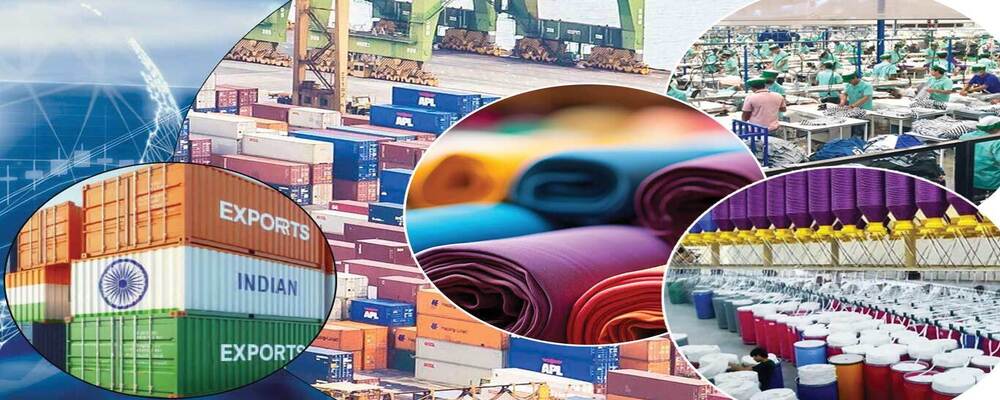
India wants $100 billion in textile and apparel exports by 2030, from $36 billion today. Apparel alone should be $40 billion, from $15.7 billion. The target looks fanciful unless you visit Tiruppur.
The Tamil Nadu knitwear cluster, an organically grown ecosystem, now exports $3.3 billion in 2020-21 to $5.3 billion in 2024-25, about 68% of India's knitwear exports. It employs more than a million workers, around 70% of them women. Nearly 20,000 units weave yarn, knitting, dyeing, printing, stitching, finishing into one production ecosystem.
The op-ed by economist Gurucharan and ICRIER fellow, makes a crucial distinction: being counted as "employed" for working 30 days a year is not a formal job. India needs regular, formal jobs with EPF and ESIC. Apparel is labour-intensive, employs women in large numbers, and can train workers in 60 days.
But Tiruppur alone cannot deliver 20 million jobs. It succeeded because entrepreneurs, the Tiruppur Exporters Association under A Sakthivel, and the South India Hosiery Manufacturers Association built collective capabilities and common infrastructure like the Netaji Apparel Park and a Rs 850-crore zero liquid discharge common effluent treatment plant after the Madras High Court's 2011 order.
Trade deals alone don't ensure exports. India's apparel exports to Japan fell from $229 million in 2013 to $203 million in 2024 despite the 2011 FTA.
The government announced seven PM MITRA parks in 2021. Only one - Warangal - seems operational. This snail's pace does not inspire confidence for $100 billion by 2030, let alone 2035.
The authors argue the PM must give special attention to this sector. Chip-making and Al are for the highly skilled. T&A is for the bottom of the labour force, where India's real jobs crisis is. It offers high employment intensity at low cost - the path China, Bangladesh, Vietnam followed. Viksit Bharat will not be tested by how many chips we make, but by how many productive jobs we create. Tiruppur shows the blueprint. Execution is missing