

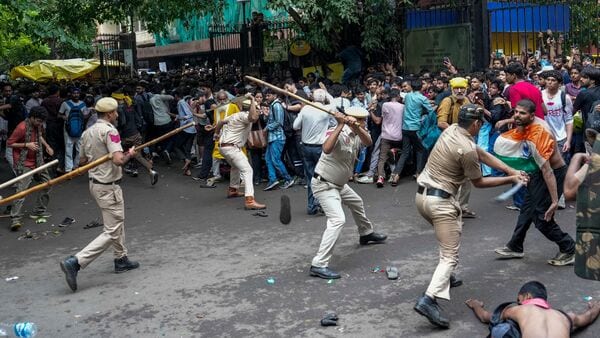
CPI Rajya Sabha MP P. Sandosh Kumar's letter to Home Minister Amit Shah contains a serious allegation: Delhi Police personnel removed or concealed their identity badges before detaining protesters and using force against them on Friday during a protest against Chief Election Commissioner Gyanesh Kumar.
Read more - 14 Notes Of Dissent: The Revolt Inside The EC
The allegation is not about one protest. It is about a pattern. Kumar says Delhi Police, directly answerable to the Home Ministry, has repeatedly responded to peaceful mobilisation with violence, mass detentions, internet shutdowns and manhandling instead of protecting democratic exercise at a site designated by the Supreme Court and NGT.
Why badges matter is settled law. In D.K. Basu vs State of West Bengal, the Supreme Court laid down that identification is essential when police exercise coercive powers. Delhi Police Standing Order No. 51 reiterates it. A nameless policeman is an unaccountable policeman, and unaccountable force is the definition of a police state.
From an Indian perspective, this is worrying because Delhi is not an ordinary policing zone - it is the capital where dissent is most visible. If identity can be hidden in Lutyens' Delhi, it can be hidden anywhere. The National Secretariat member of CPI himself was detained along with AISF and AIYF cadres, which underscores how routine preventive detention has become.
Read more - Treason, Theft, And The EC
India prides itself on being a noisy democracy. But democracy needs referees with name tags. The MP's demand for a time-bound inquiry is the minimum. Body cameras, mandatory visible badges, and penal action for concealment should be non-negotiable SOPs. Without identification, citizens cannot complain, courts cannot fix liability, and impunity becomes policy.
Tags: #DelhiPolice #DKBasu #RightToProtest #CPI #PSandoshKumar #PoliceReform #Article19 #AmitShah #Democracy #Accountability