
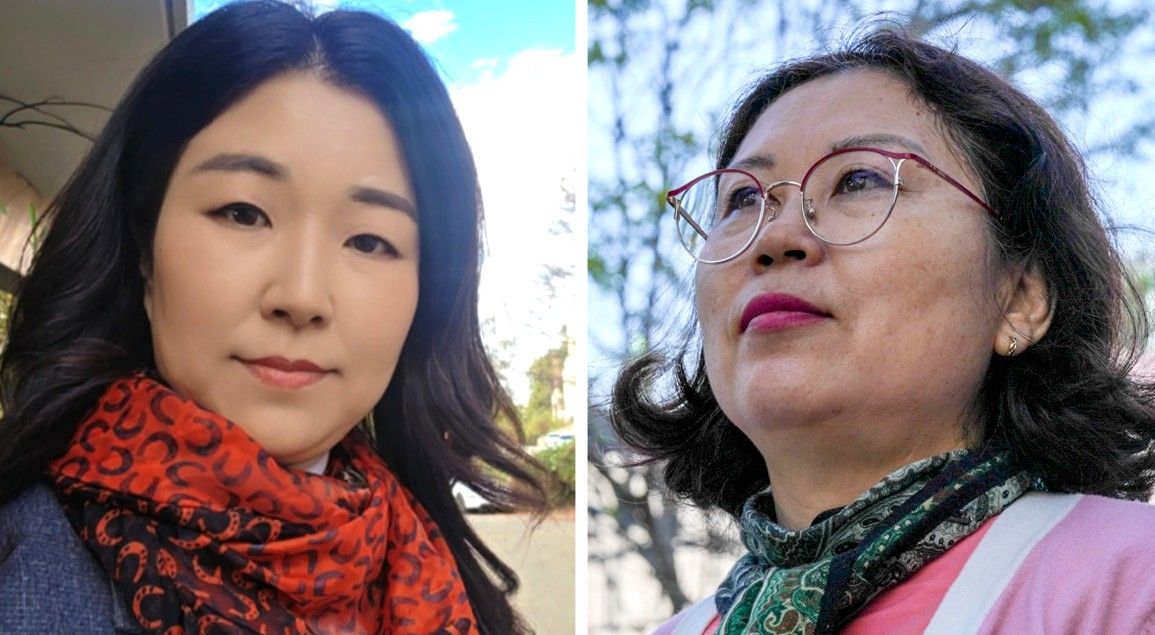
SEOUL: Living in North Korea, Kim Bo-bin got used to praying with her eyes open.
She found ingenious ways to keep her Christian faith a secret in the communist dictatorship, which tightly controls how and where its citizens worship. Unauthorised displays of faith could land people in prison, she tells the BBC.
So Kim would silently mouth hymns and clap with just two of her fingers. “In North Korea, if there are three people in a room, you are being spied on. So I would only close my eyes [and pray] when I lay on the floor.”
Now 44, Kim lives just outside Seoul, where she fled 15 years ago.
Her testimony is part of a new report documenting the experiences of 570 North Korean escapees, most of whom say they experienced or witnessed anti-Christian persecution. Spanning five years, the report by British human rights group Korea Future accuses Kim Jong Un's regime of repeatedly violating religious freedom through a system of surveillance, fear and violence.
It suggests little has changed after sustained international pressure, with multiple incidents of suspected Christians being beaten and tortured as recently as last year.
North Korea maintains that it allows religious freedom, despite years of evidence from rights groups and the United Nations. The churches in Pyongyang are state-controlled showcases. The UN has referred to estimates of 200,000 to 400,000 Christians practising secretly, some detained in camps.
Christianity was first established in Korea in the late 1700s and exploded in the north after Protestant missionaries arrived in the 1880s. Pyongyang was once called the "Jerusalem of the East". Today, the regime treats it as an existential threat.
"The North Korean leader's authority is god-like," says Kang Dong-wan, professor at Dong-a University. In schools, Christianity and shamanism were dismissed as superstitions. The Kim family is presented as the only object of worship.
The report documents indoctrination from "cradle to the grave", says co-author James Burt. Police and a network of neighbourhood spies monitor suspicious activities. A former police informant says she was instructed to gather information on neighbours' worshipping, and handed a memo describing Christianity as an "anti-socialist activity".
Authorities also hold intergenerational records of families' beliefs, condemning Christians' children and grandchildren to a life without higher education or decent career prospects.
Pyongyang has also cracked down on smuggled memory sticks containing South Korean videos of Christian sermons. In 2020, it passed a law on Rejecting Reactionary Ideology and Culture. Owning Bibles and hosting services can now result in imprisonment, while distributing religious books or videos is punishable by death.
Kim Bo-bin grew up in North Hamgyong province, along the border with China. In 2003, she went to China expecting a job but was forced into marriage. After her daughter was born, she met a missionary when she went to collect a free pram from a building bearing a cross.
In 2007, she was detained in China and sent back. Secret police questioned her about whether she had worn a cross. She pretended not to understand. She says she was beaten for 23 days and given a three-year hard-labour sentence.
In prison, she met Lee Young-joo, another woman deported from China. Lee says interrogators asked her about missionaries, churches and the Bible. She denied knowing them. She was sentenced to three and a half years and prayed in her cell without closing her eyes, fearing she would be sent to a political prisoners' camp if her faith was discovered.
Both women resumed practising in secret after release. Kim fled to South Korea with her daughter in 2012. Lee now attends a church for North Korean escapees in Seoul.
Surveillance intensified under Kim Jong Un, who succeeded his father in 2011. Three South Korean missionaries operating in the border region were arrested in 2013-2014 and sentenced to life on charges of espionage and plotting a coup.
Korea Future's report contains no first-hand testimony from Christians held in political prison camps — a reminder of how much remains hidden.
But what 570 voices make clear is this: in North Korea, even a silent prayer is an act of defiance.
*Tags:*
#NorthKorea #Christian #ReligiousFreedom #KoreaFuture #HumanRights #KimJongUn #Persecution #Defectors #Seoul #BBC