

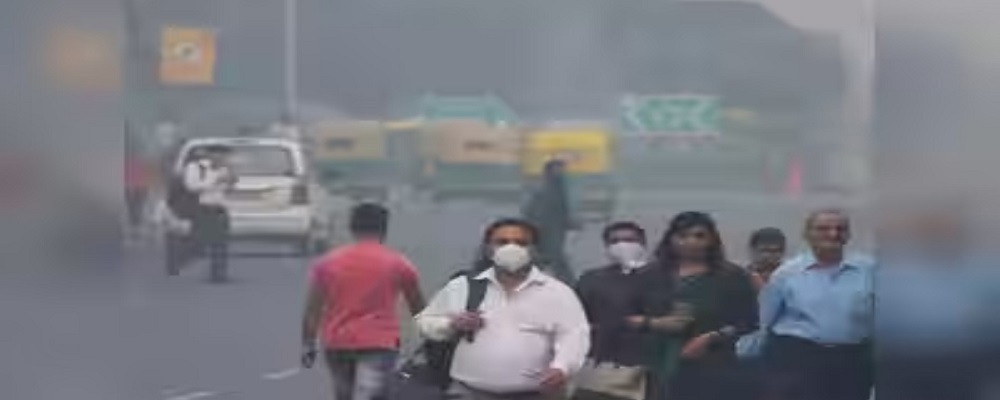
With the onset of winter and the withdrawal of the monsoon, a blanket of smog and pollution has once again begun to hover over the national capital, Delhi, and the adjoining NCR region (Noida, Ghaziabad, Gurugram, and Faridabad). As rainfall has ceased completely and wind speeds have dropped, the Air Quality Index (AQI) has rapidly deteriorated, shifting from the 'Moderate' to the 'Poor' category. Average AQI levels ranging between 178 and 210 have been recorded in several key areas of Delhi.
According to data from the Central Pollution Control Board (CPCB), levels of PM 2.5 and PM 10 have reached hazardous marks at traditional pollution hotspots such as Anand Vihar, Mundka, Wazirpur, and Jahangirpuri. A drop in temperature has increased air density, causing pollutants—such as vehicular emissions, construction dust, and smoke from local waste burning—to remain trapped in the air close to the ground.
Incidents of stubble burning have also begun to be reported alongside the start of the paddy harvest in neighbouring states like Punjab and Haryana. Although the administration claims that bio-decomposers and super-seeder machines are being extensively used for stubble management this season, a shift in wind direction often brings smoke from the northwest, further degrading Delhi's air quality.
In response to rising pollution levels, the Delhi government and the Commission for Air Quality Management (CAQM) have initiated preparations to implement the initial stages of the 'Graded Response Action Plan' (GRAP). Measures under this plan include intensified mechanical road sweeping, water sprinkling, mandatory use of anti-smog guns at construction sites, and stricter enforcement against vehicles lacking a valid Pollution Under Control (PUC) certificate. During the winter months, air pollution in Delhi-NCR turns into an annual health emergency. Air quality reaching the 'poor' category poses health risks for people with respiratory and heart conditions, the elderly, and young children. Environmental experts believe that to prevent the situation from spiralling out of control this time, public participation and strict enforcement are far more crucial than merely relying on government restrictions.