

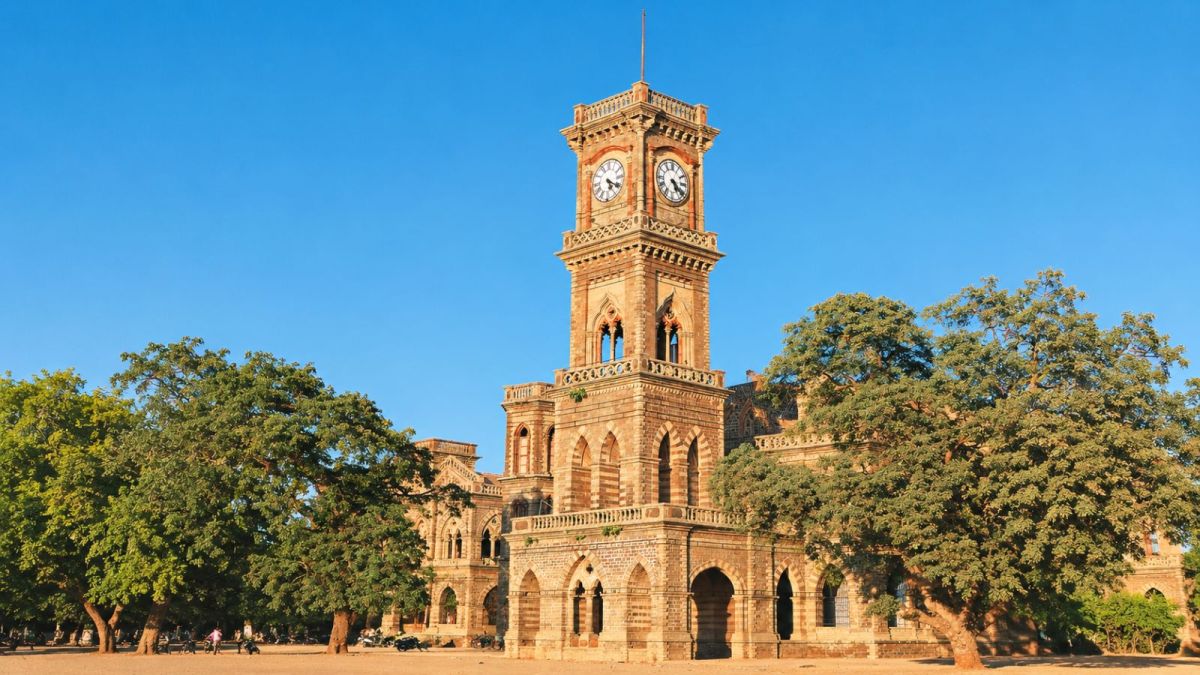
Flanked by automobile spare parts shops and art framers, a rusted clock tower in old Kanpur's Moolganj market looks up at nobody. Most residents pass by without a glance at what was once the whistle that regulated mill workers' lives. It is a story repeated from Delhi to Kolkata.
Shiny Varghese's piece in The Indian Express maps this forgotten network. Rajabai Clock Tower in Mumbai, built during the reign of Maharaja Sardar Singh, funded by Premchand Roychand who named it after his mother Rajabai. It was designed by Sir George Gilbert Scott in Venetian Gothic style, modelled on Big Ben. At 280 feet, it was the tallest structure in Bombay then. Its clock still strikes every 15 minutes. Then there is the Ram Tower in Delhi, named after the Indian founder of the factory, who also built a temple and school in the area. Kanpur's story is of textile mills, railways and industrial time.
Read more - Modern Architecture and Vastu Shastra building homes
What is fascinating is that these towers have outworked the same mechanism since they were installed. The Mumbai clock is weight-driven mechanical, later pendulum-based apparatus with three-quarters and hour striking. Replacing an original mechanism may make the clock functional but it can also impact the authenticity of the building, says conservation architect Brinda Somaya. That is the conservation dilemma India has never solved - first, intervene sensitively, and then understand the science and craft behind it.
Why did colonial India need clock towers? Time was not Indian, it was imperial. Before railways, time was local - temple bells, azaan, sun. Clock towers standardised time for factories, courts, schools and railway stations. They were expressions of royal patronage and modernity. Their location was deliberate - near markets, railway stations to induce punctuality, order and make transactions.
In 2026, when every wrist has a smartwatch, why preserve them? Because they are among the few secular, public, non-commercial landmarks left. In an era of gated communities and mall clocks, Rajabai is still public. Mumbai's BMC and conservationists have restored it, but in Kanpur, Lucknow, Meerut, Ajmer, they are crumbling, wrapped in ad wires, sometimes without hands.
Read more - Biophilic Architecture: Back To Nature's Lap
Supreme Court's Allahabad High Court quashed a tender to demolish a market in Uttar Pradesh when it was revealed that the clock still told time when people can't check their phones and watched for a while. While photo-finish preservation helps, mapping them is not enough. Delhi, Mumbai and Kolkata have started lighting them, but we need adaptive reuse - like Rajabai's library chimes - that keeps their heartbeat alive, as author Gyan Prakash says. To save a clock tower is to save a city's memory of shared public time.
Tags: #ClockTower #RajabaiClock #UrbanHistory #Mumbai #Conservation #ColonialArchitecture #PublicSpace #IndianCities #Heritage #Time