

SINGAPORE: Oil prices rose slightly on Friday and are on track to snap a three-week losing streak as ongoing attacks on tankers in the Strait of Hormuz and Saudi energy infrastructure heightened concerns over oil supply from the conflict-hit Middle East.
Brent crude futures rose to $96.61 a barrel by 0450 GMT, after gaining nearly $2 on Thursday to settle at their highest since November 6. Later Friday, Brent traded at $97.30, up 0.8%, after hitting its highest since November 9.
US West Texas Intermediate crude futures were at $85.78 a barrel, up $2.10, or 2.5%, from their close on Wednesday. There was no WTI settlement on Thursday due to the US Thanksgiving holiday.
Both benchmarks are headed for their first weekly gain in four weeks.
What changed?
Prices slipped in previous weeks on relief that US President Donald Trump did not step up military action on Iran after the midterm elections. Traders bet on a global supply surplus next year, with the IEA assuming the September rebound in Gulf exports would hold.
That assumption is now looking wrong.
Oil flows are down from September and October highs, and LNG export rates are still about half of what they were before the war started.
"We think Brent can still push above USD100/bbl without another major escalation in the Middle East, but that increasingly requires evidence of constrained deliverable supply," ANZ analysts Brian Martin and Daniel Hynes said in a note.
Hormuz: mines and tankers—
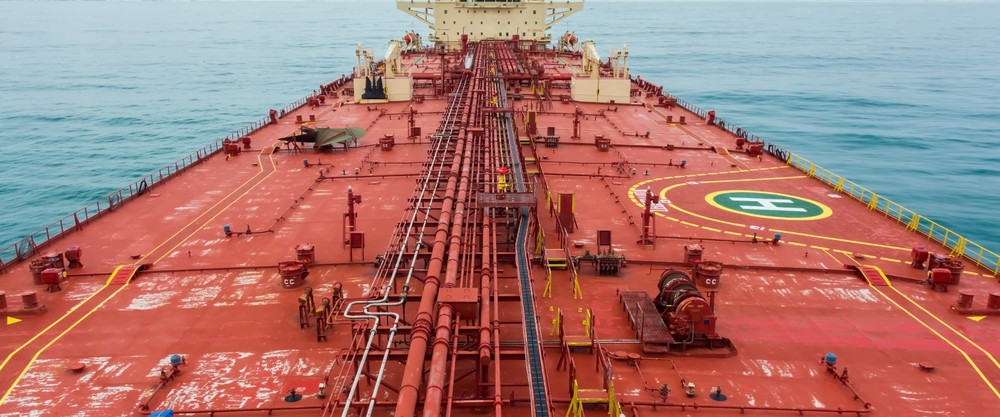
Iran has continued to attack ships transiting the Hormuz strait, disrupting oil exports.
On Thursday, Iran's Revolutionary Guards said two tankers had exploded and caught fire after hitting sea mines north of Oman's Khasab port while attempting to cross the strait. One was a supertanker carrying more than 2 million barrels of crude.
Shipping through Hormuz — through which about 20% of global oil flows — had been recovering to near pre-war levels. That recovery is now stalling.
"The price in the Bay of Oman currently seems to signal that there is ample supply of crude oil available. But assuming that this is a stable status quo is probably a faulty assumption," said SEB analyst Bjarne Schieldrop.
“Add in that the Houthis and what they do to Saudi Arabia and their semi-control of the Bab-el-Mandeb Strait, and you may not want to sit short oil, to put it mildly.”
Saudi Arabia: Ras Tanura and Jazan—
Yemen's Iran-aligned Houthis have struck Saudi infrastructure in back-to-back days.
On Wednesday, the Houthis said they had attacked Ras Tanura — Saudi Arabia's largest refinery and a major crude export hub — and the Red Sea ports of Jeddah and Jazan.
On Thursday, Saudi Aramco's Jazan refinery temporarily halted some operations after a projectile struck the facility, killing a Nepalese worker and wounding several others, Saudi Arabia's Energy Ministry said.
Risks to Saudi Arabia's Red Sea ports remain elevated as hostilities continue. ANZ noted Saudi Arabia is increasingly favouring exports from its western coast at Yanbu amid risks to Ras Tanura on the Gulf coast.
Meanwhile, a US naval blockade continues to restrict Iranian oil exports as diplomatic efforts to end the conflict remain stalled.
The glut argument hasn't disappeared—
US commercial crude oil inventories rose for a third consecutive week in the seven days through Nov 20, up 1.1 million barrels to 418.9 million barrels, according to the EIA. Gasoline and distillate stockpiles also increased.
That is why some analysts still see a surplus in 2027 if Gulf exports recover and geopolitical risk eases.
"Recovering Gulf exports and easing geopolitical risk support lower oil prices in 2027. However, depleted inventories, persistent shipping risks and slow refinery repairs leave the market exposed," OCBC analyst Sim Moh Siong said.
OPEC+ on Sunday—
OPEC+ ministers meet Sunday to decide 2027 output policy.
Given the disruption from the Iran war, OPEC+ is likely to maintain its oil output targets for at least the first quarter of 2027, sources said. The group faces the added challenge of balancing output with the UAE no longer in the group, and Iraq and Kazakhstan pressing for higher capacity estimates.
Elsewhere: refineries burning—
Ukraine has intensified drone attacks on Russian oil refineries since the end of October, with the latest causing a fire at the Slavyansk ECO refinery in Krasnodar region. Those attacks have hit Russia's refining output and fuel exports, tightening global diesel.
Separately, fires disrupted Thailand's Bangchak refinery and Venezuela's Amuay refinery on Thursday. An incident at Brazil's Bacalhau oilfield offshore has halted production for an estimated five to eight weeks, Equinor and Galp said Wednesday.
*Tags:*
#OilPrices #Brent #WTI #OPEC #MiddleEast #StraitOfHormuz #SaudiArabia #Iran #Houthis #Energy